

Based on your book
Money and magic
by Hans Christoph Binswanger
Hans Christoph Binswanger’s “Money and Magic” is an intellectual expedition into the core of modern economics, guided by the surprising foresight of Goethe. The book lays out how our current financial world, born from the Industrial Revolution, fundamentally relies on transforming nature into an ever-expanding money supply. It’s a profound, analytical read that asks you to grapple with the moral complexities and responsibilities inherent in this system. This isn't a light read; it’s for someone who enjoys a philosophical challenge, a rigorous deep dive into cultural and historical analysis, and a book that genuinely reshapes how they understand the interplay between human society, the environment, and capital. Prepare to think deeply about the hidden costs and promises of progress.
10 Books similar to 'Money and magic'
If you appreciated Binswanger's intellectual rigor and his critical lens on economic history, our curated list will offer more avenues for exploration. We’ve gathered books that share that same commitment to deep cultural analysis and historical deep dives, examining how money and economic systems shape our societies and moral dilemmas. Whether you’re interested in the philosophical roots of wealth, the social commentary on modern capitalism, or the human stories behind financial constructs, these titles will continue to challenge your assumptions and broaden your understanding of the "magic" behind our financial world.
As an Amazon Associate, we earn from qualifying purchases.

Graeber's magnum opus re-examines the historical relationship between debt, money, and social structures, challenging conventional economic narratives much like Binswanger explores the 'magic' of money. It's a deeply analytical and philosophical journey through human history, revealing the cultural and moral underpinnings of our financial systems.

Harari explores how shared fictions, including money, have enabled human cooperation on a grand scale, resonating with Binswanger's examination of money's 'magic' as a powerful, collectively imagined construct. This book offers a sweeping, intellectual perspective on the systems that shape human civilization and belief.

by Karl Polanyi
Polanyi's seminal work critiques the idea of a self-regulating market, arguing that it's a utopian project with profound social and political consequences, mirroring Binswanger's critical look at the societal impact of money. It provides a crucial historical and sociological perspective on the development of modern economic thought.
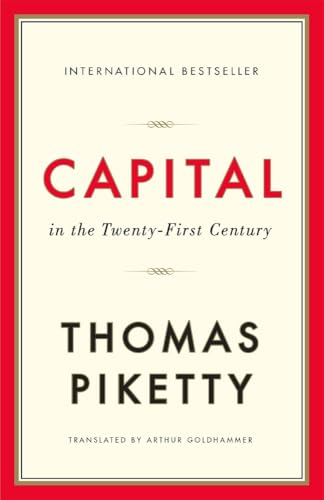
Piketty offers a comprehensive, data-driven analysis of wealth and income inequality under capitalism, providing a rigorous, critical examination of economic systems that aligns with Binswanger's intellectual approach to understanding money's power. It delves into the historical dynamics of capital accumulation and its societal effects.

Not sure what they've already read?
Let them pick their next favorite with an Amazon Gift Card.
As an Amazon Associate, we earn from qualifying purchases.

Ferguson provides an engaging narrative history of finance, from ancient forms of credit to modern global markets, revealing how financial innovations have shaped human civilization. Like Binswanger, he demystifies the complex world of money by exploring its historical evolution and profound societal impact.

While not directly about money, Kahneman's exploration of cognitive biases and human decision-making offers profound insights into the psychological 'magic' behind economic choices and perceptions of value. Readers interested in the underlying human factors influencing financial systems, as explored by Binswanger, will find this compelling.

Graeber critically examines the proliferation of meaningless jobs in modern society, offering a sharp, satirical, and deeply analytical critique of our economic system's values and its impact on human dignity. This book's intellectual rigor and societal critique will resonate with fans of Binswanger's take on money's pervasive influence.

Zuboff exposes a new economic order where human experience is commodified and manipulated for profit, offering a powerful, disturbing critique of modern power dynamics that echoes Binswanger's analysis of money's hidden influence. It's an intellectual deep dive into how new systems shape our lives and societies.

by Adam Smith
As a foundational text in economic thought, Smith's work provides a philosophical and historical look at the principles of markets, labor, and value, offering insights into the 'magic' of how wealth is created and distributed. Its analytical depth and exploration of societal structures will appeal to readers interested in the origins of economic ideas.

by John Perkins
Perkins offers a controversial insider account of how international financial institutions and corporations exert influence over developing nations, revealing the often-hidden, almost 'magical' power dynamics of global finance. This book provides a more narrative, yet equally critical, perspective on the real-world impact of economic systems.

Love to read on the go?
Explore Kindle e-readers and take your books with you.
As an Amazon Associate, we earn from qualifying purchases.
As an Amazon Associate, we earn from qualifying purchases.