

Based on your book
Mutual Aid
by Kropotkin, Peter
Kropotkin wrote this as a direct rebuttal to the social Darwinism of his era, which insisted that life is essentially a brutal, zero-sum struggle for survival. Instead, he draws on exhaustive observations of animal behavior and human history to argue that cooperation—or mutual aid—is the primary engine of evolution and societal progress. The text feels less like a dusty political manifesto and more like a patient, expansive lecture from a scientist who genuinely believes in human potential. You will encounter dense historical vignettes and biological analysis, which demand a focused, contemplative pace. It is an intellectually dense experience that leaves you feeling surprisingly optimistic about the human species. This is for the reader who wants to challenge their own cynical assumptions about why we act the way we do and is willing to engage with rigorous, old-school scholarly inquiry.
10 Books similar to 'Mutual Aid'
Since you connected with the radical optimism and historical re-evaluation in Mutual Aid, these selections were curated to further explore the interplay between human biology and social organization. Whether you are interested in the modern game-theory proof of cooperation found in Axelrod, the anthropological grounding provided by Graeber and Wengrow, or the primatology insights of de Waal, these books expand on Kropotkin's thesis through different lenses. They share a common commitment to dismantling the myth of inherent human selfishness, offering a hopeful, evidence-based roadmap for how we might reconsider our collective future.
As an Amazon Associate, we earn from qualifying purchases.
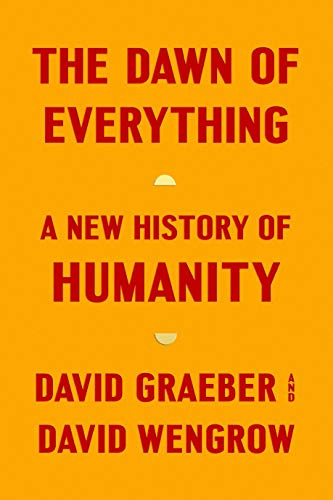
by David Graeber and David Wengrow
Like Kropotkin, this book challenges conventional narratives about human nature and societal development by demonstrating that early human societies were far more diverse, egalitarian, and cooperative than we are taught. It provides a modern, rigorous, and deeply researched expansion on the themes of social organization and human potential found in Mutual Aid.

Bregman provides a direct intellectual successor to Kropotkin's thesis by arguing that humans are biologically wired for cooperation rather than selfishness. It is an accessible, optimistic, and evidence-based argument that dismantles the cynical view of human nature often used to justify authoritarianism.

For readers who appreciated the scientific and historical arguments in Mutual Aid, this companion text offers the practical, political, and economic vision of how such a cooperative society could function. It is essential reading for understanding the full scope of Kropotkin's anarchist philosophy.

Graeber examines the historical and social origins of debt, revealing how cooperative social relations were historically prioritized over market-based competition. It shares Kropotkin's knack for re-evaluating history from the perspective of the marginalized and the communal.

Love to read on the go?
Explore Kindle e-readers and take your books with you.
As an Amazon Associate, we earn from qualifying purchases.

De Waal, a primatologist, provides biological evidence that mirrors Kropotkin's observations about animal cooperation, showing that empathy and social intelligence are evolutionary imperatives. It is a perfect scientific update to the biological arguments presented in Mutual Aid.

by Emma Goldman
Goldman was a contemporary of Kropotkin, and her essays provide a passionate, humanistic, and fiercely intelligent defense of individual liberty and social cooperation. Readers who enjoyed the moral and social critique in Kropotkin's work will resonate with her uncompromising voice.

This work applies the principles of mutual aid to the industrial and agricultural sectors, arguing for decentralization and the integration of manual and intellectual labor. It is a visionary text that bridges the gap between biological theory and economic practice.
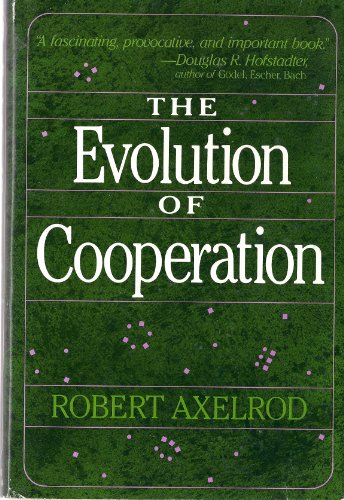
Using game theory and computer modeling, Axelrod proves mathematically that cooperation is a more successful strategy than competition in the long run. It provides the rigorous, modern academic backing for the intuitive claims Kropotkin made over a century ago.

Scott examines how state-led social engineering projects often fail because they ignore the 'metis' (local, practical knowledge) and cooperative social structures that people naturally form. It shares the skeptical, anti-authoritarian, and history-focused lens of Kropotkin.

by Howard Zinn
Zinn’s classic history book mirrors Kropotkin’s methodology by focusing on the grassroots movements and collective actions of ordinary people rather than the 'great men' of history. It is a foundational text for understanding history through the lens of solidarity and resistance.

Not sure what they've already read?
Let them pick their next favorite with an Amazon Gift Card.
As an Amazon Associate, we earn from qualifying purchases.
As an Amazon Associate, we earn from qualifying purchases.