

Based on your book
Nazi Literature in the Americas
by Bolaño, Roberto
Roberto Bolano presents this work as a dry, academic encyclopedia detailing the lives and works of imaginary right-wing writers across the Americas. It is a collection of brief, biographical sketches that document the careers of mediocre poets and novelists who share a common, fanatical devotion to fascist ideology. The reading experience is cold, detached, and bitingly funny. Bolano treats these monstrous figures with the same scholarly precision one might apply to a list of historical luminaries, creating a jarring disconnect that highlights the banality of evil. It is not a novel in the traditional sense, but a series of interconnected, dark vignettes that reward those who enjoy literary puzzles. If you appreciate satire that refuses to hold your hand and have an interest in the intersection of intellectual vanity and political extremism, this book will keep you thoroughly unsettled.
10 Books similar to 'Nazi Literature in the Americas'
Since you enjoyed the way Bolano weaponized the format of an encyclopedia, these selections focus on the same brand of metafictional gamesmanship. Whether it is the labyrinthine scholarly footnotes in Nabokov or the obsessive, biographical fabrications of Borges, these authors share a fascination with constructing reality through invented archives. We chose these titles because they mirror the dark, intellectual irony found in Bolano's work, prioritizing experimental structures and cynical character studies that dissect the nature of failure, ego, and the thin line between historical fact and creative madness.
As an Amazon Associate, we earn from qualifying purchases.

As a primary influence on Bolaño, this collection of short, pseudo-biographical sketches of infamous criminals shares the same playful yet dark approach to historical fabrication. It masterfully blends fact and fiction, mirroring the encyclopedic and inventive spirit found in Nazi Literature in the Americas.

This collection of short, pseudo-biographical sketches of infamous criminals shares the same playful yet dark approach to historical fabrication as Bolaño's work. It masterfully blends fact and fiction, mirroring the encyclopedic and inventive spirit found in Nazi Literature in the Americas.

This surreal, darkly comic novel shares Bolaño's penchant for the absurd and the intellectually rigorous. Its labyrinthine narrative and obsession with strange, obsessive characters will resonate with readers who enjoy the metafictional playfulness of Nazi Literature in the Americas.

Like Bolaño's work, this book abandons traditional narrative structure in favor of a catalog-like format that explores imaginary places and ideas. It offers a similarly cerebral, poetic, and detached examination of human nature and civilization.

Love to read on the go?
Explore Kindle e-readers and take your books with you.
As an Amazon Associate, we earn from qualifying purchases.

Borges is the spiritual godfather to Bolaño's literary games, and this collection is essential for anyone who enjoys the way Nazi Literature in the Americas constructs entire worlds out of scholarly footnotes and invented bibliographies. It is the gold standard for intellectual, metafictional literature.

Bernhard’s relentless, obsessive prose style and his focus on the crushing weight of artistic failure and ego align perfectly with the tone of Bolaño's biographical sketches. It is a deeply cynical, brilliant examination of the lives of people consumed by their own mediocrity and madness.

This is the ultimate masterpiece of the 'fictional literary critique' genre, featuring a poem followed by a completely unhinged, unreliable commentary. Readers who loved the way Bolaño used the structure of an encyclopedia to hide dark truths will find this equally rewarding and complex.

This is a non-fiction encyclopedia of mythical creatures that shares the exact structural DNA of Nazi Literature in the Americas. It demonstrates the same love for cataloging the obscure, the bizarre, and the invented, providing a fascinating look at how literature constructs reality.

Markson’s novel is a fragmented, highly intellectual exploration of a woman who believes she is the last person on earth, filled with references to art, history, and philosophy. Its experimental structure and focus on the isolation of the mind will appeal to fans of Bolaño's more avant-garde tendencies.
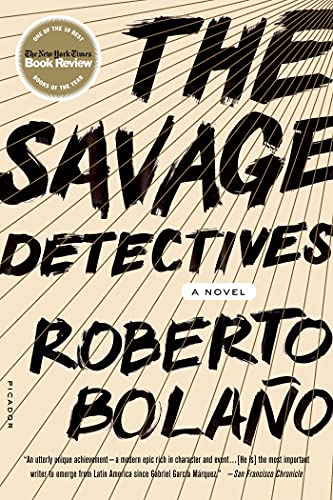
If you enjoyed the literary obsession and the sprawling, fragmented nature of Nazi Literature in the Americas, this is the logical next step. It expands those themes into a massive, globe-trotting epic about poets, memory, and the search for meaning.

Not sure what they've already read?
Let them pick their next favorite with an Amazon Gift Card.
As an Amazon Associate, we earn from qualifying purchases.
As an Amazon Associate, we earn from qualifying purchases.