

Based on your book
Nazi Literature in the Americas (New Directions Paperbook) by Roberto Bola?o
by Roberto Bolaño
This book is a fake encyclopedia of right-wing writers who never existed. Roberto Bolano presents a gallery of absurd, pathetic, and truly dark figures, cataloging their lives, failures, and minor literary contributions with the dry, detached precision of an academic. It is a cynical, often hilarious exercise in world-building that forces you to confront how easily history can be fabricated and how persistent the ego is, even in the service of abhorrent ideas. The reading experience is intellectual and deeply ironic; it feels like sifting through the archives of a parallel universe where literature is a weapon of the mediocre. If you enjoy dry wit, structural experimentation, and stories that reward a skeptical, observant mind, this will keep you hooked. It is for those who prefer their fiction to be a little bit dangerous and entirely unconcerned with sentimentality.
10 Books similar to 'Nazi Literature in the Americas (New Directions Paperbook) by Roberto Bola?o'
If this collection of literary ghosts left you wanting more, these selections mirror that same obsession with the intersection of art, madness, and history. We chose these titles because they share that distinctively fragmented, meta-fictional DNA, whether through the encyclopedic puzzles of Borges and Pavic or the claustrophobic, obsessive prose of Bernhard and Nabokov. Each of these books plays with the architecture of storytelling, using the form of the biography, dictionary, or catalog to expose the darkness hidden within the creative spirit and the inherent fallibility of the written word.
As an Amazon Associate, we earn from qualifying purchases.

Bolaño's work is deeply indebted to Borges's penchant for creating labyrinthine, encyclopedic fictions that blur the lines between reality and literary critique. Readers who enjoyed the meta-fictional, intellectual puzzles of Nazi Literature in the Americas will find the same playful, mind-bending brilliance here.

This novel shares the absurdist, darkly comic, and surreal sensibilities found in Bolaño's portraits of failed writers. Its bizarre, dreamlike logic and satirical bite make it a perfect companion for those who appreciate Bolaño's cynical humor.

This collection of short, fictionalized biographies of real-life criminals mirrors the structure of Nazi Literature in the Americas perfectly. It captures the same fascination with the darker corners of history and the art of the biographical sketch.

Bernhard's obsessive, rhythmic prose and his focus on the failure of artistic genius resonate strongly with Bolaño's themes. Readers who enjoy the intense, claustrophobic examination of literary ambition and madness will find this essential reading.

Love to read on the go?
Explore Kindle e-readers and take your books with you.
As an Amazon Associate, we earn from qualifying purchases.

Like Bolaño's work, this book uses a fragmented, catalog-like structure to explore vast concepts through small, precise vignettes. It offers a similarly intellectual and imaginative exercise that rewards readers who enjoy structural experimentation.
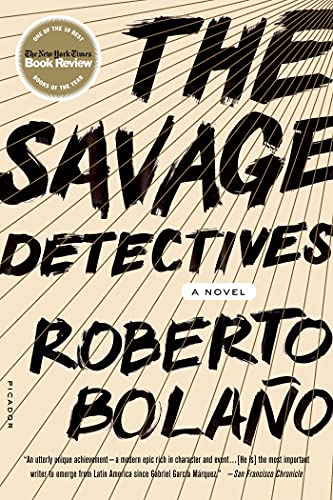
While this is a full-length novel rather than a mock-encyclopedia, it is the spiritual successor to the themes explored in Nazi Literature in the Americas. It dives deeper into the lives of the poets and literary outcasts that populate Bolaño's fictional universe.

This is the gold standard for meta-fiction and literary satire, featuring a poem and a lengthy, increasingly unhinged commentary. Fans of Bolaño's mock-biographies will delight in the layers of deception and intellectual gamesmanship present here.

This compendium of mythical creatures serves as a direct stylistic forebear to the encyclopedic format of Nazi Literature in the Americas. It is a testament to the power of the catalog format to create a world that feels both scholarly and dangerously unreal.

Structured as a dictionary, this novel allows the reader to navigate the narrative in any order, mirroring the non-linear, fragmented experience of reading Bolaño's mock-encyclopedia. It is a brilliant, complex experiment in form that challenges the reader's perception of history.

by W.G. Sebald
Sebald’s work blends travelogue, history, and biography into a melancholic, wandering narrative that feels deeply intellectual. Fans of Bolaño will appreciate the way Sebald weaves together disparate threads of history to create a haunting, cohesive atmosphere.

Not sure what they've already read?
Let them pick their next favorite with an Amazon Gift Card.
As an Amazon Associate, we earn from qualifying purchases.
As an Amazon Associate, we earn from qualifying purchases.