
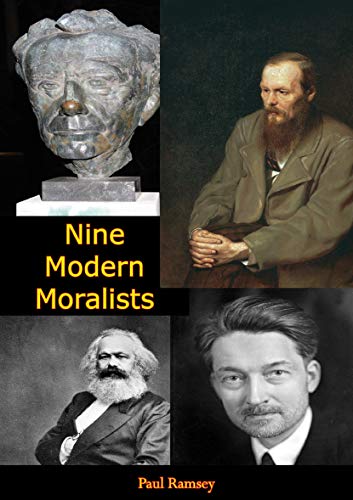
Based on your book
Nine Modern Moralists
by Paul Ramsey
Nine Modern Moralists invites you into the minds of some of the 20th century's most impactful thinkers, from Karl Marx to Jean-Paul Sartre. Paul Ramsey doesn't just list their ideas; he carefully dissects their ethical systems, showing how each philosopher grappled with fundamental questions of right and wrong, meaning, and human responsibility. The reading experience is intellectually rigorous, like a stimulating seminar where you're encouraged to think alongside the great minds. Ramsey's analysis is sharp and illuminating, pushing you to consider your own moral landscape in light of these profound perspectives. This book is for the reader who craves deep intellectual engagement, who wants to understand the historical currents that shaped modern moral dilemmas, and who is ready to undertake a serious journey of self-discovery through philosophical inquiry. It's a challenging but ultimately rewarding exploration of what it means to live ethically in a complex world.
10 Books similar to 'Nine Modern Moralists'
If you appreciated Paul Ramsey's deep dive into the architects of modern ethical thought, you'll find much to ponder in these selections. We've gathered books that continue Ramsey's exploration of moral dilemmas and the search for meaning, often directly from the pens of the philosophers he discusses, like Sartre and Kierkegaard. Others, like Camus and Nietzsche, push further into the existential questions and radical critiques of traditional morality that define modern thought. These recommendations will further your journey into self-discovery and offer a broader cultural analysis of how humans grapple with profound ethical challenges.
As an Amazon Associate, we earn from qualifying purchases.

This foundational text directly addresses the core tenets of existentialist philosophy, a key intellectual movement explored by Ramsey. Readers will appreciate Sartre's clear, concise articulation of concepts like freedom, responsibility, and the search for meaning in a godless world, offering a direct voice from one of the "modern moralists."

by Albert Camus
Camus, another figure often associated with the moral questions Ramsey examines, delves into the concept of the absurd and how to find meaning and rebellion in a world devoid of inherent purpose. Its blend of philosophical essay and literary reflection will resonate with readers who appreciate deep intellectual inquiry into the human condition.

A direct work by one of the "modern moralists" himself, this book offers a profound and challenging exploration of faith, ethics, and the individual's relationship with the divine. Fans of Ramsey will appreciate Kierkegaard's intense introspection and his wrestling with the limits of reason and the demands of absolute commitment.

Nietzsche's radical critique of traditional morality, truth, and human values is central to understanding the modern ethical landscape Ramsey analyzes. This book challenges readers to re-evaluate their fundamental assumptions, offering a powerful and often provocative voice from another key figure in modern moral thought.

Love to read on the go?
Explore Kindle e-readers and take your books with you.
As an Amazon Associate, we earn from qualifying purchases.

While not a direct philosophical treatise on specific moralists, Frankl's profound exploration of finding meaning amidst unimaginable suffering directly addresses the existential questions central to Ramsey's work. It offers a powerful, real-world testament to the human spirit's capacity for purpose and moral choice, even in the bleakest circumstances.

by Albert Camus
Expanding on themes from "The Myth of Sisyphus," Camus here offers a comprehensive philosophical essay on the nature of rebellion and its ethical implications in modern society. This deep dive into the historical and philosophical roots of revolt will appeal to readers interested in the societal and political dimensions of moral inquiry, a natural extension of Ramsey's analysis.

For readers who appreciate the intellectual context and critical analysis found in Ramsey's work, Russell's comprehensive history provides an invaluable overview of the philosophical traditions that shaped the "modern moralists." It offers a clear, often witty, and critical perspective on the evolution of ideas, including those concerning ethics and human values.
This book offers a trenchant conservative critique of modern thought, arguing that the decline of absolute moral standards and the embrace of relativism have profound societal consequences. Readers of Ramsey will appreciate its rigorous intellectual argument and its focus on the moral implications of philosophical shifts, mirroring Ramsey's concern with modern ethics.

by Allan Bloom
Bloom's influential critique explores the state of contemporary higher education and the erosion of intellectual and moral seriousness, particularly in relation to moral relativism and the decline of engagement with great books. Fans of Ramsey's analysis of modern moral thought will find a compelling, if controversial, argument about the challenges to ethical reasoning in the modern world.

While ancient, Marcus Aurelius's personal reflections on Stoic philosophy offer a timeless guide to ethical living, self-discipline, and finding peace amidst life's challenges. Readers who appreciate Ramsey's focus on the individual's moral journey will find a deep resonance in these introspective thoughts on duty, virtue, and the human condition, providing a classical counterpoint to modern moralists.

Not sure what they've already read?
Let them pick their next favorite with an Amazon Gift Card.
As an Amazon Associate, we earn from qualifying purchases.
As an Amazon Associate, we earn from qualifying purchases.