

Based on your book
Once Upon An Algorithm
by O’Connor, Clara
Once Upon An Algorithm invites you to pull back the curtain on the subtle, often invisible, rule sets that govern everything from the fairy tales we tell to the social systems we navigate daily. Clara O'Connor has a knack for dissecting the familiar, revealing the underlying logic – the 'algorithms' – that dictate outcomes, shape our choices, and even influence our sense of self. This isn't a tech manual; it's a wonderfully quirky and deeply intellectual journey that makes you look at the world with fresh eyes, seeing patterns where you once saw chaos. Reading it feels like having a brilliant, slightly eccentric friend explain the universe over coffee. It's a genuinely thought-provoking experience, perfect for anyone who loves to understand the 'how' and 'why' behind human behavior, societal structures, and the very stories we live by. If you enjoy analytical deep dives and surprising connections, this book will give you plenty to chew on.
10 Books similar to 'Once Upon An Algorithm'
For readers who found themselves captivated by Clara O'Connor's unique ability to uncover the hidden algorithms shaping our stories and lives, our curated list offers further intellectual adventures. Each of these books shares that same analytical curiosity, whether they're dissecting the underlying logic of human decisions in Algorithms to Live By, revealing the invisible structures of literature with How to Read Literature Like a Professor, or exploring the grand narratives of humanity in Sapiens. They all invite you to pull back the curtain, think critically, and appreciate the intricate patterns that govern our world, much like O'Connor herself.
As an Amazon Associate, we earn from qualifying purchases.

Cheng, a mathematician, explores how logic can be applied to everyday situations and societal issues with a clear, engaging, and often humorous style. Fans of O'Connor's analytical approach to narrative structures will appreciate Cheng's ability to demystify complex logical concepts and show their relevance to the "illogical" world, much like O'Connor demystifies the "algorithms" of stories.

by Brian Christian and Tom Griffiths
This book directly applies computer science algorithms to human decision-making, from optimal stopping to sorting and caching. Readers who enjoyed O'Connor's exploration of the underlying logic in seemingly non-computational domains will find a similar fascinating intersection of technology and everyday life, presented with clarity and practical insights.

Harari offers a sweeping, analytical history of humanity, deconstructing the "stories" and systems that have shaped our species. Its grand scope and incisive examination of the underlying patterns of human civilization will appeal to readers who appreciate O'Connor's intellectual curiosity and her ability to reveal the hidden structures within complex phenomena.

Kahneman, a Nobel laureate, explores the two systems that drive human thought and decision-making, revealing the "algorithms" of our minds. Readers who enjoyed O'Connor's systematic breakdown of narrative or logical structures will find a compelling parallel in Kahneman's rigorous yet accessible analysis of cognitive biases and the mechanics of human judgment.

Not sure what they've already read?
Let them pick their next favorite with an Amazon Gift Card.
As an Amazon Associate, we earn from qualifying purchases.
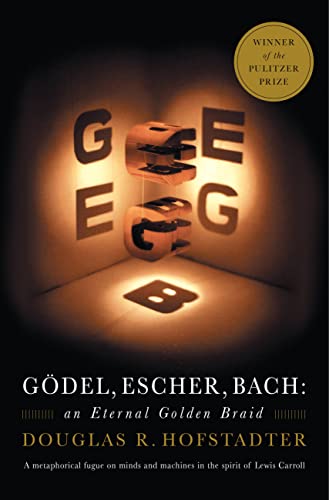
This Pulitzer-winning book is a profound exploration of logic, mathematics, artificial intelligence, and the nature of consciousness, presented through an intricate tapestry of dialogues and essays. Its interdisciplinary approach to finding patterns and meaning in disparate fields, much like O'Connor might connect algorithms to fairy tales, will deeply resonate with intellectually curious readers.
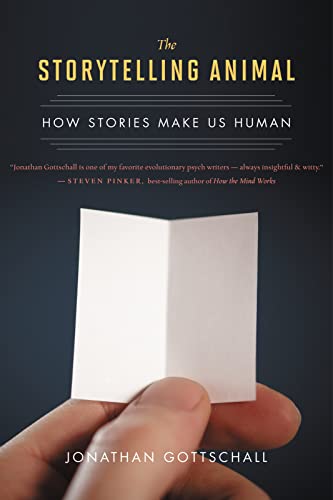
Gottschall delves into the science and psychology behind why humans are so compelled by stories, exploring their evolutionary purpose and universal structures. For fans of O'Connor's examination of narrative "algorithms," this book offers a fascinating, research-backed look at the fundamental human need for storytelling and how it shapes our minds and societies.

by Judea Pearl and Dana Mackenzie
Pearl, a pioneer in artificial intelligence, introduces a revolutionary theory of causality, explaining how we can understand and model cause-and-effect relationships. Readers who appreciate O'Connor's systematic approach to understanding underlying structures will be captivated by this book's rigorous yet accessible exploration of the "ladder of causation" and its implications for science, philosophy, and everyday life.

Foster provides a witty and insightful guide to understanding the hidden codes and patterns in literature, from archetypes to symbolism. Fans of O'Connor's deconstruction of narrative will enjoy Foster's accessible approach to revealing the "algorithms" of storytelling, enhancing their appreciation and comprehension of literary works.

This biography tells the extraordinary story of Srinivasa Ramanujan, a self-taught Indian mathematical genius whose intuitive insights defied conventional logic. Readers who appreciate the beauty and mystery of underlying patterns, similar to O'Connor's exploration of algorithms, will be inspired by Ramanujan's profound connection to mathematical truth and the compelling narrative of his life.

Set in a future intellectual utopia, this novel centers on a complex, abstract game that synthesizes all human knowledge and culture. Readers drawn to O'Connor's exploration of systems, patterns, and the intellectual deconstruction of narratives will be captivated by Hesse's philosophical meditation on the pursuit of knowledge, the interplay of art and science, and the search for meaning within intricate structures.

Prefer to listen?
Try Audible and hear the story instead of reading it.
As an Amazon Associate, we earn from qualifying purchases.
As an Amazon Associate, we earn from qualifying purchases.