

Based on your book
Open Veins of Latin America
by Eduardo Galeano
Eduardo Galeano's Open Veins of Latin America isn't a detached historical account; it's an urgent, often heartbreaking journey through five centuries of exploitation. Galeano traces how Latin America's vast natural wealth — from gold and silver to coffee and oil — was systematically extracted, flowing into the coffers of foreign powers while leaving a legacy of poverty and injustice for its people. The reading experience is less like a textbook and more like a powerful, indignant epic, brimming with vivid prose and relentless facts. You'll feel the weight of history and the resilience of a plundered continent. This is for readers who want to deeply understand the roots of global inequality, who seek a passionate, critical perspective on power dynamics, and who appreciate history told with both scholarly depth and profound human empathy.
10 Books similar to 'Open Veins of Latin America'
If Open Veins of Latin America ignited a fire in you, our recommendations continue that essential conversation. We’ve selected books that share Galeano’s unflinching commitment to exposing the historical roots of exploitation and the devastating impact of power dynamics on marginalized communities. You'll find other works that dissect the mechanisms of global capitalism, illuminate the human cost of resource extraction, and empower you with a deeper understanding of social justice movements, all told with similar analytical rigor and a profound sense of urgency.
As an Amazon Associate, we earn from qualifying purchases.

by Howard Zinn
Zinn's magnum opus offers a powerful counter-narrative to traditional historical accounts, focusing on the struggles of marginalized groups and the impact of power structures, mirroring Galeano's passionate critique of exploitation and injustice from the perspective of the oppressed. It dissects American history with a similar critical lens, revealing the 'open veins' within its own development.

by Frantz Fanon
This seminal work dissects the psychological and societal impacts of colonialism and the dynamics of liberation struggles, providing a profound theoretical framework that complements Galeano's historical narrative of exploitation and resistance in the Global South. Fanon's intense analysis of decolonization resonates with Galeano's call for understanding the roots of oppression.

González meticulously traces the historical and economic forces that have shaped Latin American migration to the U.S., directly linking U.S. foreign policy and economic interests to the conditions in Latin American countries, much like Galeano exposes the external influences on the continent's fate. It provides a crucial contemporary extension of Galeano's historical analysis.
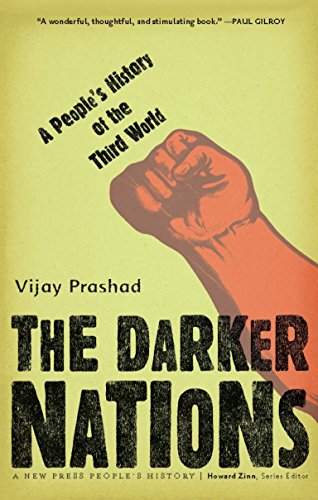
Prashad offers a sweeping historical account of the anti-colonial movements and the struggles of the 'Third World' against Western dominance, expanding on Galeano's themes of exploitation and resistance with a global perspective and similar critical analysis. It's an epic and informative exploration of post-colonial challenges and aspirations.

Not sure what they've already read?
Let them pick their next favorite with an Amazon Gift Card.
As an Amazon Associate, we earn from qualifying purchases.

by Sven Beckert
Beckert's work masterfully demonstrates how a single commodity, cotton, drove global capitalism, slavery, and industrialization, revealing the brutal mechanisms of wealth accumulation through exploitation, a theme central to Galeano's analysis of Latin America's resources. It's a complex and analytical historical deep dive into the origins of global inequality.

by Naomi Klein
Klein investigates how political and economic crises are exploited to implement radical free-market policies, offering a contemporary and global perspective on the 'open veins' of resource extraction and economic subjugation that Galeano so passionately detailed for Latin America. It's a disturbing yet analytical exposé of modern economic exploitation.
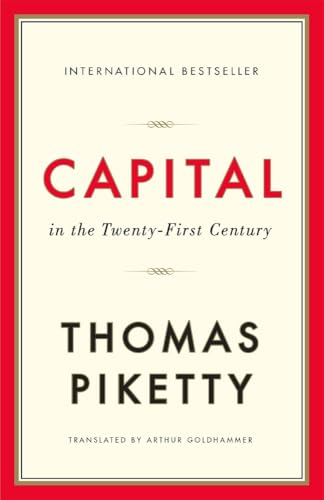
Piketty's monumental study provides a rigorous, data-driven analysis of wealth and income inequality across centuries, offering a profound understanding of the systemic economic structures that perpetuate disparity, echoing Galeano's critique of global economic exploitation. It's a complex and intellectual exploration of power dynamics through an economic lens.

While fiction, Steinbeck's powerful novel vividly portrays the devastating human cost of economic exploitation, displacement, and social injustice during the Great Depression, resonating with Galeano's emotional and gritty depiction of the suffering caused by systemic oppression. It captures the heartbreaking reality of those caught in the 'open veins' of their own land.

by Edward S. Herman and Noam Chomsky
This book critically examines how media systems serve to manufacture consent for dominant political and economic ideologies, sharing Galeano's deep skepticism of official narratives and his analytical rigor in exposing the mechanisms of power and control. It's an intellectual and informative look at how power dynamics are maintained through information.

by Duncan Green
Green offers a comprehensive and accessible overview of Latin America's contemporary political, economic, and social landscape, building upon the historical context provided by Galeano to explain current challenges and movements for change in the region. It's an informative and thought-provoking update for readers interested in the ongoing struggles and resilience of the continent.

Prefer to listen?
Try Audible and hear the story instead of reading it.
As an Amazon Associate, we earn from qualifying purchases.
As an Amazon Associate, we earn from qualifying purchases.