

Based on your book
Our Enemies in Blue
by Williams, Kirista
Kristian Williams provides a cold, hard look at the history and function of the American police force. Rather than focusing on individual bad actors, he digs into the institution itself, framing policing as a tool for maintaining social control and protecting the interests of the powerful. The reading experience is dense and unflinching, demanding your full attention as it strips away the myth of the thin blue line to reveal a system built on coercion. It feels less like a typical history book and more like a forensic audit of state power. You should pick this up if you are ready to dismantle your assumptions about law enforcement and prefer analytical, research-heavy writing that prioritizes systemic critique over comfortable narratives. It is an essential, if heavy, foundation for understanding the modern carceral state.
10 Books similar to 'Our Enemies in Blue'
When you finish Our Enemies in Blue, you will likely find yourself looking for more ways to contextualize the systemic violence and power dynamics Williams uncovers. I have curated this list to help you move from his historical analysis into actionable abolitionist theory and global perspectives. Whether you want to explore the economic roots of incarceration with Ruth Wilson Gilmore or seek the practical, community-centered solutions proposed by Mariame Kaba, these titles deepen the conversation. They share a commitment to challenging the necessity of state force and imagining a truly different future.
As an Amazon Associate, we earn from qualifying purchases.

Like Williams' work, this seminal text provides a rigorous, systemic critique of the American legal and carceral apparatus. It is essential reading for anyone seeking to understand the historical and structural mechanisms that perpetuate state-sanctioned inequality.

Davis offers a foundational argument for prison abolition that mirrors the critical, anti-authoritarian lens found in 'Our Enemies in Blue.' This book challenges the reader to rethink the necessity and morality of the modern penal system.

Vitale provides a comprehensive, policy-oriented critique of modern policing strategies that aligns perfectly with Williams' focus on the limitations and dangers of law enforcement. It is a pragmatic and deeply researched companion piece to the broader abolitionist arguments.

Gilmore’s masterwork explores the geography and political economy of the prison-industrial complex with a depth that complements Williams' historical analysis. It is a dense, academic, and highly rewarding study of how state power expands through incarceration.

Love to read on the go?
Explore Kindle e-readers and take your books with you.
As an Amazon Associate, we earn from qualifying purchases.

Forman examines the complex, often overlooked role that Black officials played in the development of tough-on-crime policies, adding a nuanced layer to the history of policing. Readers who appreciated the historical research in Williams' book will find this perspective equally challenging and enlightening.
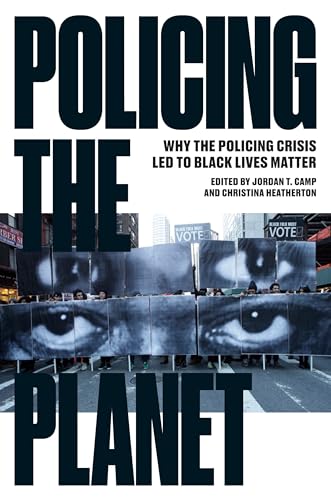
by Jordan T. Camp and Christina Heatherton
This collection of essays expands the conversation on policing from a local American issue to a global phenomenon, much like the systemic critique Williams presents. It connects the dots between neoliberalism, state violence, and grassroots resistance movements.
Also written by the author of 'Our Enemies in Blue,' this work serves as an essential follow-up that synthesizes his arguments into a more focused, activist-oriented manifesto. It is the natural next step for readers who want to deepen their understanding of his specific abolitionist framework.

by Mariame Kaba and Andrea J. Ritchie
Kaba and Ritchie provide a clear, accessible, and visionary roadmap for what a world without police could look like, building on the critical foundation Williams established. It is a hopeful yet grounded exploration of transformative justice.

by Geo Maher
Maher offers a provocative and historically grounded argument that challenges the very premise of police legitimacy, echoing the central thesis of 'Our Enemies in Blue.' This book is ideal for readers interested in the intersection of political theory and radical social change.

Ritchie centers the often-neglected experiences of women of color within the broader narrative of police violence, providing a critical intersectional analysis. It is a vital, necessary expansion of the themes of state power and systemic abuse found in Williams' work.

Not sure what they've already read?
Let them pick their next favorite with an Amazon Gift Card.
As an Amazon Associate, we earn from qualifying purchases.
As an Amazon Associate, we earn from qualifying purchases.