

Based on your book
Out of the Silent Planet
by Lewis, C.S.
Elwin Ransom, a Cambridge philologist, is kidnapped and whisked away on a spaceship to Malacandra, a planet that bears little resemblance to the cold, dead Mars he expected. Instead of a barren wasteland, he finds an intricate, living world governed by a strange, celestial hierarchy. As he navigates the languages and customs of the native hrossa and sorns, he realizes that his own home, Earth, is considered a quarantined, silent planet in the eyes of the cosmos. The prose is cerebral and atmospheric, favoring philosophical inquiry over high-octane action. You feel the isolation of space and the quiet wonder of discovery as Ransom sheds his human biases. This is a book for readers who enjoy slow-burn science fiction, linguistic puzzles, and stories that use the alien landscape as a mirror to reflect the failings and potential of humanity.
10 Books similar to 'Out of the Silent Planet'
Since you enjoyed the intellectual and spiritual weight of Ransom's journey, we curated these titles to further explore the intersection of cosmology and philosophy. If you appreciate the way Lewis uses the alien as a lens for human morality, you will find similar depth in the works of Le Guin and Lem, both of whom excel at the fish-out-of-water trope. For those drawn to the theological and metaphysical underpinnings of the story, the fiction of Chesterton and Lindsay offers that same sense of a world hiding a deeper, invisible truth.
As an Amazon Associate, we earn from qualifying purchases.

by C.S. Lewis
As the direct sequel to Out of the Silent Planet, this novel continues Ransom's journey, deepening the philosophical and theological exploration of the cosmos. It perfectly mirrors the original's blend of science fiction, spiritual allegory, and vivid, otherworldly landscapes.

This classic work of metaphysical science fiction shares Lewis's interest in using a journey to another planet to explore profound moral and spiritual questions. It is a surreal, challenging, and deeply imaginative precursor to the genre that fans of Lewis's cosmic scope will appreciate.

by H.G. Wells
Lewis was heavily influenced by Wells, and this seminal work provides a stark, grounded contrast to Lewis's more theological approach to first contact. It captures a similar sense of awe and terror regarding the unknown, serving as a foundational text for the genre.
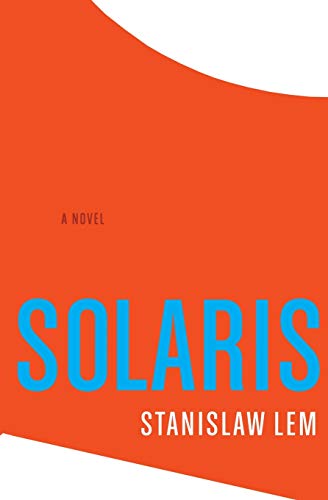
While more psychologically oriented than Lewis's work, Solaris explores the fundamental difficulty of communicating with a truly alien intelligence. It shares the same intellectual rigor and sense of profound isolation that Ransom experiences on Malacandra.

Love to read on the go?
Explore Kindle e-readers and take your books with you.
As an Amazon Associate, we earn from qualifying purchases.

Le Guin's masterpiece excels at creating a fully realized alien culture and environment, much like Lewis's depiction of the hrossa and sorns. It uses the 'fish out of water' narrative to perform deep social and anthropological commentary.

This satirical novella uses a fantastical setting to explore higher dimensions and social hierarchy, mirroring Lewis's use of science fiction as a vehicle for philosophical inquiry. It is brief, witty, and intellectually stimulating.

Though the tone is far more horrific, Lovecraft's novella shares the sense of discovering an ancient, non-human civilization that challenges the protagonist's understanding of history. It captures the 'sense of wonder' regarding alien biology and antiquity that Lewis also explored.
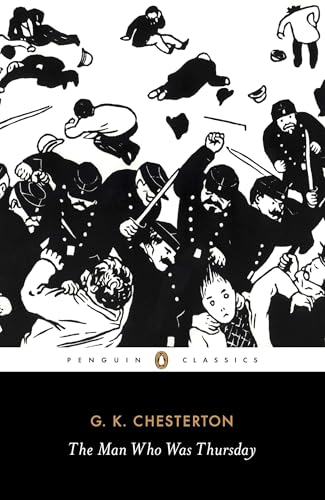
Chesterton was a massive influence on C.S. Lewis, and this novel shares that distinct blend of theological speculation, adventure, and surrealism. It features a protagonist thrust into a strange, conspiratorial world that feels both real and allegorical.

This novel explores the evolution of humanity under the guidance of a superior extraterrestrial race, echoing Lewis's interest in the cosmic destiny of mankind. It is a classic of the genre that balances high-concept science fiction with deep, existential themes.

This post-apocalyptic classic examines the role of religion and history in the survival of civilization, themes that are central to Lewis's work. Its cyclical view of history and focus on preserving knowledge provide a similar intellectual weight.

Not sure what they've already read?
Let them pick their next favorite with an Amazon Gift Card.
As an Amazon Associate, we earn from qualifying purchases.
As an Amazon Associate, we earn from qualifying purchases.