

Based on your book
Partition
by Barney White-Spunner
Barney White-Spunner approaches the 1947 partition of India and Pakistan not just as a historical event, but as a complex administrative and human catastrophe. He meticulously untangles the web of political miscalculations, colonial arrogance, and communal desperation that led to the largest forced migration in human history. The narrative maintains a steady, analytical pace, shifting between the high-stakes boardrooms of British officials and the chaotic, blood-stained streets of Lahore and Delhi. It is a sobering read that avoids sensationalism in favor of a cold, clear-eyed examination of how empires collapse and the devastating price paid by those caught in the middle. If you appreciate history that balances macro-level geopolitical strategy with an unflinching look at the human cost of political failure, this book will leave you deeply affected.
10 Books similar to 'Partition'
Since you finished Partition, you are likely looking for narratives that bridge the gap between high-level diplomatic decisions and the visceral, lived reality of the people affected by them. Our selection focuses on the lingering cultural scars, the strategic failures of the British Raj, and the tangible artifacts of loss. Whether you want to explore the specific political machinations of figures like Mountbatten or the intimate oral histories preserved in personal objects, these titles expand on the themes of imperial decline and the ongoing search for identity in a post-colonial world.
As an Amazon Associate, we earn from qualifying purchases.

by Nisid Hajari
Like White-Spunner's work, this book provides a gripping, high-stakes narrative of the 1947 partition, focusing on the political miscalculations and the human cost of the division. It offers a similarly analytical look at the geopolitical consequences that still define the region today.

by Yasmin Khan
This book is essential for those who appreciated the depth of 'Partition,' as it shifts the focus from high-level politics to the devastating lived experience of the people on the ground. It masterfully balances scholarly rigor with the emotional weight of a nation being torn apart.

If you enjoyed understanding the origins of the modern Indian state in White-Spunner's book, this comprehensive history serves as the perfect follow-up. It explores how the chaos of 1947 eventually coalesced into a functioning, albeit complex, democracy.
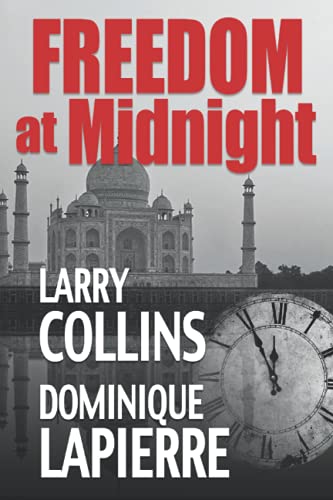
by Dominique Lapierre and Larry Collins
This classic narrative history captures the dramatic, final days of the British Raj with a cinematic flair that mirrors the storytelling style of 'Partition.' It excels at humanizing the key historical figures while painting a vivid picture of a crumbling empire.

Not sure what they've already read?
Let them pick their next favorite with an Amazon Gift Card.
As an Amazon Associate, we earn from qualifying purchases.

Dalrymple is a master of Indian history, and this account of the 1857 uprising shares the same meticulous research and evocative prose found in White-Spunner's work. It provides crucial context for the colonial tensions that would eventually lead to the 1947 partition.

This book offers a unique, intimate perspective on the partition by focusing on the material culture—the objects people carried across borders. It complements the macro-historical view of 'Partition' by grounding the trauma in tangible, personal artifacts.

For readers interested in the colonial underpinnings of the partition, Tharoor’s sharp, analytical critique of British rule provides the necessary context for why the 1947 separation was so catastrophic. It is a powerful, argumentative companion to the events described in White-Spunner's history.

Sarila provides a fascinating, alternative look at the strategic and geopolitical motivations behind the partition, challenging conventional narratives. Fans of the political maneuvering detailed in 'Partition' will appreciate this deep dive into the 'Great Game' of imperial power.
This scholarly yet accessible work explores how the memory of partition has been constructed and suppressed over time, offering a different lens than the purely chronological approach of White-Spunner. It is perfect for readers who want to understand the lasting cultural and psychological scars of 1947.

by David Butler
Focusing on the pivotal figure of Lord Mountbatten, this book provides a character-driven look at the rapid, often reckless, dismantling of the British Raj. It offers the same level of granular detail regarding the decision-making processes that readers of 'Partition' will find compelling.

Prefer to listen?
Try Audible and hear the story instead of reading it.
As an Amazon Associate, we earn from qualifying purchases.
As an Amazon Associate, we earn from qualifying purchases.