

Based on your book
Power and Progress
by Acemoglu, Daron
Acemoglu and Johnson challenge the assumption that technological advancement inevitably leads to widespread prosperity. Instead, they examine the historical choices behind who benefits from innovation and who gets left behind. The book functions as a rigorous, wide-ranging audit of how power dynamics dictate the trajectory of our tools, from the steam engine to modern artificial intelligence. The prose is measured and analytical, demanding your full attention as it dissects the moral dilemmas inherent in economic growth. It feels less like a standard business book and more like a long-form conversation with an expert who is deeply concerned about our collective future. If you enjoy peeling back the layers of social systems and prefer arguments backed by historical precedent rather than techno-optimist hype, this is a dense, rewarding read that will fundamentally change how you view your smartphone and the office software you use daily.
10 Books similar to 'Power and Progress'
Since you found the arguments in Power and Progress compelling, these selections were curated to expand on the interplay between technology, governance, and human welfare. We chose titles that bridge the gap between abstract economic theory and the lived reality of systemic inequality. Whether you are interested in the historical lessons of state capacity found in The Narrow Corridor or the ground-level social impact documented in Automating Inequality, these books share a common focus on how institutional design, rather than just market forces, determines whether our future is one of shared progress or deepening divides.
As an Amazon Associate, we earn from qualifying purchases.

by Daron Acemoglu and James A. Robinson
Written by one of the co-authors of Power and Progress, this foundational text provides the essential historical framework for understanding the institutional roots of prosperity and poverty. It mirrors the analytical rigor and focus on how power dynamics shape economic outcomes that define Acemoglu's later work.

by Erik Brynjolfsson and Andrew McAfee
This book explores the transformative impact of digital technologies on the economy and labor markets, directly paralleling the central questions in Power and Progress about AI and automation. It offers a similarly optimistic yet cautionary look at how we must adapt our institutions to harness technological potential.

by Daron Acemoglu and James A. Robinson
This work deepens the discussion of state capacity and societal liberty, providing the political science context that underpins the arguments in Power and Progress. Readers interested in the delicate balance between state power and individual freedom will find this essential reading.
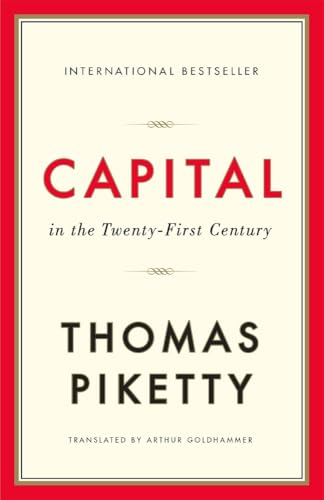
Piketty's magnum opus provides the deep economic data and historical analysis regarding wealth inequality that serves as a necessary backdrop for understanding the technological disparities discussed in Power and Progress. It shares a similar scope, ambition, and intellectual density.

Prefer to listen?
Try Audible and hear the story instead of reading it.
As an Amazon Associate, we earn from qualifying purchases.

by Henry A. Kissinger, Eric Schmidt, and Daniel Huttenlocher
This book examines the geopolitical and societal implications of artificial intelligence, offering a complementary perspective to the economic focus of Power and Progress. It shares the same urgent, high-level concern regarding how technology reshapes human society and governance.

Eubanks provides a ground-level view of how data-driven technologies can exacerbate systemic inequality, serving as a powerful, real-world case study for the theoretical arguments in Power and Progress. It is a critical, sobering look at the human cost of technological 'progress.'

by Karl Polanyi
A classic work that explores the historical and economic shift toward market societies, providing the intellectual lineage for the arguments made in Power and Progress. It is an essential read for understanding how economic systems dictate human welfare.

Russell, a leading computer scientist, argues for a fundamental redesign of AI to ensure it remains aligned with human values, a key recommendation found in the conclusion of Power and Progress. It bridges the gap between technical reality and societal governance.

Frey provides a comprehensive history of how labor-replacing technologies have historically led to social unrest and political upheaval, directly echoing the historical lessons emphasized in Power and Progress. It is a vital companion for understanding the 'Luddite' perspective in modern economics.

by Richard Wilkinson and Kate Pickett
This book demonstrates how greater economic equality leads to better outcomes for all members of society, reinforcing the central thesis of Power and Progress that technology should be directed toward shared prosperity. It provides the sociological evidence that supports Acemoglu's economic arguments.

Love to read on the go?
Explore Kindle e-readers and take your books with you.
As an Amazon Associate, we earn from qualifying purchases.
As an Amazon Associate, we earn from qualifying purchases.