
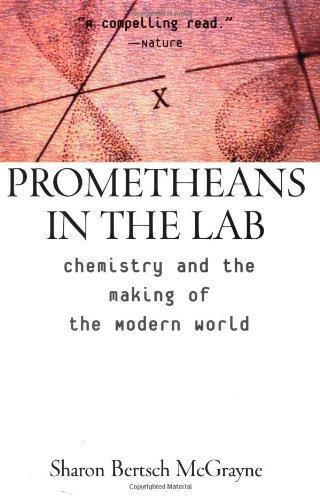
Based on your book
Prometheans in the Lab
by Bertsch McGrayne, Sharon
Prometheans in the Lab turns the spotlight on the chemists who fundamentally reshaped our modern reality, often with unforeseen and sometimes devastating consequences. McGrayne profiles the individuals behind inventions like synthetic dyes, leaded gasoline, and chemical fertilizers, moving beyond dry technical history to examine the messy, ego-driven, and often ethically compromised process of innovation. The pacing is deliberate and observational, feeling more like a series of investigative portraits than a standard history text. It is a book that asks you to hold two opposing thoughts at once: the brilliance of human ingenuity and the terrifying scale of our potential for unintended harm. This is essential reading for anyone who wants to understand how the invisible, industrial world around us was built, and who prefers their science writing with a heavy dose of social context and moral inquiry.
10 Books similar to 'Prometheans in the Lab'
Since you enjoyed the way this book balances technical history with human drama, these selections were curated to further explore the hidden costs of progress. Titles like The Radium Girls and The Immortal Life of Henrietta Lacks mirror the focus on the ethical weight of scientific breakthroughs, while books such as The Disappearing Spoon and The Alchemy of Us highlight the profound ways specific substances have dictated our societal path. These recommendations are for readers who want to look behind the curtain of innovation to see the complex power dynamics and personal stakes involved.
As an Amazon Associate, we earn from qualifying purchases.

by Sam Kean
Like McGrayne's work, this book breathes life into the history of chemistry by focusing on the eccentric personalities and dramatic stories behind scientific discoveries. It captures the same blend of rigorous historical research and accessible, engaging storytelling that makes scientific progress feel like a compelling narrative.

This book mirrors the focus on the intersection of scientific advancement and human ethics found in McGrayne's work. It explores the profound consequences of a specific scientific breakthrough on the individual and society, maintaining a balance between meticulous reporting and emotional depth.

by Kate Moore
Fans of McGrayne's exploration of chemical impacts will appreciate this gripping account of the women who worked with radium. It highlights the dangerous, often overlooked consequences of industrial chemistry and the fight for accountability, matching the historical and investigative tone of 'Prometheans in the Lab'.

by Penny Le Couteur and Jay Burreson
This book shares the exact thematic premise of McGrayne's work by examining how specific chemical substances have shaped the course of human civilization. It is structured around the transformative power of science, offering readers a fascinating look at the 'why' and 'how' behind historical shifts.

Not sure what they've already read?
Let them pick their next favorite with an Amazon Gift Card.
As an Amazon Associate, we earn from qualifying purchases.

For readers interested in the 'Promethean' aspect of McGrayne's book—the dangerous fire of scientific discovery—this is the definitive account. It provides a masterful, complex narrative of the scientists involved in the Manhattan Project, exploring the moral weight of their inventions.

by Bill Bryson
Bryson captures the same sense of wonder and curiosity about the scientific world that permeates McGrayne's writing. While broader in scope, it shares the same accessible, narrative-driven approach to explaining complex scientific history and the personalities behind the breakthroughs.

Ramirez explores the symbiotic relationship between human invention and societal evolution, much like McGrayne's analysis of chemists. It offers a similarly insightful look at how specific materials and scientific innovations have fundamentally altered the fabric of our daily lives.

by Hope Jahren
While more autobiographical, this book provides an intimate, 'behind-the-scenes' look at the life of a scientist that complements McGrayne's biographical sketches. It captures the passion, frustration, and intellectual rigor required for scientific discovery, making it a perfect companion for fans of chemist biographies.

This book explores the intersection of science and culture during the Romantic era, offering the same historical depth found in McGrayne's work. It portrays science not as a dry discipline, but as a thrilling, dangerous, and transformative human endeavor.

Miodownik brings the same appreciation for the 'hidden' chemistry of everyday objects that McGrayne highlights in her profiles of industrial chemists. His narrative style is engaging and analytical, turning the study of materials into a fascinating exploration of human ingenuity.

Prefer to listen?
Try Audible and hear the story instead of reading it.
As an Amazon Associate, we earn from qualifying purchases.
As an Amazon Associate, we earn from qualifying purchases.