

Based on your book
Quantum Mechanics
by McIntyre, David H.
McIntyre avoids the common pitfall of hiding quantum mechanics behind impenetrable layers of pure abstraction. Instead, he centers the reader’s journey on the Dirac notation, building a logical architecture that makes the subject feel less like a series of disconnected paradoxes and more like a coherent, albeit strange, language. The pacing is deliberate and analytical, demanding your full attention as it balances rigorous mathematical derivation with conceptual clarity. You will not find breezy anecdotes here; rather, you will find a structured, intellectual challenge that treats the reader as a serious student of reality. It is a demanding, rewarding exercise in rewiring how you perceive the physical world. This book is for the reader who wants to move beyond popular science summaries and actually learn how to perform the calculations that define modern physics.
10 Books similar to 'Quantum Mechanics'
Since you appreciated the structured, pedagogical approach in McIntyre, these selections were curated to bridge the gap between textbook rigor and the deeper existential questions inherent in the field. We chose these titles because they oscillate between the technical mastery found in Sakurai and Nielsen, and the philosophical inquiry presented by Bell and Davies. Whether you are looking for the intuitive leaps of Feynman or the foundational bridge provided by Beiser, these books collectively expand on the analytical framework you have already started to build, helping you navigate the transition from student to practitioner.
As an Amazon Associate, we earn from qualifying purchases.

Considered the gold standard in undergraduate physics education, this text offers a rigorous, mathematically precise approach that complements McIntyre's pedagogical style. It is the natural next step for students looking to deepen their problem-solving skills in quantum theory.

Feynman's lectures are legendary for their intuitive and conceptual clarity, making them an essential companion to any formal textbook. Readers who appreciate McIntyre's clear explanations will find Feynman's unique, conversational approach to quantum mechanics both refreshing and deeply insightful.

Susskind bridges the gap between popular science and advanced textbooks by focusing on the essential mathematical concepts without unnecessary fluff. It mirrors McIntyre's focus on accessible yet rigorous instruction for the dedicated learner.

This book provides a brilliant, non-mathematical explanation of quantum electrodynamics that helps solidify the conceptual foundations laid out in McIntyre's textbook. It is perfect for readers who want to grasp the 'why' behind the equations.

Not sure what they've already read?
Let them pick their next favorite with an Amazon Gift Card.
As an Amazon Associate, we earn from qualifying purchases.

For readers ready to move beyond introductory material, this text offers a deeper look at the path integral formulation, a crucial topic in modern physics. It shares the same academic rigor and focus on fundamental principles found in McIntyre's work.
by John S. Bell
This collection of essays explores the philosophical foundations and implications of quantum mechanics, providing the critical context that textbooks often skim over. It is essential reading for students who want to understand the deeper, often debated, nature of quantum reality.
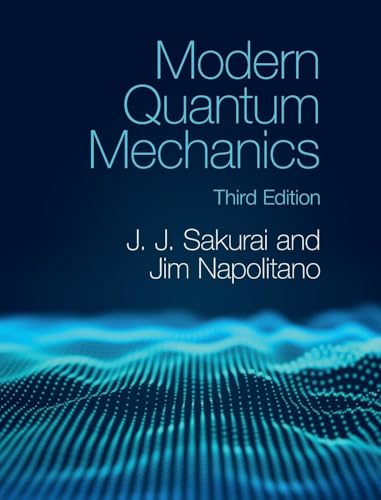
Sakurai's text is a classic graduate-level reference that expands on the concepts introduced in undergraduate texts like McIntyre's. It is highly valued for its sophisticated approach to symmetry and angular momentum, pushing the reader toward mastery.

by P.C.W. Davies and J.R. Brown
This book presents a series of interviews with leading physicists regarding the interpretation of quantum mechanics, offering a human perspective on the abstract math. It complements the technical study of McIntyre by exploring the ongoing debates in the field.
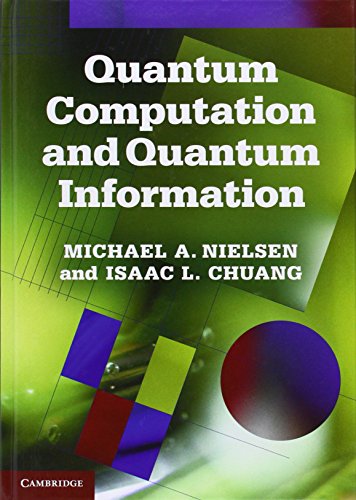
by Michael A. Nielsen and Isaac L. Chuang
Often referred to as the 'Bible' of quantum computing, this book applies the principles of quantum mechanics to information theory. It is the logical next step for students who enjoyed the practical, application-oriented sections of McIntyre's textbook.

Beiser provides a broad, clear overview of the transition from classical to modern physics, serving as an excellent bridge to the specific study of quantum mechanics. It shares the same commitment to clarity and student understanding found in McIntyre's work.

Prefer to listen?
Try Audible and hear the story instead of reading it.
As an Amazon Associate, we earn from qualifying purchases.
As an Amazon Associate, we earn from qualifying purchases.