

Based on your book
Regulating the Poor
by Piven, Frances Fox
Regulating the Poor is a cold, sharp look at the welfare system, arguing that government aid is less about charity and more about controlling the labor market during times of civil unrest. Piven and Cloward dismantle the myth that social policy is designed to help the vulnerable, showing instead how relief programs expand to soothe social instability and contract to force people back into low-wage, exploitative work. The reading experience is dense and academic, demanding your full attention as it strips away the moral language surrounding poverty to reveal the raw power dynamics underneath. It is not an uplifting read, but it is an essential one for anyone tired of surface-level political debates. If you want to understand the structural mechanics of how the state maintains order through economic coercion, this book will fundamentally change your perspective.
10 Books similar to 'Regulating the Poor'
Since you appreciate the structural critique in Piven and Cloward, these titles were curated to deepen your understanding of state-sponsored inequality and economic control. We selected works like The New Jim Crow and Golden Gulag because they mirror the way Piven analyzes the state as a tool for managing surplus populations. Whether you are interested in the historical rhetoric of deserving versus undeserving poor or the ground-level reality of labor exploitation, these books expand on the themes of institutional power, class struggle, and the deliberate dismantling of the social safety net.
As an Amazon Associate, we earn from qualifying purchases.

Like Piven and Cloward, Alexander provides a rigorous, systemic critique of how social institutions—in this case, the criminal justice system—are used to control and marginalize vulnerable populations. It is an essential companion for understanding the mechanisms of state-sponsored inequality in America.

Desmond’s ethnographic masterpiece echoes the structural analysis found in 'Regulating the Poor' by exposing how the housing market actively creates and sustains poverty. It bridges the gap between high-level policy theory and the visceral, lived reality of those trapped in the welfare cycle.

This book provides the historical context necessary to understand the economic shifts that necessitate the welfare systems Piven and Cloward critique. It is a masterful study of how policy decisions and institutional racism shape the economic outcomes of the poor.

While more personal in narrative than Piven's work, Ehrenreich’s immersive journalism exposes the impossibility of surviving on low-wage work, directly illustrating the 'work requirements' and economic traps discussed in 'Regulating the Poor.' It offers a ground-level view of the systemic failures that welfare policy attempts to manage.

Love to read on the go?
Explore Kindle e-readers and take your books with you.
As an Amazon Associate, we earn from qualifying purchases.
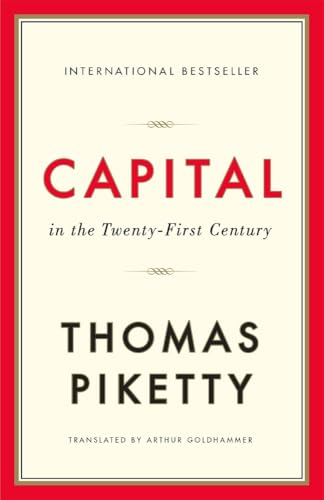
Piketty’s sweeping economic analysis provides the macro-level data that supports Piven and Cloward's arguments about wealth concentration and class struggle. It is a dense, intellectual read that fundamentally changes how one views the relationship between capital, labor, and state intervention.
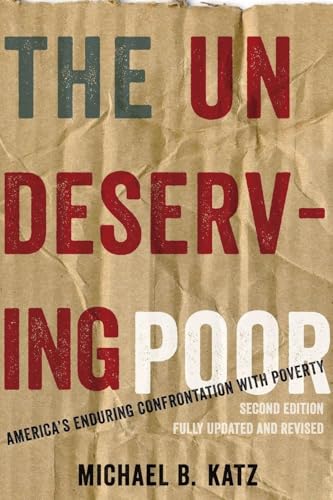
Katz directly engages with the historical rhetoric surrounding poverty that Piven and Cloward analyze, tracing how the distinction between the 'deserving' and 'undeserving' poor has been used to justify punitive social policies. It is an essential historical companion to the arguments in 'Regulating the Poor.'

by Frances Fox Piven and Richard A. Cloward
Written by the same authors, this book is the logical next step for readers interested in how the poor can actually exert power against the systems of control described in 'Regulating the Poor.' It shifts the focus from state regulation to the efficacy of grassroots organizing and protest.

Gilmore expands on the themes of state control and crisis management, arguing that prisons are a solution to political and economic crises in much the same way Piven and Cloward argued welfare was a solution to civil unrest. It is a brilliant, rigorous analysis of the carceral state.

by Karl Polanyi
This foundational text provides the theoretical framework for understanding the 'market society' that Piven and Cloward critique. Polanyi explains how the commodification of land, labor, and money necessitates the very social protections—and the state regulation of them—that 'Regulating the Poor' dissects.

MacLean uncovers the organized, intellectual, and political history behind the dismantling of the public sector, providing the 'other side' of the story Piven and Cloward tell. It is a chilling, well-researched look at the deliberate efforts to undermine the social safety net.

Not sure what they've already read?
Let them pick their next favorite with an Amazon Gift Card.
As an Amazon Associate, we earn from qualifying purchases.
As an Amazon Associate, we earn from qualifying purchases.