
![Sapiens [Tenth Anniversary Edition]](https://m.media-amazon.com/images/I/41heRvvFOtL._SL500_.jpg)
Based on your book
Sapiens [Tenth Anniversary Edition]
by Harari, Yuval Noah
Harari attempts a feat of intellectual gymnastics, tracing the path of our species from insignificant apes in the corner of Africa to the dominant rulers of the planet. Rather than a dry recitation of dates and battles, this is a look at the shared myths—money, nations, human rights—that allow millions of strangers to cooperate. The pacing is brisk and the tone is unapologetically provocative, often forcing you to pause and reconsider your most basic assumptions about progress and morality. You will likely feel a sense of existential vertigo as Harari strips away the comfort of human exceptionalism to reveal the biological and cultural accidents that defined our trajectory. This book is for the curious skeptic who prefers big-picture synthesis over granular detail and enjoys having their foundational beliefs about civilization poked, prodded, and dismantled.
10 Books similar to 'Sapiens [Tenth Anniversary Edition]'
Since Sapiens leaves you with more questions than answers, these selections are curated to help you continue that intellectual investigation. If you want to challenge the historical inevitability Harari proposes, look to The Dawn of Everything for a more nuanced view of human social complexity. If the evolutionary and biological roots of our behavior captured your attention, Behave and The Better Angels of Our Nature offer rigorous scientific deep dives into why we act the way we do. These books collectively expand on themes of power dynamics, institutional history, and the myths that underpin our modern existence.
As an Amazon Associate, we earn from qualifying purchases.

Like Sapiens, this book offers a sweeping, macro-historical analysis of how geography and environment shaped the development of human civilizations. It provides the same intellectual satisfaction of connecting disparate historical threads into a cohesive narrative about why the world is the way it is today.

by Will Durant and Ariel Durant
This concise volume distills thousands of years of human experience into essential patterns and recurring themes, mirroring Harari's attempt to find universal truths in our collective past. It is a perfect follow-up for readers who enjoyed the big-picture synthesis of Sapiens.
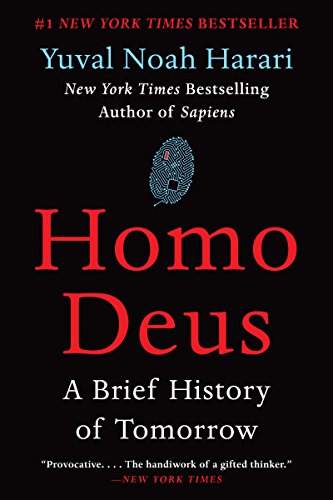
Written by the same author, this book acts as the logical sequel to Sapiens, shifting the focus from our past to our potential technological future. Readers who appreciated Harari's unique voice and provocative questioning of human nature will find this an essential continuation.

Pinker uses a similar blend of psychology, history, and data analysis to challenge the common perception that the world is getting worse, much like Harari challenges common perceptions about human progress. It is a deeply researched, data-driven look at the trajectory of humanity.

Prefer to listen?
Try Audible and hear the story instead of reading it.
As an Amazon Associate, we earn from qualifying purchases.

While focused on cosmology rather than anthropology, Hawking's masterpiece shares the same ambition as Sapiens: to explain the fundamental nature of our existence in accessible, engaging prose. Both books aim to make the reader feel small yet deeply connected to the grand scale of the universe.

Graeber provides a radical, anthropological re-examination of how economic systems have shaped human society, challenging the standard myths of history just as Harari does. It is a fascinating deep dive into the social structures that underpin civilization.
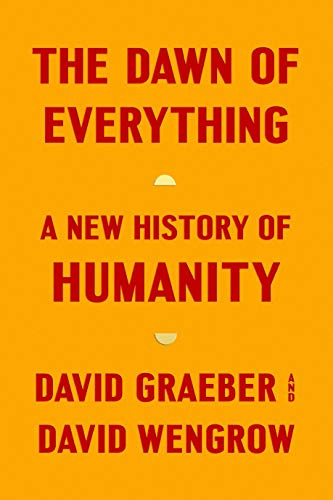
by David Graeber and David Wengrow
This book directly engages with the narratives presented in Sapiens, offering a more nuanced and evidence-based counter-argument regarding the 'inevitability' of human social structures. It is perfect for readers who want to continue the debate about how humans organized themselves before the dawn of agriculture.

by Daron Acemoglu and James A. Robinson
Like Sapiens, this book seeks to explain the vast disparities in wealth and power across the globe by looking at the historical development of political and economic institutions. It provides a compelling framework for understanding why some societies flourish while others stagnate.

Sapolsky examines the biological and evolutionary roots of human behavior with the same comprehensive scope that Harari applies to history. Readers who loved the 'why' behind human actions in Sapiens will appreciate this deep dive into the brain and evolutionary psychology.

Frankopan shifts the focus of history away from the Eurocentric view, offering a global perspective that aligns with the sweeping, inclusive narrative style of Sapiens. It re-frames the story of humanity by centering the interconnected trade networks of the East.

Love to read on the go?
Explore Kindle e-readers and take your books with you.
As an Amazon Associate, we earn from qualifying purchases.
As an Amazon Associate, we earn from qualifying purchases.