
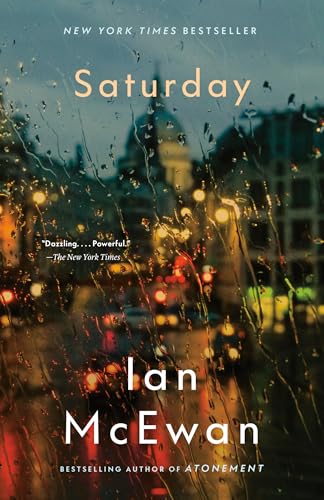
Based on your book
Saturday
by McEwan, Ian
Henry Perowne is a successful neurosurgeon living a life of enviable stability in London. The entire novel unfolds over the course of a single Saturday in 2003, tracking his thoughts, his routines, and his interactions with his family as a massive anti-war protest rages outside his window. What begins as a day of domestic comfort gradually shifts into an exercise in mounting dread. McEwan excels at tethering big, abstract anxieties about global instability to the minutiae of one man's conscious experience. The prose is hyper-observational, almost clinical, which makes the sudden intrusion of unpredictable violence feel particularly jarring. This is a book for readers who enjoy being trapped inside a brilliant but fallible mind. If you appreciate fiction that treats the mundane details of daily life with the same intensity as a thriller, you will find this deeply satisfying.
10 Books similar to 'Saturday'
Since you appreciated the way Saturday balances domestic comfort with the threat of sudden, chaotic violence, these selections focus on the fragility of the bourgeois experience. We have curated a list that leans into the intersection of high-register prose and moral ambiguity. Whether you are looking for more of McEwan’s surgical precision in dissecting human behavior, or the works of authors like Zadie Smith and Alan Hollinghurst who capture the frantic, layered reality of city life, these books mirror that specific tension between individual privilege and the encroaching weight of the wider world.
As an Amazon Associate, we earn from qualifying purchases.

Like McEwan, Barnes writes with a precise, intellectual clarity that dissects the reliability of memory and the way small, past decisions echo into the present. It shares that distinctively British, introspective tone where a quiet life is suddenly disrupted by the weight of history and personal accountability.
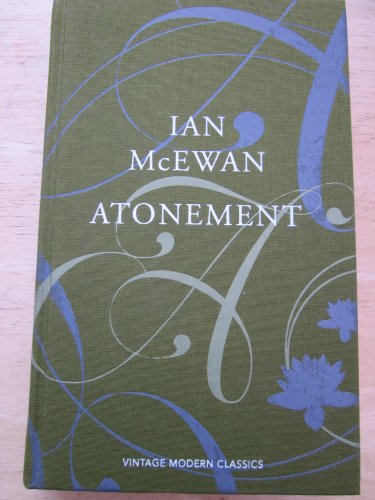
by Ian McEwan
Since you enjoyed the masterful prose and structural tension of 'Saturday', this earlier McEwan classic is essential reading. It explores how a single moment of misunderstanding can irrevocably alter multiple lives, showcasing his signature blend of psychological depth and narrative precision.

by Zadie Smith
Set in contemporary London, this novel captures the frantic, observational energy of city life much like 'Saturday' does. Smith’s narrative voice is equally sharp and socially conscious, exploring the collision of different lives within the same urban geography.

This novel offers a similarly meticulous, high-register prose style that examines the intersection of personal ambition and political climate in London. It shares McEwan’s talent for placing a highly intelligent protagonist in a situation where their status and worldview are quietly challenged.

Love to read on the go?
Explore Kindle e-readers and take your books with you.
As an Amazon Associate, we earn from qualifying purchases.
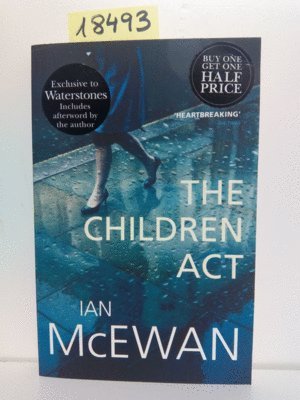
by Ian McEwan
Focusing on a high-court judge dealing with a complex medical-ethical case, this novel mirrors the professional-personal tension found in 'Saturday'. It delves into the burden of expertise and the moral weight of decision-making in a world that feels increasingly fragile.

by Tom McCarthy
For readers who appreciated the clinical, almost detached observation of Henry Perowne’s daily routines, this novel pushes that obsession to an extreme. It is a brilliant, unsettling examination of consciousness, repetition, and the desire to control reality.

by Herman Koch
If the underlying tension of 'Saturday'—the fear of violence encroaching on a comfortable, bourgeois life—was what hooked you, this book will be perfect. It is a tightly wound, claustrophobic story about how far parents will go to protect their children, stripping away civility to reveal the darkness underneath.

by Ian McEwan
While tonally more satirical than 'Saturday', this novel shares the same focus on a highly intelligent, flawed professional protagonist struggling with the chaos of modern life. It captures that specific McEwan-esque ability to weave global anxieties into the fabric of an individual's personal failings.

This book spans decades to examine how reputation and memory are constructed, offering the same kind of erudite, observational pleasure found in McEwan's work. It is a masterclass in how society’s shifting values impact the individual, written with elegant, precise prose.

Greene is a clear predecessor to McEwan in his ability to blend intense psychological realism with moral and philosophical questioning. Set in a war-weary London, it captures a similar atmosphere of personal upheaval and the haunting nature of past events.

Not sure what they've already read?
Let them pick their next favorite with an Amazon Gift Card.
As an Amazon Associate, we earn from qualifying purchases.
As an Amazon Associate, we earn from qualifying purchases.