

Based on your book
Saving Jesus from the Church
by Meyers, Robin R.
Robin R. Meyers addresses the growing disconnect between the historical figure of Jesus and the institutional machinery of the modern church. He argues that by prioritizing dogma and political influence, the church has effectively hidden the radical, subversive nature of its namesake. The reading experience is less like a Sunday sermon and more like a late-night conversation with a professor who is willing to burn the syllabus to find the truth. Meyers writes with a sharp, analytical edge, balancing theological rigor with a genuine sense of mourning for what has been lost. It is a contemplative, often uncomfortable look at how faith is practiced in the twenty-first century. If you find yourself holding onto the teachings of Jesus while feeling increasingly alienated by the structure of organized religion, this book offers both a diagnosis of the problem and a path toward reclaiming your own spiritual integrity.
10 Books similar to 'Saving Jesus from the Church'
When you finish Meyers, you will likely be hungry for more voices that dismantle the walls between spirituality and institutional rigidity. We have curated a list that bridges the gap between sociological analysis and personal deconstruction. Authors like Richard Rohr and Diana Butler Bass provide the historical context for the shifts Meyers describes, while Rachel Held Evans and Donald Miller mirror his raw, honest struggle for authenticity. These books collectively explore the tension between tradition and evolution, offering a roadmap for readers who want to keep the radical essence of their faith while letting go of the baggage.
As an Amazon Associate, we earn from qualifying purchases.

by Richard Rohr
Much like Meyers, Rohr challenges traditional, exclusionary religious dogmas to present a more inclusive, mystical, and expansive understanding of Jesus. It is a profound exploration of how the divine is present in all things, appealing to readers seeking a deeper, less institutional faith.

This book resonates with the desire to strip away the superficiality of modern church culture to find an authentic, humble connection with the divine. It shares the same conversational, honest, and slightly rebellious spirit found in Meyers' work.

by Rob Bell
Bell offers a re-examination of the Christian faith that encourages questioning and intellectual rigor rather than blind adherence to tradition. Readers who appreciate Meyers' critique of rigid dogma will find Bell's approach to the 'springs' of faith refreshing and vital.

Evans documents her journey of leaving and then finding her way back to a faith community that values authenticity over perfection. It mirrors Meyers' concern for the church's health and provides a deeply personal look at the struggle to reconcile faith with institutional flaws.

Love to read on the go?
Explore Kindle e-readers and take your books with you.
As an Amazon Associate, we earn from qualifying purchases.
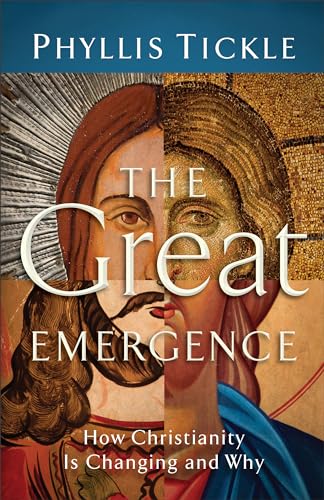
Tickle provides the historical and sociological context for the very shifts in Christianity that Meyers discusses. It is an essential read for understanding why institutional religion is currently in such a state of flux and what might come next.

McLaren invites readers into a 'generous' faith that refuses to be boxed in by fundamentalism or rigid binaries. It aligns perfectly with Meyers' vision of a Christianity that is centered on the radical, transformative love of Jesus rather than political or social control.

If Meyers focuses on the theological critique of the church, Claiborne focuses on the practical, lived-out reality of the gospel. This book challenges readers to embody the radical, counter-cultural life of Jesus in ways that disrupt the status quo.

Bass analyzes the shift from 'religion' (institutional) to 'spirituality' (relational) in America, mirroring Meyers' argument about the decline of the church as an institution. It is a data-driven yet deeply empathetic look at the future of faith.

by Shane Claiborne and Chris Haw
This book serves as a political and theological manifesto that aligns with the social justice focus of Meyers' writing. It critiques the marriage of church and state, urging readers to prioritize the kingdom of God over nationalistic or partisan agendas.

Formerly titled 'Evolving in Monkey Town,' this book captures the painful, necessary process of deconstructing a rigid faith to find something deeper and more honest. It is a perfect companion for those who found Meyers' work helpful in navigating their own religious disillusionment.

Not sure what they've already read?
Let them pick their next favorite with an Amazon Gift Card.
As an Amazon Associate, we earn from qualifying purchases.
As an Amazon Associate, we earn from qualifying purchases.