

Based on your book
Saving the Appearances
by Barfield, Owen
Owen Barfield asks a simple, unsettling question: why do we assume the world we see is the world as it truly exists? This book is an investigation into how human consciousness has evolved, shifting from a state of original participation, where we felt deeply connected to the natural world, to our current state of alienation. Barfield argues that our modern scientific detachment has turned the world into a collection of objects to be measured rather than a reality to be experienced. Reading this feels like having the rug pulled out from under your worldview. The prose is dense, demanding, and rigorous, requiring you to slow down and reconsider the history of your own thoughts. It is a perfect match for readers who feel that modern materialism is missing something fundamental and who want to bridge the gap between their inner lives and the physical world.
10 Books similar to 'Saving the Appearances'
The books selected here expand on the specific intellectual itch Barfield scratches, focusing on the tension between our subjective perception and objective reality. If you found his critique of modern materialism particularly compelling, you will appreciate how authors like C.S. Lewis and Iain McGilchrist tackle the dangers of scientism and the fragmentation of the human mind from different, yet complementary, angles. These selections emphasize the evolution of consciousness and the struggle to reclaim a sense of wonder, helping you further explore the philosophical and spiritual consequences of living in an increasingly disenchanted age.
As an Amazon Associate, we earn from qualifying purchases.

by C.S. Lewis
As a close friend and intellectual peer of Barfield, Lewis shares the same deep concern regarding the loss of objective value and the dangers of scientism. This book serves as a perfect companion piece, offering a concise, brilliant defense of traditional morality and the necessity of objective truth in an increasingly subjective world.

Chesterton's unique ability to look at history and human consciousness through a lens of wonder and paradox aligns perfectly with Barfield's 'participatory' view of reality. Readers who appreciate Barfield's critique of modern materialism will find Chesterton's historical perspective both refreshing and deeply profound.

Tournier explores the distinction between the 'person' and the 'persona,' a theme that resonates deeply with Barfield's exploration of how we perceive and construct our reality. It offers a psychological and spiritual depth that complements Barfield's philosophical inquiry into the nature of human consciousness.

If you enjoyed the intellectual rigor of 'Saving the Appearances,' this earlier work by Barfield is essential for understanding his theory of language and evolution. It provides the linguistic foundation for his later arguments, showing how words themselves carry the history of human consciousness.

Not sure what they've already read?
Let them pick their next favorite with an Amazon Gift Card.
As an Amazon Associate, we earn from qualifying purchases.

by C.S. Lewis
While a work of fiction, this book dramatizes the philosophical and spiritual consequences of the 'idolatry' and 'unparticipation' that Barfield critiques in his non-fiction. It is an allegorical exploration of the human soul's relationship to reality, making it a perfect narrative companion to Barfield's ideas.

by C.S. Lewis
This book provides a masterclass in understanding how past civilizations viewed the universe, which directly supports Barfield's thesis on the 'evolution of consciousness.' It is an essential read for anyone interested in how our mental models of the world change over time.

by Carl Jung
Jung's exploration of the collective unconscious and the spiritual void in modern humanity parallels Barfield's concerns about the alienation of the modern mind. Both authors seek to bridge the gap between the internal human experience and the external world.
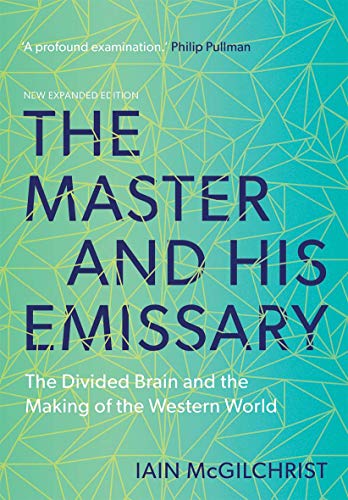
McGilchrist offers a modern, neuroscientific validation of many of the intuitions Barfield articulated decades earlier regarding how we divide and perceive the world. It is a dense, rewarding read that bridges the gap between science and philosophy in a way Barfield fans will find fascinating.
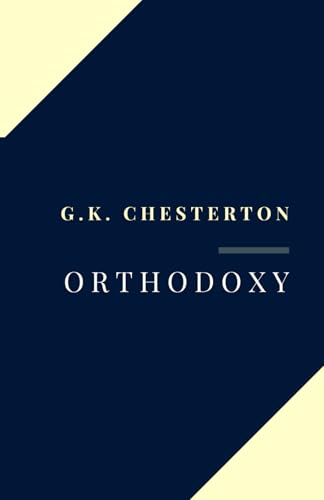
Chesterton’s seminal work on finding wonder in the mundane is a spiritual and intellectual precursor to the 'participation' Barfield advocates. It shares a similar tone of joyful defiance against the reductionist materialism of the modern age.

by Rudolf Otto
Otto's investigation into the 'numinous'—the experience of the divine—provides the theological and experiential depth that underpins Barfield's arguments about our lost connection to reality. It is a classic text for understanding the 'otherness' that Barfield argues we have ceased to perceive.

Prefer to listen?
Try Audible and hear the story instead of reading it.
As an Amazon Associate, we earn from qualifying purchases.
As an Amazon Associate, we earn from qualifying purchases.