

Based on your book
Shaping
by Winter, S. L.
Shaping is an ambitious inquiry into the cognitive architecture of law. S. L. Winter argues that legal thought is not an abstract, detached exercise in logic but a product of embodied experience and cultural metaphor. The reading experience is demanding and slow, requiring you to dismantle your assumptions about how objectivity works in a courtroom or a contract. It feels less like reading a standard legal text and more like participating in a rigorous seminar on the philosophy of mind. You will find yourself pausing frequently to reconsider the language you use to describe your own reality. This book is best suited for the patient, analytical reader who enjoys intellectual heavy lifting and wants to understand the invisible, conceptual frameworks that govern our social and legal existence.
10 Books similar to 'Shaping'
Since you appreciated the way Winter dissects the intersection of cognitive science and legal theory, these ten titles were selected to help you map that intellectual territory further. We focused on works that treat law as a fluid, human-constructed practice rather than a static set of rules. Whether you are looking for the foundational metaphors that structure our thoughts or the historical shifts in how we define logic itself, these recommendations bridge the gap between abstract philosophy and the practical reality of how we navigate our culture and institutions.
As an Amazon Associate, we earn from qualifying purchases.

by George Lakoff and Mark Johnson
As a foundational text for the cognitive theories explored in Winter's work, this book provides the essential framework for understanding how metaphor structures our conceptual system. Readers who appreciated the intellectual rigor and linguistic analysis in 'Shaping' will find this equally transformative for their worldview.

by H.L.A. Hart
This classic text offers a deep dive into the philosophy of law, providing the analytical backbone that Winter builds upon in his own critique of legal formalism. It is essential reading for anyone interested in the structural and moral underpinnings of legal systems.
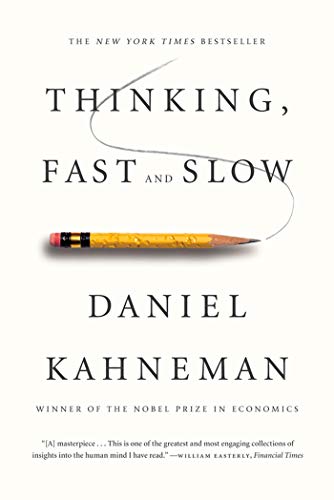
Winter relies heavily on cognitive science to explain legal reasoning, and Kahneman's masterpiece is the definitive guide to the dual-process model of the mind. It bridges the gap between psychological theory and real-world application, mirroring Winter's interdisciplinary approach.

Posner explores the intersection of legal theory and narrative, much like Winter examines the 'shaping' of legal reality through conceptual frameworks. This book will appeal to those who enjoy seeing law treated not as a static set of rules, but as a dynamic cultural practice.

Prefer to listen?
Try Audible and hear the story instead of reading it.
As an Amazon Associate, we earn from qualifying purchases.

This book explores how our understanding of probability and logic has been constructed over time, paralleling Winter's argument about how legal concepts are constructed through social practice. It is a fascinating look at how abstract ideas shape our perception of reality.

by Brian Bix
For readers who want to contextualize the arguments presented in 'Shaping' within the broader landscape of legal theory, Bix provides a clear and comprehensive guide. It serves as an excellent companion piece, clarifying the dense theoretical debates that Winter navigates.

by George Lakoff and Mark Johnson
Expanding on their earlier work, this book delves into the embodied mind, which is central to Winter's thesis that legal thought is rooted in physical experience. It offers a deeper, more biological perspective on the concepts introduced in 'Shaping'.

As a seminal essay that challenged traditional legal formalism, Holmes' work is the ancestor of the kind of critical, reality-based legal analysis Winter champions. It is a concise, powerful read that sets the stage for modern legal realism.

While more practical in application, this text explores the mechanics of how lawyers think and construct arguments, providing a grounded complement to Winter's abstract theoretical work. It helps bridge the gap between high-level jurisprudence and daily legal practice.

Kuhn's exploration of paradigm shifts is crucial for understanding Winter's argument about how legal 'shapes' change over time. Fans of 'Shaping' will recognize the same pattern of intellectual evolution and the struggle against established orthodoxies.

Love to read on the go?
Explore Kindle e-readers and take your books with you.
As an Amazon Associate, we earn from qualifying purchases.
As an Amazon Associate, we earn from qualifying purchases.