

Based on your book
Society and the Supernatural in Song China
by Davis, Edward L.
Edward L. Davis reconstructs the complex, often messy interplay between official state ideology and the thriving world of popular spirit-mediumship during the Song Dynasty. Rather than treating the supernatural as a static set of beliefs, Davis examines it as a dynamic social force that shaped power dynamics between commoners and the ruling elite. You will find this a dense, rewarding intellectual exercise that demands your full attention as it maps out how rituals and local cults functioned as a form of social currency. The writing is precise, analytical, and deeply researched, favoring clear-eyed observation over romanticized history. This is for the reader who enjoys untangling the threads of historical power structures and wants to understand how the unseen world dictated the very real, very tangible lives of people living centuries ago.
10 Books similar to 'Society and the Supernatural in Song China'
When you finish this deep dive, you will likely want to explore how these patterns of belief and social control evolved or manifested elsewhere. We have selected these titles to bridge the gap between Davis's historical focus and broader anthropological studies of Chinese religion. Whether you are interested in the embodied nature of Taoist ritual, the political tensions between elite ideologies and folk practice, or the way religious networks build communities, these books provide the necessary context to further your understanding of the complex, often invisible ties that bind Chinese society.
As an Amazon Associate, we earn from qualifying purchases.
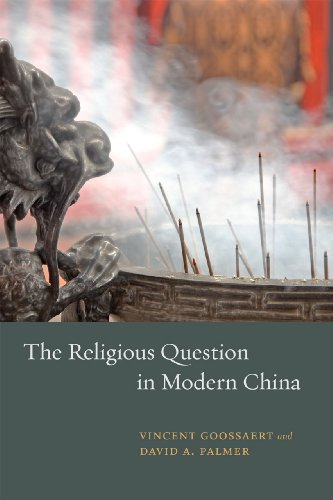
by Vincent Goossaert and David A. Palmer
Like Davis's work, this book offers a rigorous, scholarly analysis of how religious practices and state power intersect over time. Readers interested in the evolution of belief systems and their social implications in China will find this an essential and intellectually stimulating companion.

This classic text provides an intimate and profound look into the ritual life and embodied practices of Daoism, mirroring the focus on lived religion found in Davis's work. It is perfect for readers who want to understand the 'supernatural' not just as abstract belief, but as a physical and social reality in Chinese history.
For those who enjoyed the specific historical context of the Song Dynasty in Davis's book, this work provides a broader structural understanding of the era's political and social shifts. It complements the supernatural focus by grounding it firmly in the institutional reality of the time.

This book serves as an excellent bridge between specific historical studies and broader religious patterns, offering a clear framework for understanding the diverse practices Davis explores. It is ideal for readers looking to place Song Dynasty spirit mediumship within the wider tapestry of Chinese religious life.

Not sure what they've already read?
Let them pick their next favorite with an Amazon Gift Card.
As an Amazon Associate, we earn from qualifying purchases.

Brook’s examination of the Yuan Dynasty and its predecessors offers a similar 'ground-up' approach to history that resonates with Davis's interest in how ordinary people and supernatural beliefs shaped the state. It provides a fascinating look at the social and political dynamics of the period surrounding the Song.

Chau explores how religious practices create social networks and community bonds, echoing Davis's analysis of how supernatural beliefs functioned within Song society. It is a highly accessible yet deeply researched look at the 'social' aspect of religion.
This work delves into the intellectual and cultural tensions of the Chinese state, providing a necessary counterpoint to the folk religious practices Davis describes. It helps readers understand the 'elite' side of the dichotomy between official ideology and popular belief.

While focused on a different subject, Goldin’s methodology of using textual and historical evidence to reconstruct the social values of early China mirrors Davis’s approach. It is a compelling read for anyone who appreciates the academic rigor of reconstructing the 'private' lives of historical figures.

Though focused on a modern context, this ethnography is a classic study of the very spirit-mediumship practices that Davis traces back to the Song Dynasty. It provides a living, breathing look at the phenomena that Davis analyzes through historical texts.
This book offers a vivid portrait of a late imperial intellectual, providing a narrative-driven look at the intersection of literature, religion, and social status. It captures the 'vibe' of the scholar-official class that Davis frequently references as the counterpoint to popular supernaturalism.

Prefer to listen?
Try Audible and hear the story instead of reading it.
As an Amazon Associate, we earn from qualifying purchases.
As an Amazon Associate, we earn from qualifying purchases.