
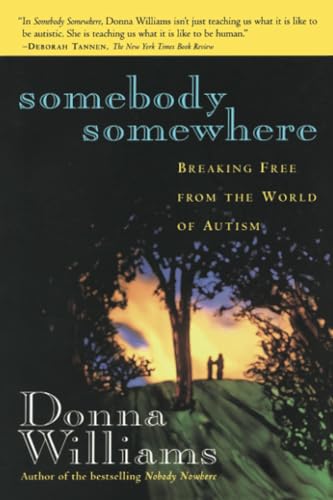
Based on your book
Somebody Somewhere
by Williams, Donna
Donna Williams writes with a startling, almost raw clarity that makes this memoir feel less like a book and more like a direct transmission from an internal world. She documents her life as a person living with undiagnosed autism, detailing the exhausting, constant effort required to perform normalcy in a society that never quite fit her. The pacing is reflective and deliberate, mirroring her own process of untangling who she is from the expectations placed upon her. It is not an easy read, but it is an essential one for anyone interested in the mechanics of human identity. If you appreciate memoirs that prioritize psychological honesty over narrative polish, you will find Williams to be a guide who refuses to sugarcoat the isolation of being different, yet ultimately finds a way to claim her own space in the world.
10 Books similar to 'Somebody Somewhere'
The selections listed here were chosen because they reflect the same core struggle for self-definition that defines Williams's journey. Whether through clinical analysis, personal memoir, or fiction, these books explore the tension between internal neurodivergent experiences and external social demands. We focused on works that handle the themes of sensory processing, the search for belonging, and the relief of late-life diagnosis. If the search for identity in Somebody Somewhere resonated with you, these titles will help you continue exploring the diverse, complex ways individuals navigate a world not designed for their specific minds.
As an Amazon Associate, we earn from qualifying purchases.

Like Donna Williams, Higashida offers a rare, firsthand glimpse into the mind of a non-verbal autistic person, providing profound insight into the unique way they perceive the world. It shares the same raw, honest, and deeply introspective voice that challenges societal assumptions about intelligence and communication.

This foundational memoir provides a similar analytical look at the autistic experience, bridging the gap between the internal world of the author and the external demands of society. Readers who appreciated Williams's attempt to decode her own behavior will find Grandin's scientific yet personal approach equally compelling.

While broader in scope, this book provides the historical and cultural context that frames the individual stories found in memoirs like 'Somebody Somewhere.' It validates the struggle for identity and acceptance that Williams chronicled, making it an essential companion for understanding the neurodivergent experience.

This novel features an autistic protagonist navigating a world that demands conformity, mirroring the internal conflicts and social navigation found in Williams's memoir. Its focus on the protagonist's internal monologue and desire for connection makes it a perfect fictional parallel to 'Somebody Somewhere.'

Love to read on the go?
Explore Kindle e-readers and take your books with you.
As an Amazon Associate, we earn from qualifying purchases.

Tammet provides an intimate account of living with high-functioning autism and savant syndrome, offering a similar 'insider' perspective on sensory processing and social alienation. The narrative voice is gentle and observant, much like Williams's, inviting readers into a world that feels both strange and deeply human.

Robison's memoir covers his life before and after his diagnosis, capturing the confusion and isolation of being 'different' without knowing why—a core theme in Williams's work. His journey toward self-acceptance and understanding his own mind resonates strongly with the themes of 'Somebody Somewhere.'

by Daniel Keyes
This classic explores the profound isolation of being intellectually different from the society around you, told through the raw, evolving perspective of the protagonist. Readers who were moved by Williams's struggle for self-understanding will find the emotional arc of this novel deeply familiar and heartbreaking.

Kaysen's memoir captures the feeling of being an outsider in a world that pathologizes non-conformity, echoing Williams's experiences with institutions and societal labels. The writing is sharp, cynical, and deeply observant, providing a similar exploration of mental health and identity.

by David Finch
Finch writes about his late-in-life diagnosis and his efforts to learn the 'rules' of neurotypical social interaction, which mirrors Williams's own attempts to decode human behavior. It is a deeply honest, often humorous look at the effort required to bridge the gap between two different ways of thinking.

by Laura James
This memoir details the author's journey to a late autism diagnosis as an adult, providing a narrative of relief and self-discovery that mirrors the conclusion of Williams's story. It is a validating, reflective read for anyone who has felt like they were living life without an instruction manual.

Not sure what they've already read?
Let them pick their next favorite with an Amazon Gift Card.
As an Amazon Associate, we earn from qualifying purchases.
As an Amazon Associate, we earn from qualifying purchases.