

Based on your book
Statistical Mechanics
by Hill, Terrell L.
Terrell Hill’s Statistical Mechanics is not a casual read; it is a dense, uncompromising exercise in reductionism that demands your full attention. The book functions as a bridge between the chaotic behavior of individual particles and the predictable, macroscopic laws of thermodynamics. As you work through the derivations, the experience feels less like studying a textbook and more like untangling the fundamental architecture of the physical universe. The pacing is deliberate, favoring rigorous mathematical proofs over hand-waving explanations. This is intended for the reader who finds beauty in precision and wants to understand the 'why' behind the 'how' of natural processes. If you prefer to grapple with complex, existential questions about how order emerges from randomness, Hill provides a stark, intellectual framework that will challenge your intuition and sharpen your analytical instincts.
10 Books similar to 'Statistical Mechanics'
Since you appreciate the rigorous, foundational approach found in Hill, our curated list emphasizes texts that share his commitment to mathematical depth and conceptual clarity. We have selected these works to help you transition from Hill’s classic methodology into more modern applications, whether you are exploring phase transitions with Plischke or applying molecular driving forces to biological systems with Dill. These recommendations prioritize the same analytical hunger that drives Hill’s writing, ensuring that whether you are looking for pedagogical flexibility or specialized lattice system proofs, you remain grounded in the same intellectually demanding tradition.
As an Amazon Associate, we earn from qualifying purchases.

Feynman's lectures provide a unique, intuitive, and pedagogical approach to the subject that complements Hill's more rigorous treatment. Readers who appreciate Hill's depth will find Feynman's perspective on the fundamental principles of statistical mechanics both illuminating and intellectually stimulating.

Chandler offers a concise and modern framework that bridges the gap between microscopic interactions and macroscopic properties, much like Hill's classic text. It is a standard reference for serious students who value a clear, logical progression of complex physical concepts.

by Kerson Huang
Huang's text is a comprehensive and authoritative volume that covers a broad range of topics, making it an excellent follow-up or companion to Hill. It matches the academic rigor and depth expected by those diving deep into the statistical foundations of thermodynamics.

Callen provides the foundational thermodynamic framework upon which statistical mechanics is built, offering a rigorous axiomatic approach. It is essential reading for any reader who wants to understand the macroscopic laws that Hill's statistical models seek to explain.

Prefer to listen?
Try Audible and hear the story instead of reading it.
As an Amazon Associate, we earn from qualifying purchases.
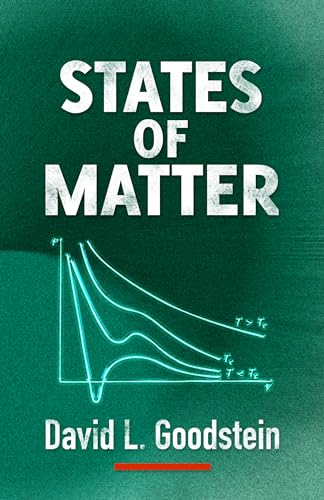
Goodstein bridges the gap between abstract statistical mechanics and the physical reality of various phases of matter. Readers who enjoy Hill's molecular-level focus will appreciate how this book connects those microscopic theories to tangible physical phenomena.

by Michael Plischke and Birger Bergersen
This text provides a modern and detailed look at equilibrium systems, offering a level of complexity and mathematical rigor that appeals to fans of Hill's work. It is particularly strong in its treatment of phase transitions and critical phenomena.

Kardar's book is highly regarded for its modern pedagogical style and clarity, making advanced concepts in statistical mechanics accessible without sacrificing depth. It serves as a perfect modern successor to the classical foundations laid out by authors like Hill.

by Ken A. Dill and Sarina Bromberg
This book expands the scope of statistical mechanics into biological and chemical systems, mirroring Hill's interest in molecular-level explanations. It is an excellent choice for readers who want to see how these theories apply to complex, real-world systems.
Penrose focuses on the rigorous mathematical and conceptual foundations of the field, appealing to the analytical mindset of readers who enjoy Hill's precise methodology. It tackles the difficult questions of why statistical mechanics works at a fundamental level.

by Sacha Friedli and Yvan Velenik
For readers interested in the specific mathematical structures of statistical mechanics, this text offers a deep dive into lattice systems. It provides the rigorous, specialized focus that fans of Hill's detailed derivations will find highly satisfying.

Love to read on the go?
Explore Kindle e-readers and take your books with you.
As an Amazon Associate, we earn from qualifying purchases.
As an Amazon Associate, we earn from qualifying purchases.