
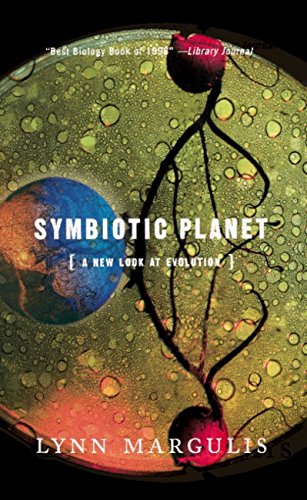
Based on your book
Symbiotic Planet
by Lynn Margulis
Symbiotic Planet by Lynn Margulis isn't just another take on evolution; it's a profound re-framing of how life on Earth came to be. Margulis makes a compelling case that cooperation, through symbiosis, is as fundamental to evolution as competition. She unpacks how everything from our own cells to the very emergence of sex and the greening of continents arose from different species living intimately together. Reading this feels like stepping into a brilliant mind, encountering ideas that were once radical but are now foundational. It's a book that invites you to rethink the interconnectedness of all living things, challenging established paradigms with a vibrant, knowledgeable voice. This is for the reader who loves to grapple with big, philosophical questions about life's origins and isn't afraid to have their worldview expanded.
10 Books similar to 'Symbiotic Planet'
If Margulis's vision of a deeply interconnected, symbiotic Earth resonated with you, our curated list will offer more avenues for exploration. We've gathered books that share her grand, systems-level perspective on life's evolution, often challenging conventional wisdom. You'll find other works that delve into the unseen forces and microbial drivers of planetary change, alongside titles that provide an outsider's look at scientific breakthroughs and the historical context of big biological ideas. These selections continue the thought-provoking, intellectual journey of understanding our living world in new, inspiring ways.
As an Amazon Associate, we earn from qualifying purchases.

Lovelock's seminal work, developed in part with Margulis, presents the Gaia hypothesis: that Earth functions as a single self-regulating system. Readers of 'Symbiotic Planet' will appreciate the grand, interconnected view of life and Earth's processes, challenging conventional biological perspectives.

by Lynn Margulis and Dorion Sagan
Co-authored by Margulis herself, this book delves deeper into the microbial world and its profound impact on Earth's evolution, a central theme in 'Symbiotic Planet'. It offers a comprehensive and accessible exploration of symbiogenesis and the unseen drivers of life.

Kimmerer beautifully weaves together scientific understanding of ecology with indigenous ways of knowing, emphasizing reciprocity and interconnectedness in nature. Fans of Margulis's holistic view of life will find a resonant spirit in this lyrical and deeply insightful exploration of our relationship with the living world.

This book explores the hidden, interconnected world of fungi, revealing their crucial symbiotic relationships and challenging our understanding of individual organisms. It mirrors Margulis's emphasis on cooperation and the often-overlooked microbial (or fungal) drivers of life and evolution.

Prefer to listen?
Try Audible and hear the story instead of reading it.
As an Amazon Associate, we earn from qualifying purchases.

Kolbert's Pulitzer-winning work provides a rigorous scientific and historical account of past and ongoing mass extinctions, offering a sobering perspective on humanity's impact on Earth's biodiversity. Readers who appreciate 'Symbiotic Planet's' large-scale biological and ecological scope will find this an equally informative and thought-provoking read on planetary change.

A foundational text in biology and physics, Schrödinger's book explores the physical and chemical basis of life, influencing generations of scientists. It shares 'Symbiotic Planet's' spirit of fundamental inquiry into the nature of living systems and the grand questions of biology.

Harari's ambitious narrative takes a sweeping, systems-level view of human biological and cultural evolution, making connections across vast timescales. Like Margulis, he challenges conventional wisdom and offers a grand, interconnected perspective on life's development, albeit focused on humanity.

This book delves into the scientific and ethical implications of cell biology through the story of Henrietta Lacks and her immortal HeLa cells. It connects the microscopic world of biological entities with profound human stories and ethical dilemmas, echoing the scientific depth and societal relevance found in 'Symbiotic Planet'.

While offering a contrasting perspective on evolution (gene-centered competition vs. Margulis's cooperation), Dawkins's work is equally analytical and intellectually stimulating. Reading both provides a richer understanding of evolutionary theory and the ongoing scientific discourse, appealing to those who enjoy challenging established paradigms.

by Carl Sagan
Sagan's classic offers an awe-inspiring journey through the universe, making complex scientific ideas accessible and emphasizing the interconnectedness of all things. Like Margulis, Sagan fosters a sense of wonder and intellectual curiosity about life's place in the grand cosmic scheme.

Love to read on the go?
Explore Kindle e-readers and take your books with you.
As an Amazon Associate, we earn from qualifying purchases.
As an Amazon Associate, we earn from qualifying purchases.