

Based on your book
Technofeudalism: What Killed Capitalism
by Yanis Varoufakis
Yanis Varoufakis presents a provocative thesis: capitalism as we knew it is dead, replaced by a digital feudalism where tech giants act as lords of the cloud. Instead of generating profit through production, these platforms extract rent from users who are essentially digital serfs. Reading this feels like having a high-stakes conversation with an economist who is unafraid to dismantle the status quo. The prose is sharp, urgent, and relentlessly analytical, pushing you to reconsider the mechanics of your daily digital interactions. It is not a light read; it demands your full attention as it maps out the shifting power dynamics of the modern era. This book is for the reader who enjoys structural critique and wants to understand why the digital economy feels increasingly like a closed, exploitative loop rather than a free market.
10 Books similar to 'Technofeudalism: What Killed Capitalism'
If the arguments in Technofeudalism resonated with your desire to understand the mechanics of power, this collection of titles will help you dig deeper into the structural collapse of contemporary systems. We have selected these works because they mirror Varoufakis's blend of rigorous economic analysis and sharp political critique. Whether you are looking for the historical context of debt and market societies or the grounded human reality of algorithmic inequality, these books expand on the themes of rent-seeking, digital sovereignty, and the widening gap between the architects of the cloud and the rest of us.
As an Amazon Associate, we earn from qualifying purchases.

Like Varoufakis, Zuboff provides a rigorous, sweeping analysis of how digital platforms have fundamentally altered the nature of capitalism and human autonomy. It is essential reading for anyone interested in the structural power dynamics of the modern tech economy.
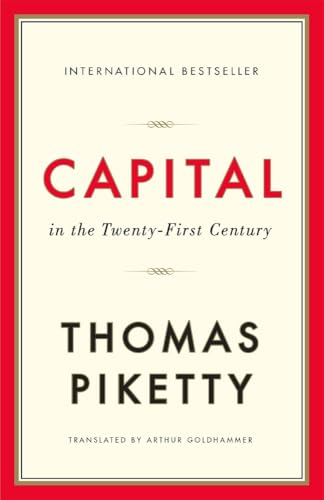
This seminal work provides the historical and economic data-driven foundation for understanding the inequality that Varoufakis argues has mutated into technofeudalism. It is a dense but rewarding deep dive into how wealth concentration reshapes societal structures.

by Nick Srnicek
Srnicek offers a concise, accessible breakdown of the business models that underpin the digital economy, echoing Varoufakis's critique of rent-seeking behavior by tech giants. It serves as a perfect companion piece for understanding the 'how' behind the 'what' of the technofeudal shift.

by Naomi Klein
Klein explores how crises are exploited to push radical economic shifts, a concept that complements Varoufakis's analysis of how capitalism has been hollowed out. Her narrative style is equally compelling and critical of established power structures.

Not sure what they've already read?
Let them pick their next favorite with an Amazon Gift Card.
As an Amazon Associate, we earn from qualifying purchases.

by Paul Mason
Mason looks at the same technological disruptions as Varoufakis but offers a more optimistic, forward-looking perspective on how these changes could lead to a post-scarcity society. It is a vital counterpoint for readers interested in what comes after the current economic model.

Graeber’s exploration of meaningless work and the alienation caused by modern corporate structures aligns perfectly with Varoufakis's critique of the 'vassalage' inherent in digital labor. It combines deep sociological insight with a biting, witty tone.

Bratton provides a philosophical and architectural view of the global computing infrastructure, framing it as a new form of planetary-scale governance. It offers a more theoretical, abstract lens on the same 'technofeudal' reality Varoufakis describes.

Eubanks focuses on the human cost of the digital systems that Varoufakis critiques, showing how algorithms and data mining reinforce existing social hierarchies. It provides the necessary grounded, human-centric perspective to balance the high-level economic theory.

by Karl Polanyi
As a foundational text for understanding the 'market society,' Polanyi's work is the intellectual ancestor to Varoufakis's arguments about the fragility and artificiality of capitalism. It is essential for readers who want to understand the long-term history of economic systems.

Graeber dismantles the myths surrounding money and debt, providing a historical context that makes Varoufakis's claims about the 'cloud fiefs' and financialization feel inevitable. It is a massive, ambitious book that changes how you perceive the global economy.

Prefer to listen?
Try Audible and hear the story instead of reading it.
As an Amazon Associate, we earn from qualifying purchases.
As an Amazon Associate, we earn from qualifying purchases.