

Based on your book
The Bible Says So
by McClellan, Dan
Dan McClellan moves past standard Sunday school interpretations to examine how the Bible is weaponized in modern political and social discourse. Instead of treating the text as a static moral guide, he treats it as a historical artifact that has been continuously repurposed by human hands to justify contemporary agendas. The reading experience is less like a theological lecture and more like a precise, intellectual audit of the cultural myths we hold dear. You will feel the weight of the historical evidence as he carefully dismantles the assumption that any single reading of the Bible is objective or divinely ordained. This book is for the reader who enjoys pulling back the curtain on how power structures operate, and for anyone who prefers cold, historical analysis over sentimental tradition. It is a demanding but deeply rewarding look at how we shape our sacred stories to fit our own needs.
10 Books similar to 'The Bible Says So'
If the analytical rigor of The Bible Says So left you wanting more, these selections are curated to deepen your understanding of how religious texts are constructed and deployed. We have focused on works that treat scripture as literature and history rather than dogma, centering on the themes of textual evolution and the political manipulation of belief. Whether you are interested in the documentary hypothesis or the archaeology behind the narratives, these authors provide the same intellectual honesty found in McClellan's work, helping you trace the human fingerprints left on the divine.
As an Amazon Associate, we earn from qualifying purchases.
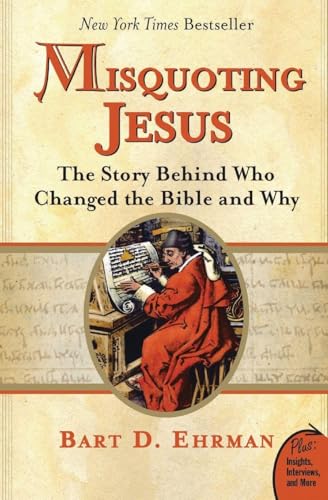
Like McClellan, Ehrman provides a rigorous, scholarly examination of the textual history of the New Testament, revealing how human hands shaped the scriptures we read today. It is an essential read for anyone interested in the academic deconstruction of biblical authority.

This book offers a deep dive into how the concept of God has changed over time, mirroring McClellan's approach of examining religious texts through a historical and evolutionary lens. It challenges readers to rethink the origins and development of major monotheistic traditions.

Friedman's classic work provides the foundational documentary hypothesis for the Pentateuch, offering the kind of critical, evidence-based analysis that fans of McClellan's work will appreciate. It demystifies the authorship of the Torah with clarity and academic precision.

by Jack Miles
By treating the Bible as a work of literature and analyzing the character of God as a protagonist, Miles offers a unique and critical perspective that aligns with McClellan's literary and historical approach. It is a brilliant study of how the divine is portrayed and perceived across the canon.

Love to read on the go?
Explore Kindle e-readers and take your books with you.
As an Amazon Associate, we earn from qualifying purchases.

by Reza Aslan
Aslan strips away centuries of theological dogma to present a historical portrait of Jesus, much like McClellan seeks to strip away political misuse of the Bible. It is a provocative, fast-paced investigation into the man behind the myth.

Pagels explores the alternative gospels that were excluded from the biblical canon, providing a fascinating look at the diversity of early Christian thought. Readers who enjoy McClellan's work on biblical context will appreciate this exploration of what was left out and why.

This book directly complements McClellan's mission by exposing the discrepancies and contradictions within the New Testament that are often ignored by mainstream religious discourse. It is a highly accessible, critical look at biblical scholarship.

by Israel Finkelstein and Neil Asher Silberman
Using archaeology to cross-reference biblical narratives, this book provides the physical evidence that often contradicts traditional religious claims, similar to how McClellan uses historical context to challenge modern misuse. It is a grounded, evidence-based critique of biblical history.

Pagels delves into the Gospel of Thomas to explore how early Christianity was not a monolithic movement but a collection of competing ideas. It resonates with McClellan's work by demonstrating that the 'Bible' is a constructed entity with a complex, often political, history.

While broader in scope, Harari's analysis of how shared myths and narratives hold societies together provides a macro-level framework that helps explain the very human impulse to use texts like the Bible for social and political power. It shares the same analytical, demystifying tone found in McClellan's writing.

Not sure what they've already read?
Let them pick their next favorite with an Amazon Gift Card.
As an Amazon Associate, we earn from qualifying purchases.
As an Amazon Associate, we earn from qualifying purchases.