

Based on your book
The Black Swan
by Taleb, Nassim Nicholas
Nassim Nicholas Taleb argues that we are fundamentally wired to ignore the unpredictable. He defines a Black Swan as a rare, high-impact event that defies our past experiences and our models of probability, yet we insist on explaining them away after the fact to maintain a sense of order. Reading this is an abrasive, intellectual exercise; Taleb writes with a sharp, cynical wit, often taking direct aim at the academic and financial elites who claim to understand the world while ignoring its inherent volatility. You will not find a soothing guide to success here, but rather a provocative challenge to your own cognitive blind spots. This is for the reader who enjoys being told they are wrong, who questions the reliability of experts, and who prefers philosophical rigor over comfortable, linear narratives about how the world functions.
10 Books similar to 'The Black Swan'
Since you found the unsettling nature of Taleb's world compelling, these titles were curated to deepen your grasp on the themes of randomness, cognitive bias, and the limits of human expertise. We selected these books because they bridge the gap between abstract theory and real-world application, whether through the psychological roots of our errors or the historical struggle to quantify risk. If you appreciate the outsider perspective and the critique of institutional arrogance, this collection offers a rigorous path forward for those who want to better navigate a chaotic, unpredictable reality.
As an Amazon Associate, we earn from qualifying purchases.
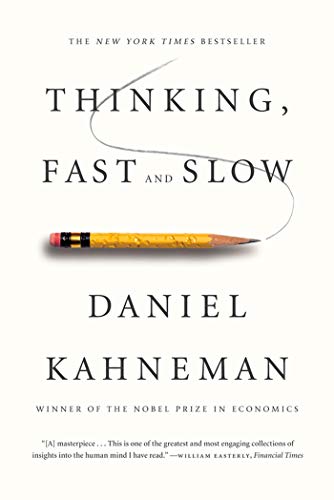
Like Taleb, Kahneman explores the systematic errors in human judgment and cognitive biases that lead us to misinterpret the world. This book serves as the perfect companion to The Black Swan, offering a rigorous psychological framework for why we fail to predict and understand randomness.

This is the essential precursor to The Black Swan, laying the groundwork for Taleb's philosophy on probability and luck. It provides a deeper look into the author's specific intellectual style and his disdain for the illusion of control in financial markets.

by Nate Silver
Silver bridges the gap between statistical theory and real-world application, examining why some predictions succeed while others fail spectacularly. Fans of Taleb will appreciate the focus on distinguishing true patterns from the chaos of noise in data-driven environments.

The natural successor to The Black Swan, this book takes the concept of uncertainty and flips it on its head by arguing that some systems actually thrive in volatile conditions. It is a dense, provocative read that expands on the 'Black Swan' framework.

Love to read on the go?
Explore Kindle e-readers and take your books with you.
As an Amazon Associate, we earn from qualifying purchases.

Mlodinow provides a highly accessible exploration of how randomness impacts our daily lives, from sports to business to medicine. It shares Taleb's fascination with the role of chance, though it approaches the subject with a slightly more optimistic and narrative-driven tone.

Thaler chronicles the battle to introduce human psychology into the rigid world of traditional economic theory. Readers who enjoy Taleb's critique of 'experts' and 'academics' will find this history of the behavioral economics movement both validating and entertaining.
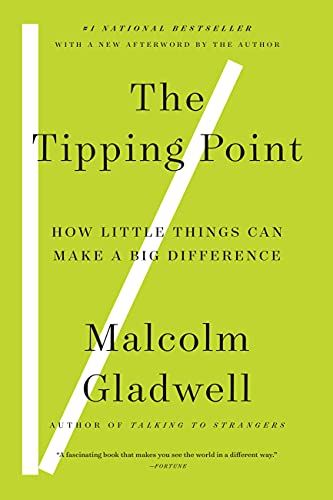
While less mathematically rigorous than Taleb, Gladwell explores the unpredictable nature of social phenomena and how small changes can lead to massive, unexpected results. It shares the same fascination with the 'black swan' concept of sudden, non-linear shifts in society.

This book provides a fascinating historical deep dive into how humanity learned to quantify and manage risk over the centuries. It offers essential context for anyone interested in the mathematical and philosophical underpinnings of Taleb's arguments regarding probability.

Tetlock investigates what actually makes certain people better at predicting the future, challenging the assumption that expert opinion is always reliable. It is a direct challenge to the 'illusion of expertise' that Taleb frequently attacks in his own work.

by James Gleick
Gleick tells the story of the scientists who discovered the hidden order within chaotic systems, a concept deeply intertwined with Taleb's theories on randomness. It is a brilliant blend of history, biography, and science that captures the same intellectual excitement as The Black Swan.

Not sure what they've already read?
Let them pick their next favorite with an Amazon Gift Card.
As an Amazon Associate, we earn from qualifying purchases.
As an Amazon Associate, we earn from qualifying purchases.