

Based on your book
The Case Against Adolescence
by Robert Epstein
Robert Epstein's "The Case Against Adolescence" isn't just a book; it's a direct challenge to how we understand young people. He argues that 'adolescence' as we know it isn't a biological given, but a century-old social construct that actually harms teenagers by isolating them from adult responsibility and wisdom. Reading this feels like a bracing, informed conversation with a psychologist who's done his homework. Epstein backs his claims with historical and anthropological insights, pulling apart the systems that keep young people in a state of extended dependency. It's thought-provoking and analytical, often making you rethink every interaction you've had with a teen, or even your own past. This book is for anyone who's ever felt frustrated by the "teen years," or for parents, educators, and policymakers ready to question fundamental assumptions about youth development and cultural norms. It’s a call to action for recognizing the competence within young people.
10 Books similar to 'The Case Against Adolescence'
If "The Case Against Adolescence" sparked your interest in how society shapes our youth, you'll find plenty more to chew on here. Many of these books, like Neil Postman's "The Disappearance of Childhood," delve into the cultural construction of childhood and the blurring lines between life stages. Others, such as John Taylor Gatto's "Dumbing Us Down," echo Epstein's critique of educational systems that infantilize young people rather than fostering true competence. And for a look at modern parenting's role in extending this dependency, "The Coddling of the American Mind" offers a compelling parallel, exploring how our attempts to protect youth might actually hinder their growth into resilient adults. These selections continue the conversation about social commentary and personal growth.
As an Amazon Associate, we earn from qualifying purchases.
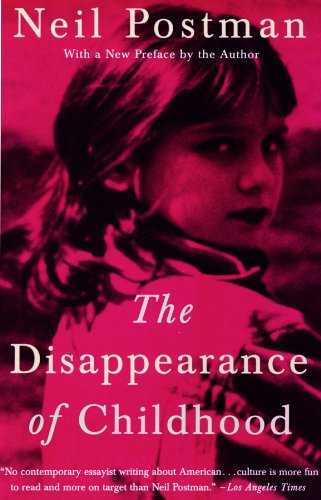
by Neil Postman
Like Epstein, Postman explores how the boundaries between childhood and adulthood have shifted due to social and technological changes. He provides a historical deep dive into how the concept of 'childhood' was invented and how modern media is eroding it, leading to a loss of the distinct stages of life.

Gatto's critique of the American education system mirrors Epstein's concerns about the artificial extension of childhood. He argues that modern schooling is designed to keep youth in a state of perpetual dependency and intellectual immaturity rather than fostering true competence.

by Greg Lukianoff and Jonathan Haidt
This book examines how modern parenting and educational trends have created a culture of 'safetyism' that hinders the development of resilience in young people. It aligns with Epstein's thesis that shielding youth from adult responsibilities and challenges is ultimately detrimental to their psychological health.

by Joseph Allen and Claudia Worrell Allen
Focusing on the 'failure to launch' phenomenon, this book echoes Epstein's call for reintegrating young people into the adult world. It provides a psychological and practical look at how the current social structure traps teenagers in a bubble of peer-focused triviality.

Not sure what they've already read?
Let them pick their next favorite with an Amazon Gift Card.
As an Amazon Associate, we earn from qualifying purchases.

by Gordon Neufeld and Gabor Maté
This book discusses the 'peer orientation' that Epstein identifies as a core problem of modern adolescence. It explores how the breakdown of vertical transmission between generations has led to a youth culture that is disconnected from adult wisdom and maturity.
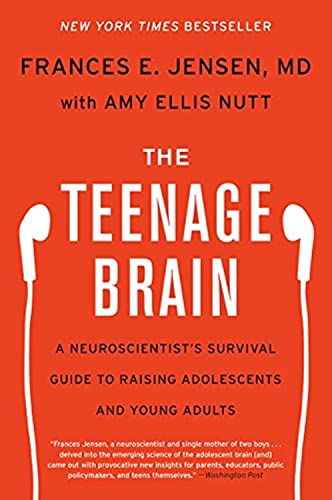
While Epstein focuses on social engineering, Jensen provides the biological counterpart by explaining the neurological development of the adolescent mind. Readers will appreciate the scientific depth regarding the same age group and the discussion on how environment shapes the developing brain.

Deresiewicz critiques the high-pressure, 'hoop-jumping' culture of elite education that prevents young adults from developing a true sense of self. It resonates with Epstein's argument that we have replaced genuine maturity with a series of artificial developmental milestones.

Epstein frequently references anthropological data to show that 'adolescent turmoil' is not universal. Mead's classic study provides the foundational evidence that the stress of the teenage years is a cultural construct rather than a biological inevitability.
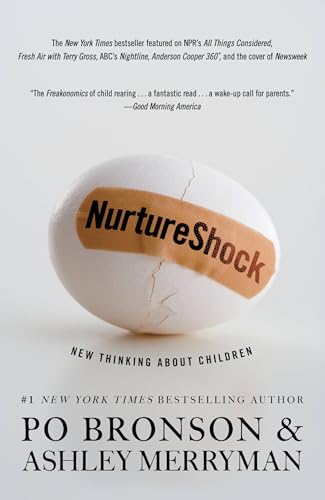
by Po Bronson and Ashley Merryman
This book challenges many conventional wisdoms about child-rearing and youth development using data-driven insights. Like Epstein, the authors suggest that many of our modern strategies for raising children are actually counterproductive to their growth and maturity.

Levine examines the high rates of emotional problems among affluent teens, arguing that a lack of autonomy and an over-emphasis on performance lead to a hollowed-out sense of self. It supports Epstein's view that modern adolescence is a state of artificial confinement that breeds dysfunction.

Prefer to listen?
Try Audible and hear the story instead of reading it.
As an Amazon Associate, we earn from qualifying purchases.
As an Amazon Associate, we earn from qualifying purchases.