

Based on your book
The Challenger Launch Decision
by Diane Vaughan
The Challenger Launch Decision isn't just a retelling of the tragic 1986 space shuttle disaster; it's a meticulously researched sociological autopsy of how it happened. Diane Vaughan takes you deep inside NASA and Morton Thiokol, tracing the subtle, incremental shifts in organizational culture that led engineers and managers to accept escalating risks. Reading this book feels like watching a slow-motion catastrophe unfold, not through a technical lens, but through the chilling logic of human decision-making and institutional pressure. It’s a profoundly disturbing and thought-provoking analysis of power dynamics, moral ambiguity, and the "normalization of deviance." If you're fascinated by how secrets fester within structures, how good people make catastrophic choices, and what a historical deep dive can reveal about human systems, this book will stay with you long after the final page.
10 Books similar to 'The Challenger Launch Decision'
If Diane Vaughan's forensic examination of the Challenger disaster resonated with you, you're likely drawn to understanding how high-stakes failures occur within complex systems. Our recommendations delve further into the normalization of deviance and structural secrecy that Vaughan so expertly unpacks. You'll find similar insights into organizational culture, the psychological underpinnings of disaster, and the chilling interplay of power dynamics and moral ambiguity in books like "Normal Accidents" and "Command and Control." These selections offer further explorations into the human element of catastrophe, from the grand scale of nuclear weapons to the everyday complexities of decision-making.
As an Amazon Associate, we earn from qualifying purchases.

This foundational text in sociology and disaster studies explores how complex systems inevitably lead to 'normal' accidents, much like Vaughan's analysis of organizational culture. It provides a systemic view of why high-stakes failures occur despite rigorous safety protocols.

Schlosser details the terrifying history of nuclear mishaps, mirroring Vaughan's focus on the gap between technical design and human management. It combines a gripping narrative of a specific accident with a deep dive into institutional risk and secrecy.

by Tom Wolfe
While more stylistic and narrative-driven, Wolfe’s classic explores the culture of NASA and the test pilot community that Vaughan analyzes sociologically. It provides the essential cultural context of the 'can-do' attitude that contributed to the normalization of deviance.

Vaughan’s work is essentially a study of a system failure; Meadows offers the theoretical framework to understand how those systems function and fail. It helps readers conceptualize the feedback loops and structural delays that Vaughan identifies in the NASA hierarchy.

Not sure what they've already read?
Let them pick their next favorite with an Amazon Gift Card.
As an Amazon Associate, we earn from qualifying purchases.

Like the Challenger disaster, Chernobyl was a failure of both engineering and organizational culture. Higginbotham’s meticulous research into the Soviet bureaucracy provides a perfect companion piece to Vaughan's study of the American space agency.

by Atul Gawande
Gawande explores how human error persists in complex environments like surgery and aviation. It resonates with Vaughan’s work by examining how professionals manage risk and the institutional tools used to prevent the 'normalization of deviance.'

Ripley investigates human psychology during catastrophes, providing a micro-level view of decision-making that complements Vaughan's macro-level organizational analysis. It explores why people ignore warnings and how social pressure influences survival.

This book offers an inside look at high-stakes aerospace engineering and the management styles that drive innovation. It provides a fascinating contrast to the bureaucratic hurdles and communication failures Vaughan identifies at NASA.
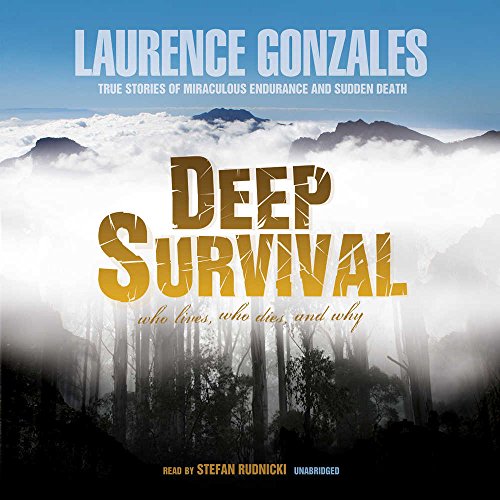
Gonzales examines the mental processes behind fatal mistakes in high-risk environments. His analysis of 'mental models' and how they can lead to disaster aligns perfectly with Vaughan’s concept of how engineers and managers perceived the O-ring risks.

This book tracks a historical crisis through the lens of data and institutional resistance to new ideas. Fans of Vaughan will appreciate the focus on how entrenched beliefs (like the miasma theory) can blind organizations to clear evidence of danger.

Prefer to listen?
Try Audible and hear the story instead of reading it.
As an Amazon Associate, we earn from qualifying purchases.
As an Amazon Associate, we earn from qualifying purchases.