
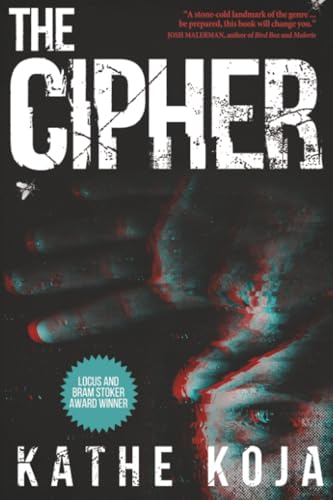
Based on your book
The Cipher
by Koja, Kathe
Nicholas and Nakota are two aimless people living on the fringes of society when they discover a dark, impossible hole in their apartment building. They call it the Funhole. It is not just a void; it is a catalyst for physical and mental decay that consumes anyone who dares to interact with it. Kathe Koja writes with a jagged, claustrophobic intensity that makes you feel the grime and the rot of the setting as much as the characters do. This is not a book about jump scares, but about the slow, agonizing erosion of morality and identity. The prose is dense, rhythmic, and unapologetically bleak. You should pick this up if you enjoy transgressive fiction that leaves you feeling genuinely unsettled and if you prefer stories that prioritize psychological collapse over traditional horror tropes.
10 Books similar to 'The Cipher'
When you finish The Cipher, you are likely looking for stories that maintain that same commitment to existential dread and the breakdown of the human psyche. We chose these titles because they share that specific, grimy obsession with the unknowable and the physical toll of encountering something truly alien. Whether it is the visceral body horror of Scott Smith and Poppy Z. Brite, or the philosophical nihilism found in the work of Thomas Ligotti and B.R. Yeager, these books mirror that signature blend of isolation and moral decay that makes Koja’s work so difficult to shake.
As an Amazon Associate, we earn from qualifying purchases.

by Scott Smith
Like The Cipher, this novel masterfully builds a sense of inescapable dread and physical decay as a group of friends becomes trapped in a hostile, unnatural environment. It shares Koja's penchant for visceral, body-horror elements and the slow unraveling of the human psyche under extreme duress.

by B.R. Yeager
This book captures the same grimy, nihilistic, and transgressive atmosphere as The Cipher, focusing on a group of disaffected youth grappling with a bizarre, reality-altering substance. It is a perfect match for readers who appreciate Koja's exploration of obsession, addiction, and the breakdown of societal norms.

Fans of The Cipher's claustrophobic, reality-bending horror will find much to admire in this labyrinthine narrative about a house that defies physical laws. Both books demand total immersion and explore the destructive power of obsession when faced with the unknowable.

by Brian Hodge
Hodge excels at the same brand of cosmic, deeply personal horror that defines Koja's work, blending bleak nihilism with profound character studies. The narrative explores the intersection of human frailty and alien indifference, mirroring the themes of decay and obsession found in The Cipher.

Not sure what they've already read?
Let them pick their next favorite with an Amazon Gift Card.
As an Amazon Associate, we earn from qualifying purchases.

A seminal work of splatterpunk, this novel shares The Cipher's transgressive, gritty, and deeply uncomfortable exploration of human desire and obsession. It is an essential read for those drawn to the darker, more visceral side of the genre that Koja helped define.

This novel echoes The Cipher's focus on a mysterious, reality-warping entity that fundamentally changes those who encounter it. The atmosphere of creeping dread and the breakdown of identity make it a natural follow-up for fans of Koja's surreal, unsettling prose.

Ligotti’s short stories are the gold standard for the philosophical, nihilistic horror that permeates The Cipher. His work focuses on the artificiality of reality and the horror of existence, providing a similar intellectual and emotional weight to Koja's writing.

by Laird Barron
Barron’s work often features characters whose lives are slowly dismantled by forces beyond their comprehension, much like the protagonists of The Cipher. The blend of deep-seated dread, complex character dynamics, and cosmic horror will resonate strongly with Koja's readership.
by John Langan
This novel masterfully combines grief, obsession, and cosmic horror, creating a narrative that feels both intimate and terrifyingly vast. Readers who enjoyed the way The Cipher centers on a strange, transformative object will appreciate the dark, folkloric mystery at the heart of this book.

While stylistically different, this novel shares The Cipher's unflinching commitment to depicting social alienation and the desperate, often grotesque lengths people go to in order to survive or belong. It is a deeply unsettling look at the breakdown of societal expectations.

Prefer to listen?
Try Audible and hear the story instead of reading it.
As an Amazon Associate, we earn from qualifying purchases.
As an Amazon Associate, we earn from qualifying purchases.