

Based on your book
The Control Revolution
by James Beniger
James Beniger's "The Control Revolution" offers a profound re-evaluation of how we arrived at our current information-saturated world. Rather than seeing the digital age as a sudden shift, Beniger argues it's a continuous, centuries-long response to the overwhelming complexity unleashed by the Industrial Revolution. He tracks the development of information technologies and control systems — from the telegraph and modern bureaucracy to computers — as humanity's ongoing effort to manage the sheer volume and speed of industrial processes. Reading it feels like uncovering the hidden logic beneath modern society, revealing the often-overlooked historical forces that shaped our present. It’s a book for anyone who enjoys rigorous historical analysis, intellectual deep dives, and understanding the 'why' behind our societal structures, offering a truly thought-provoking perspective on power, information, and the drive for control.
10 Books similar to 'The Control Revolution'
If you found Beniger's detailed historical analysis of information control and its societal impact compelling, these books extend that conversation beautifully. Our selections delve further into the evolution of managerial systems, the pervasive power dynamics of data, and the broader cultural analysis of how technology shapes human experience. They explore the 'control revolution' from different angles, whether through the philosophical lens of technology's influence on civilization or the critical examination of surveillance capitalism, offering a rich, interconnected exploration of the themes Beniger introduces.
As an Amazon Associate, we earn from qualifying purchases.

Castells' monumental trilogy directly builds upon Beniger's historical analysis, extending the concept of an information-based society into the digital era. Readers will appreciate its comprehensive examination of how information technology has reshaped global economies, social structures, and cultural identities, offering a contemporary lens on the 'control revolution'.

Zuboff's groundbreaking work details how the digital economy has evolved into a system of pervasive data extraction and behavioral modification, a direct descendant of the control mechanisms Beniger described. It offers a critical and urgent perspective on the societal implications of information technology, focusing on power, privacy, and the future of human autonomy.

Mumford's classic provides a sweeping historical and philosophical analysis of technology's role in human civilization, from the medieval period to the industrial age. Like Beniger, he meticulously traces how technological innovations shape social organization and human experience, offering a broader historical context for the 'control revolution' through a humanistic lens.

Wiener's seminal work is the foundational text for the science of cybernetics, which is central to Beniger's understanding of control and communication. Readers will find a rigorous exploration of feedback loops, information processing, and system regulation in both biological and mechanical systems, providing the theoretical underpinnings for the control revolution.

Not sure what they've already read?
Let them pick their next favorite with an Amazon Gift Card.
As an Amazon Associate, we earn from qualifying purchases.

Chandler's Pulitzer-winning book meticulously documents the rise of large-scale business enterprises and the managerial hierarchies developed to coordinate complex production and distribution. This work directly illustrates the organizational aspect of Beniger's 'control revolution,' showing how new management techniques were essential to mastering the complexities of industrial capitalism.

Scott examines how states attempt to make societies 'legible' and controllable through simplification and standardization, often with disastrous results. While focusing on state power, its core theme of centralized control, information gathering, and the unintended consequences of rationalized systems resonates strongly with Beniger's analysis of the control revolution.
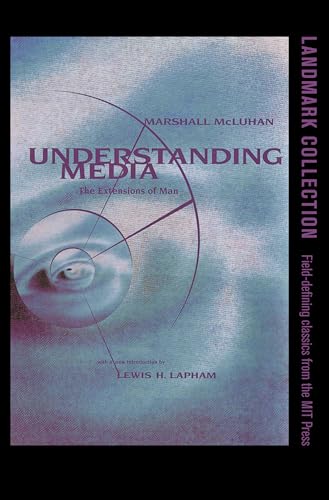
McLuhan's influential work explores how different media technologies (from writing to television) shape human thought, perception, and society itself. Fans of Beniger will appreciate McLuhan's focus on the transformative power of communication technologies and their role in structuring human interaction and control, albeit from a more philosophical and less historical-economic perspective.

by Daniel Bell
Bell's influential work posits a societal shift from an industrial economy centered on manufacturing to a post-industrial one driven by information, knowledge, and services. This book provides a crucial theoretical framework for understanding the long-term trajectory and societal implications of the 'control revolution' as it moves beyond the factory floor into the realm of information.

Rifkin explores the profound societal implications of automation and information technology leading to a significant reduction in the need for human labor. This book directly addresses the consequences of the 'control revolution' on the workforce and economic structures, offering a compelling, if sometimes bleak, vision of the future shaped by technological efficiency.

Morozov critically examines the pervasive belief that technology can solve all of society's problems, often leading to oversimplified solutions and unintended consequences. This book offers a contemporary, critical counterpoint to the inherent logic of control and optimization that underpins Beniger's 'control revolution,' questioning the efficacy and ethics of technological fixes.

Prefer to listen?
Try Audible and hear the story instead of reading it.
As an Amazon Associate, we earn from qualifying purchases.
As an Amazon Associate, we earn from qualifying purchases.