
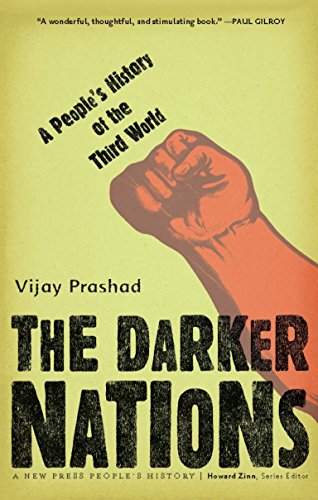
Based on your book
The Darker Nations: A People's History of the Third World
by Vijay Prashad
Vijay Prashad offers a sprawling, ambitious account of the 20th-century project to build a Third World. Instead of viewing history through the lens of cold war superpowers, he centers the activists, intellectuals, and leaders from the Global South who dared to imagine a post-colonial future. The reading experience is dense and analytical, demanding your full attention as it connects disparate uprisings and political experiments across continents. It feels less like a traditional textbook and more like a map of broken promises and persistent hope. If you are frustrated by conventional historical narratives that treat the Global South as a passive stage for Western actors, this book will be a revelation. It is for the reader who wants to understand the intellectual machinery of rebellion and why the dream of global liberation faced such brutal, systematic opposition.
10 Books similar to 'The Darker Nations: A People's History of the Third World'
If the analytical rigor of The Darker Nations left you wanting more, these selections expand on the specific mechanisms of power and resistance Prashad highlights. We chose these titles because they mirror his commitment to dismantling Eurocentric historical myths, whether through the economic focus of Walter Rodney and Mike Davis or the foundational anti-colonial theory of Frantz Fanon and Edward Said. By tracing how imperial policy, corporate greed, and intellectual framing shaped the modern world, this collection offers a deeper look at the cultural and political battles that define our current global reality.
As an Amazon Associate, we earn from qualifying purchases.

Like Prashad's work, this seminal text provides a sweeping, critical history of exploitation and resistance, focusing on the economic and political forces that shaped the Global South. It shares the same passionate, anti-imperialist perspective and serves as a foundational companion to understanding the history of the Third World project.

by Leela Gandhi
This book offers a rigorous intellectual framework for the themes Prashad explores, detailing the historical and cultural tensions between colonial powers and the colonized. It is an essential read for those looking to deepen their understanding of the theoretical underpinnings of the anti-colonial movements Prashad documents.

by Frantz Fanon
Fanon's classic provides the psychological and political bedrock for the decolonization struggles that Prashad chronicles in 'The Darker Nations'. It is a visceral, urgent, and deeply influential analysis of the violence of colonialism and the necessity of liberation.

Rodney’s masterpiece mirrors Prashad’s approach by meticulously tracing the economic history of a continent to show how external intervention stunted its growth. It is a vital, scholarly, and deeply political text that shifts the historical lens away from Eurocentric narratives.

Love to read on the go?
Explore Kindle e-readers and take your books with you.
As an Amazon Associate, we earn from qualifying purchases.

by Mike Davis
Davis provides a chilling account of how free-market ideology and imperial policy exacerbated natural disasters to create mass famine in the Global South. Readers of Prashad will appreciate the rigorous research and the focus on the human cost of global geopolitical structures.
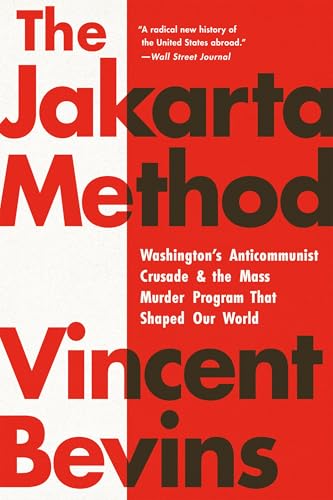
Bevins investigates the covert, violent campaigns orchestrated by the U.S. to dismantle the very 'Third World' movements Prashad writes about. This book serves as a harrowing, modern investigation into the suppression of the political autonomy of the Global South.

Said’s foundational text examines how Western representations of the 'East' were constructed to justify imperial domination, a theme that underpins the political history Prashad presents. It is indispensable for understanding the cultural and intellectual history of the colonial encounter.

Tharoor provides a sharp, accessible, and devastating critique of British colonial rule, echoing the anti-imperialist spirit found in 'The Darker Nations'. It is a powerful corrective to romanticized views of empire that complements Prashad's broader historical scope.

by Howard Zinn
While focused on the U.S., Zinn’s methodology of centering the voices of the marginalized and oppressed is the direct spiritual ancestor to Prashad’s 'People's History' approach. It offers a similar alternative narrative that challenges dominant, state-sanctioned historical accounts.

Dalrymple provides a gripping, detailed historical narrative of the corporate takeover of India, illustrating the early mechanisms of global capitalism that Prashad later analyzes in the context of the 20th century. It is a masterclass in narrative history that exposes the roots of modern global inequality.

Not sure what they've already read?
Let them pick their next favorite with an Amazon Gift Card.
As an Amazon Associate, we earn from qualifying purchases.
As an Amazon Associate, we earn from qualifying purchases.