

Based on your book
The Dispossessed
by Ursula K. Le Guin
Ursula K. Le Guin's The Dispossessed isn't a book you rush through; it's a deeply felt experience that invites you to live within its questions. It follows Shevek, a physicist from Anarres, an anarchist moon society founded on principles of communal living and equality, as he makes the unprecedented journey to Urras, its wealthy, capitalist sister planet. You'll spend your time with Shevek, seeing both worlds through his eyes, grappling with the stark differences and the subtle similarities in human nature. This is a story for readers who love to ponder big ideas about freedom, scarcity, government, and what it truly means to build a just society. It's philosophical, introspective, and profoundly thought-provoking, leaving you with a nuanced understanding of utopian ideals and their inevitable complexities.
10 Books similar to 'The Dispossessed'
If you found yourself captivated by the quiet power of The Dispossessed, you're likely drawn to stories that challenge your perspective. Our recommendations lean into that same spirit, exploring what it means to live in radically different social structures and the personal growth that comes from being a 'fish out of water.' We've chosen books that share Le Guin's commitment to deep social commentary, whether they examine the moral ambiguity of power, the complexities of creating a better world, or the sheer intellectual joy of wrestling with profound philosophical questions about humanity's future.
As an Amazon Associate, we earn from qualifying purchases.

As another cornerstone of the Hainish Cycle, this novel shares the same anthropological depth and philosophical rigor, exploring how different social structures shape human identity. It follows an envoy navigating a world with no fixed gender, echoing Shevek's journey as an outsider trying to bridge two disparate cultures.

This masterpiece mirrors the intellectual and historical scope of Le Guin’s work, focusing on the preservation of knowledge through dark ages. Fans of The Dispossessed will appreciate its deep meditation on the cyclical nature of human civilization and the intersection of science and morality.

by Marge Piercy
Much like the contrast between Anarres and Urras, this book juxtaposes a gritty present with a potential utopian future. It engages deeply with social structures, gender roles, and the political choices required to build a more equitable society.

This entry in the Culture series features a protagonist from a post-scarcity anarchist society visiting a rigid, hierarchical empire. The resulting cultural clash and critique of power dynamics will resonate strongly with readers who enjoyed Shevek's observations of capitalist Urras.

Love to read on the go?
Explore Kindle e-readers and take your books with you.
As an Amazon Associate, we earn from qualifying purchases.
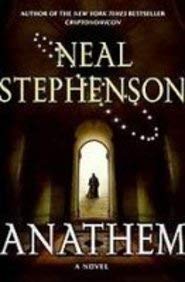
This novel features a protagonist living in a secluded intellectual community dedicated to science and philosophy, much like the scientists on Anarres. It is a deeply cerebral exploration of physics, mathematics, and the role of the intellectual in a changing world.

While more action-oriented, this book explores the practicalities of a lunar colony revolting against Earth to establish its own social system. It provides a fascinating look at alternative political structures and the logistical challenges of living in a resource-scarce environment.

Fans of the more abstract and scientific elements of The Dispossessed will enjoy this psychological exploration of human limitation. It shares Le Guin's interest in the difficulty of communication and the isolation of the intellectual mind.

Like Le Guin, Huxley uses a futuristic setting to conduct a rigorous cultural analysis of his own time. The book's focus on social engineering and the loss of individual agency provides a darker counterpoint to the anarchist ideals explored in Anarres.

This novel features two cities that occupy the same physical space but are socially and politically separated, requiring citizens to 'unsee' the other. It captures the same sense of navigating complex, invisible social boundaries found in Le Guin's work.

Butler’s work shares Le Guin’s commitment to exploring how humanity can survive and organize itself in the face of societal collapse. It features a strong, philosophical lead character who attempts to build a new community based on a unique belief system.

Not sure what they've already read?
Let them pick their next favorite with an Amazon Gift Card.
As an Amazon Associate, we earn from qualifying purchases.
As an Amazon Associate, we earn from qualifying purchases.