

Based on your book
The divine farce
by Michael S. A. Graziano
The Divine Farce takes you on a thought-provoking, surreal journey into the very fabric of consciousness and what it means to be 'you.' Michael S. A. Graziano crafts a narrative that feels both deeply personal and universally resonant, exploring the illusion of free will and the profound capacity for self-discovery. You'll find yourself questioning your own perceptions, all while being uplifted by an underlying optimism about human resilience. It's a story steeped in magical realism, lending an ethereal quality to its psychological explorations of personal growth and overcoming adversity. This book is for readers who love to grapple with big ideas, enjoy a narrative that blends the fantastical with rigorous intellectual inquiry, and appreciate a story that inspires a fresh look at our inner lives.
10 Books similar to 'The divine farce'
If The Divine Farce left you pondering the nature of your own mind and the illusion of free will, then our curated list offers further intellectual adventures. We've chosen books that similarly delve into the mysteries of consciousness and the self, whether through rigorous scientific inquiry, philosophical debate, or imaginative fiction. From neuroscience's perspective on the brain to speculative tales questioning what it means to be human, these selections challenge our understanding of agency and invite you to question the very essence of human experience, much like Graziano's compelling narrative.
As an Amazon Associate, we earn from qualifying purchases.

Dennett directly addresses the nature of consciousness, free will, and the self from a cognitive science and philosophical perspective, often challenging intuitive notions with rigorous arguments, much like Graziano. Readers will appreciate the deep dive into how the brain constructs our subjective experience.

by Sam Harris
This concise and powerful book presents a direct argument against the traditional concept of free will, drawing on neuroscience and philosophy to dismantle common assumptions. It mirrors the core arguments found in "The Divine Farce" by challenging our fundamental understanding of agency.

While broader in scope, Harari's work meticulously deconstructs human constructs like identity, free will, and collective fictions, offering a grand, analytical perspective. His challenge to our understanding of the 'self' and societal narratives resonates strongly with Graziano's intellectual approach.

This seminal science fiction novel delves deep into questions of what constitutes humanity, consciousness, and authentic emotion, forcing readers to confront the blurred lines between artificial and real. It explores the nature of the 'self' in a deeply philosophical and unsettling way, similar to Graziano's inquiries.

Not sure what they've already read?
Let them pick their next favorite with an Amazon Gift Card.
As an Amazon Associate, we earn from qualifying purchases.

Damasio challenges the traditional separation of mind and body, demonstrating through neuroscience how emotions and the body are integral to reason and consciousness. This provides a biological foundation for understanding the 'self' that aligns with Graziano's scientific approach to consciousness.

by Oliver Sacks
Through fascinating case studies of neurological patients, Sacks explores the intricate workings of the brain and how it constructs our perception of reality and self. These profound insights into consciousness offer a compelling, real-world complement to Graziano's theoretical discussions.
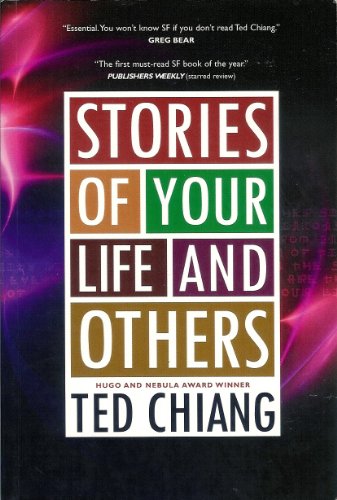
by Ted Chiang
Chiang's masterful short stories, particularly 'Story of Your Life,' explore profound philosophical questions about language, perception, and determinism. They challenge our understanding of free will and the nature of reality in a deeply intellectual and imaginative way, much like Graziano's work.

This highly speculative but influential work proposes a radical theory for the historical emergence of consciousness, challenging conventional views of the human mind and its development. Readers who enjoy bold, paradigm-shifting intellectual arguments will find parallels with Graziano's challenging thesis.

Metzinger's comprehensive philosophical and scientific work argues that the self is a 'phenomenal self-model' rather than a real entity, providing a rigorous and detailed exploration of consciousness and the illusion of self. This directly parallels Graziano's core thesis and offers a deeper dive into the concept.

While a work of fiction, Vonnegut's satirical and deeply philosophical novel grapples with themes of free will versus determinism, the nature of time, and the human response to trauma. It presents a unique, often cynical, perspective on human agency that resonates with Graziano's deconstruction of free will.

Prefer to listen?
Try Audible and hear the story instead of reading it.
As an Amazon Associate, we earn from qualifying purchases.
As an Amazon Associate, we earn from qualifying purchases.