

Based on your book
The Expulsion of the Other
by Han, Byung-Chul
Byung-Chul Han offers a sharp, surgical examination of why we are increasingly incapable of encountering anything truly different from ourselves. In this slim but dense volume, he argues that the digital age has optimized our lives for comfort and efficiency, effectively purging the friction that comes with encountering an authentic other. Without this friction, we remain trapped in a self-referential loop, where we only ever see our own reflection. The reading experience is less like a narrative and more like a series of intellectual tremors; Han writes with a cold, aphoristic precision that forces you to pause and re-evaluate your own digital habits. This book is for the reader who feels the subtle, gnawing loneliness of modern life and wants a rigorous philosophical framework to explain why our hyper-connected reality feels so hollow.
10 Books similar to 'The Expulsion of the Other'
If the unsettling clarity of Han's analysis left you wanting more, these selections expand on the social and psychological costs of our current era. We have curated a list that bridges the gap between Han's abstract philosophy and the concrete realities of sociology and technology. Whether you are exploring the erosion of community in Bowling Alone or the behavioral data extraction described by Zuboff, these books share a commitment to questioning the hidden structures of our lives. They are essential for anyone examining how digital architecture and modern achievement culture reshape our capacity for empathy.
As an Amazon Associate, we earn from qualifying purchases.

As the foundational text that precedes many of Han's later works, this book offers a deeper dive into the neurological and sociological pressures of modern achievement culture. It shares the same sharp, aphoristic style and critical lens on contemporary society that makes 'The Expulsion of the Other' so compelling.

Bauman's seminal work explores the instability and fluidity of modern social structures, mirroring Han's concerns about the erosion of community and the 'other.' Readers will appreciate the similar intellectual rigor applied to understanding how our fragile, interconnected world impacts human relationships.

Turkle investigates the paradox of our hyper-connected digital lives leading to profound isolation, a central theme in Han's critique of the digital age. This book provides a sociological counterpart to Han's philosophical arguments, perfect for those interested in the human cost of technology.

by Guy Debord
This classic text critiques how image and representation have replaced authentic life, providing the historical and theoretical bedrock for many of Han's arguments. Fans of Han's concise, critical voice will find this essential reading for understanding the commodification of experience.

Not sure what they've already read?
Let them pick their next favorite with an Amazon Gift Card.
As an Amazon Associate, we earn from qualifying purchases.

Putnam provides a data-driven examination of the decline of social capital and community engagement, which directly correlates to Han's discussion on the loss of the 'other.' It offers a concrete, sociological perspective on the themes of atomization and social fragmentation.

Carr explores how digital tools are physically and cognitively reshaping our ability to think deeply and empathize, echoing Han's concerns about the digital erosion of the self. It is a highly accessible yet rigorous look at the psychological impacts of our modern information environment.

Baudrillard's work on how reality is replaced by symbols and signs is a crucial influence on Han's philosophy regarding the 'expulsion' of reality. Readers who enjoy Han's dense, theory-heavy approach will find this challenging and rewarding.

by Neil Postman
Postman argues that our culture has become subservient to technology, a theme that resonates strongly with Han's critique of digital transparency and efficiency. It provides a historical and ethical framework for questioning the 'progress' of our modern technological society.

Zuboff offers a comprehensive analysis of how human experience is turned into behavioral data, reinforcing Han's observations about the loss of privacy and the 'other' in the digital sphere. It is a vital read for understanding the economic structures that drive the isolation Han discusses.
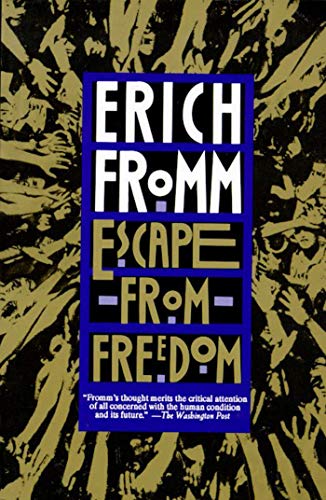
by Erich Fromm
Fromm explores the psychological burden of freedom and the tendency to seek security in authoritarian structures, which parallels Han's discussion on the self-imposed pressures of contemporary life. This classic psychology text provides deep insight into the human need for belonging versus the desire for autonomy.

Prefer to listen?
Try Audible and hear the story instead of reading it.
As an Amazon Associate, we earn from qualifying purchases.
As an Amazon Associate, we earn from qualifying purchases.