
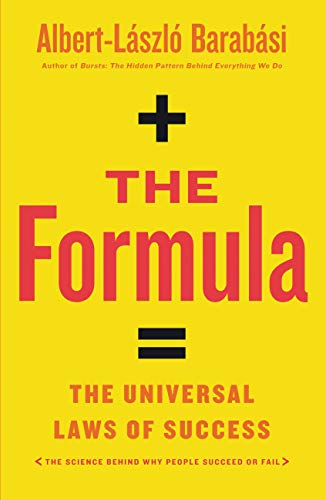
Based on your book
The Formula
by Barabási, Albert-László
We are often told that if we work hard and possess enough talent, success is inevitable. Albert-Laszlo Barabasi argues that this is fundamentally wrong. By applying network science to performance, he demonstrates that while performance is often individual, success is a collective phenomenon determined by how others perceive your work. The book breaks down why meritocracy is frequently a myth and how visibility and social networks play a larger role in our achievements than raw ability. Reading this feels like having the curtain pulled back on the machinery of the world; it is clinical, precise, and occasionally unsettling. It is perfect for the analytical reader who enjoys deconstructing social myths and wants to understand the invisible mathematical structures that govern our professional and creative lives.
10 Books similar to 'The Formula'
Since you appreciate the way Barabasi uses data to dismantle popular myths, these selections were curated to further explore the hidden systems behind human behavior. Whether you are interested in the cognitive biases explored by Kahneman or the economic reality of luck highlighted by Frank, these books share a commitment to evidence-based observation. They move beyond the surface level of self-improvement to address the mechanics of social influence and the uncomfortable truth that our outcomes are rarely the result of solitary effort, but rather the products of complex, interconnected environments.
As an Amazon Associate, we earn from qualifying purchases.

Like Barabási, Gladwell deconstructs the myths surrounding individual achievement by looking at the hidden patterns and external factors that dictate success. Both authors use data and sociological analysis to challenge the 'self-made man' narrative.

Written by the same author, this book provides the foundational theory behind the network science that informs 'The Formula.' It is essential for readers who want to understand the mathematical underpinnings of how connections shape our world.
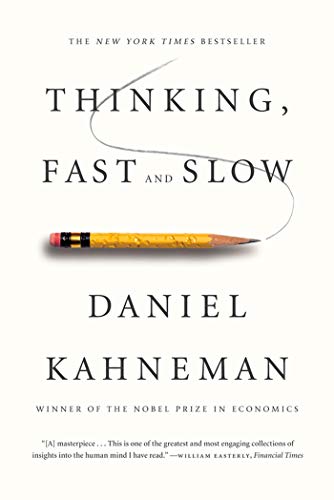
This masterpiece explores the cognitive biases that influence our decision-making, providing a psychological framework that complements Barabási's sociological approach to success. It is a must-read for anyone interested in why we perceive value and performance the way we do.

Epstein challenges the idea that early specialization is the key to success, offering a compelling argument that aligns with Barabási's findings on performance and career trajectories. It provides a data-driven look at how diverse experiences lead to better outcomes.

Love to read on the go?
Explore Kindle e-readers and take your books with you.
As an Amazon Associate, we earn from qualifying purchases.

by Adam Grant
Grant explores the science of creativity and how individuals can champion new ideas, mirroring Barabási's interest in what actually drives impact versus what we *think* drives impact. It focuses on the mechanics of success for those who challenge the status quo.
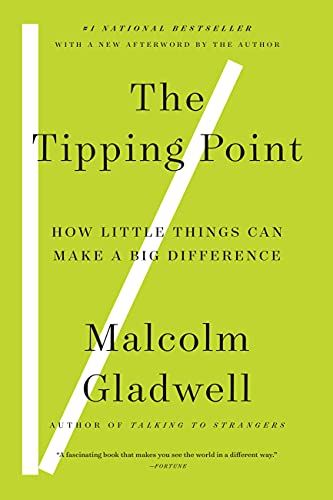
This book examines the 'social epidemics' that cause ideas or products to explode in popularity, which resonates deeply with Barabási's discussion on how success is often a network phenomenon rather than an individual one. It is a classic study in how context shapes outcomes.

Tetlock investigates the habits and traits of people who can accurately predict the future, offering a rigorous, data-based look at performance that mirrors the scientific methodology found in 'The Formula.' It deconstructs the difference between luck and genuine skill.
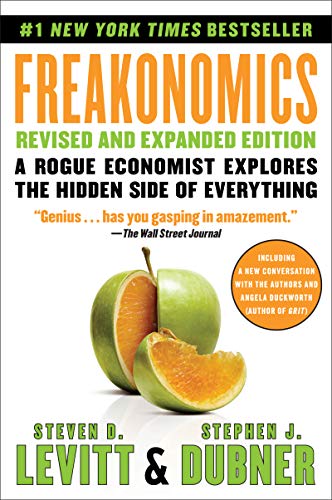
by Steven D. Levitt and Stephen J. Dubner
Much like Barabási, the authors use data to uncover the surprising, counterintuitive truths behind everyday phenomena. It is perfect for readers who enjoy having their assumptions about success and societal behavior challenged by hard evidence.

by Brian Christian and Tom Griffiths
This book applies computational algorithms to human life, providing a fascinating bridge between computer science and daily problem-solving. It shares the same 'systems-thinking' DNA as 'The Formula,' showing how mathematical principles apply to human success.

Frank provides a rigorous economic argument for the role of luck in success, which directly supports and expands upon the core thesis of Barabási's work. It is a sobering, insightful look at the limitations of the meritocratic ideal.

Not sure what they've already read?
Let them pick their next favorite with an Amazon Gift Card.
As an Amazon Associate, we earn from qualifying purchases.
As an Amazon Associate, we earn from qualifying purchases.