

Based on your book
The Future of Freedom
by Zakaria, Fareed
Fareed Zakaria challenges the common assumption that democracy and liberty are two sides of the same coin. He argues that we often conflate the two, failing to notice how the unchecked spread of democratic elections can sometimes undermine the essential foundations of constitutional liberalism, such as the rule of law and individual rights. The reading experience is clinical and measured, feeling less like a political manifesto and more like a high-level briefing from a seasoned observer of global affairs. Zakaria moves through history with a steady, analytical pace, dissecting how power structures shift and why societies often struggle to balance popular will with institutional stability. This book is for the reader who enjoys untangling complex political theories and wants a clearer lens through which to view the current tensions between populism and traditional governance.
10 Books similar to 'The Future of Freedom'
Since you appreciated the way Zakaria dissects the structural fragility of our political systems, you might want to explore the broader landscape of democratic decline and institutional history. We selected these titles because they mirror his focus on the intersection of power, law, and history. Whether you are looking for the historical evolution of the state found in Fukuyama or the modern, cautionary assessments from Levitsky and Luce, these books provide the same intellectual rigor. They collectively offer a deeper look at how the machinery of government succeeds or collapses under pressure.
As an Amazon Associate, we earn from qualifying purchases.

Like Zakaria's work, this seminal text offers a sweeping analysis of global political evolution and the triumph of liberal democracy. It is essential reading for those interested in the structural and ideological underpinnings of modern political systems.

by Daron Acemoglu and James A. Robinson
This book provides a rigorous examination of the institutional factors that lead to political and economic success or failure. Readers who appreciated Zakaria's focus on the intersection of liberty and governance will find this argument equally compelling and well-researched.

MacLean offers a critical look at the tension between democratic processes and the protection of elite interests, echoing Zakaria's concerns about the fragility of liberal institutions. It provides a sobering, deep-dive perspective on how political power is shaped and constrained.

This massive undertaking explores the development of political institutions from pre-human times to the French Revolution. It appeals to the same intellectual curiosity found in Zakaria's work, focusing on the historical evolution of the state and the rule of law.

Not sure what they've already read?
Let them pick their next favorite with an Amazon Gift Card.
As an Amazon Associate, we earn from qualifying purchases.

by Steven Levitsky and Daniel Ziblatt
This book serves as a modern companion to Zakaria's thesis, examining how elected leaders can dismantle democratic norms from within. It is a vital read for anyone concerned with the erosion of liberty in the face of populist movements.

by Tony Judt
Judt offers a poignant critique of the modern political and economic landscape, arguing for the necessity of social democracy and the public good. His voice is similarly authoritative and observational, making it a perfect follow-up for readers interested in the health of global society.
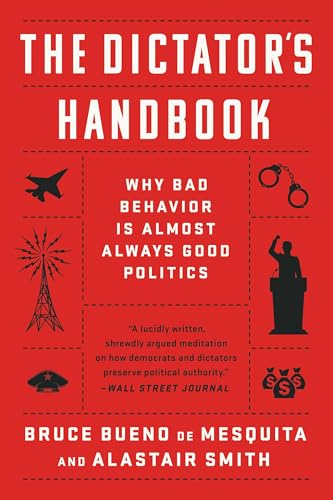
by Bruce Bueno de Mesquita and Alastair Smith
This book uses game theory and political science to explain how leaders maintain power, regardless of whether they are in a democracy or a dictatorship. It shares Zakaria's analytical, stripped-down approach to understanding the mechanics of political survival.

Snyder distills complex historical lessons into actionable advice for preserving democratic values, mirroring the urgency found in Zakaria's warnings about illiberalism. It is concise, powerful, and deeply grounded in historical context.

by Lee McIntyre
McIntyre investigates the rise of misinformation and its corrosive effect on democratic institutions, a key component of the modern political environment Zakaria explores. It provides a necessary framework for understanding the current crisis of expertise and truth.

by Edward Luce
Luce provides a sharp, journalistic assessment of the global challenges facing liberal democracy in the 21st century. Fans of Zakaria's global perspective will appreciate this book's focus on economic inequality and the shifting geopolitical landscape.

Prefer to listen?
Try Audible and hear the story instead of reading it.
As an Amazon Associate, we earn from qualifying purchases.
As an Amazon Associate, we earn from qualifying purchases.