

Based on your book
THE GNOSTIC BEGINNER’S HANDBOOK
by Vale, Theodore Ash
The Gnostic Beginner’s Handbook acts as a grounded entryway into a philosophy that often feels tangled in ancient jargon. Theodore Ash Vale strips away the academic pretense, focusing instead on the practical application of Gnostic thought in a modern, often alienating world. The book functions as both a map and a mirror, guiding you through the complex cosmology of the Gnostics while constantly pushing you to examine your own internal reality. The pacing is deliberate and meditative, encouraging you to pause and digest heavy concepts like the nature of the demiurge or the spark of divinity within. It is an ideal companion for anyone feeling the itch of an existential crisis or those who find traditional religious structures insufficient. If you are looking for a book that challenges your perception of fate versus free will without feeling like a dry textbook, this is your starting point.
10 Books similar to 'THE GNOSTIC BEGINNER’S HANDBOOK'
Since you enjoyed the introspective and intellectual framework of Vale’s work, these ten selections were chosen to deepen your understanding of the Gnostic tradition. We have curated a mix of primary source material, like The Nag Hammadi Library, and psychological interpretations that bridge the gap between ancient mysticism and modern self-discovery. Whether you want to explore the historical roots of these beliefs or seek out the more radical, liberating aspects of the philosophy, this list allows you to move beyond the basics and engage directly with the thinkers who shaped this hidden history.
As an Amazon Associate, we earn from qualifying purchases.

This seminal work provides the essential historical and theological context for the Gnostic texts that underpin the philosophy discussed in Vale's handbook. It offers a scholarly yet accessible exploration of the alternative Christian traditions that define Gnosticism.
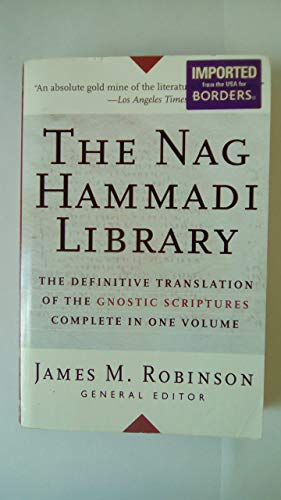
For readers who want to go directly to the source material introduced in the handbook, this collection is the definitive English translation of the Gnostic scriptures. It allows the reader to engage directly with the primary texts that shape the Gnostic worldview.

This encyclopedic work is a cornerstone for anyone interested in esoteric wisdom, mysticism, and the hidden history of spiritual thought. It complements the Gnostic perspective by placing it within a broader framework of universal symbolism and ancient philosophy.

Hoeller bridges the gap between Gnostic mysticism and Jungian psychology, a connection often explored in modern Gnostic literature. It provides a practical, psychological lens through which to view the spiritual concepts found in the handbook.

Love to read on the go?
Explore Kindle e-readers and take your books with you.
As an Amazon Associate, we earn from qualifying purchases.

Huxley synthesizes the mystical traditions of the world, highlighting the common threads of 'gnosis' or direct experience of the divine. It aligns perfectly with the handbook's focus on transcending dogma to reach personal spiritual understanding.

This book serves as an excellent companion for those interested in the intersection of Gnosticism and modern depth psychology. It expands on the idea of the 'inner journey' and the pursuit of individual spiritual truth, mirroring the handbook's instructional tone.
Focusing on one of the most influential Gnostic teachers, this book provides a deeper dive into the specific mythos and cosmology often touched upon in introductory handbooks. It is essential reading for understanding the 'why' behind Gnostic practice.

This book offers a more radical and provocative interpretation of Gnosticism, focusing on the liberation of the spirit from the material world. It appeals to readers who appreciated the 'handbook' style but are looking for a more intense, philosophical challenge.

by Kurt Rudolph
Regarded as one of the most comprehensive academic overviews of Gnosticism, this book provides the structural backbone for understanding the movement's history. It is a perfect follow-up for a reader who wants to move from a 'beginner's handbook' to a more rigorous study.

Leloup provides a beautiful, meditative commentary on one of the most important Gnostic texts, focusing on the practical application of its wisdom. It captures the reflective and spiritual tone that readers of Vale's handbook likely found appealing.

Not sure what they've already read?
Let them pick their next favorite with an Amazon Gift Card.
As an Amazon Associate, we earn from qualifying purchases.
As an Amazon Associate, we earn from qualifying purchases.