
Based on your book
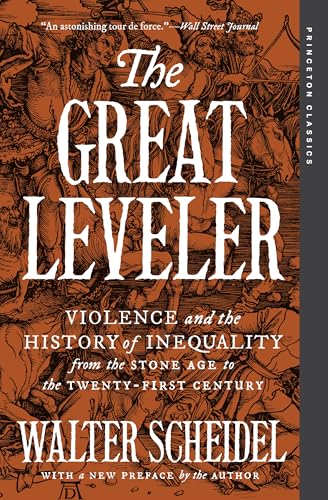
The Great Leveler
by Walter Scheidel
Walter Scheidel's The Great Leveler offers a stark, deeply analytical journey through human history, revealing a consistently unsettling truth: economic inequality rarely diminishes peacefully. Instead, Scheidel meticulously argues that only the most catastrophic events — mass warfare, transformative revolutions, state collapse, and devastating plagues — have ever genuinely flattened social hierarchies and redistributed wealth. Reading this book is a sobering experience; it's a sweeping historical deep dive that doesn't shy away from uncomfortable conclusions about our past and future. The narrative is dense with evidence, yet presented with a compelling clarity that keeps you engaged, even as it forces you to confront the brutal realities of human progress. This is for the reader who craves rigorous, thought-provoking non-fiction, unafraid of a bleak perspective on power dynamics and the persistent, violent forces that shape our world.
10 Books similar to 'The Great Leveler'
If you found yourself gripped by Walter Scheidel's unflinching historical analysis in The Great Leveler, you'll appreciate the intellectual rigor of these companion reads. We've gathered books that, like Scheidel's, offer sweeping, data-driven looks at how economic inequality and power dynamics have shaped civilizations across millennia. Whether exploring the macro-historical forces behind prosperity and collapse, or delving into the specific mechanisms by which wealth is accumulated and distributed, these selections continue the conversation about the persistent, often brutal, forces that truly "level" societies.
As an Amazon Associate, we earn from qualifying purchases.
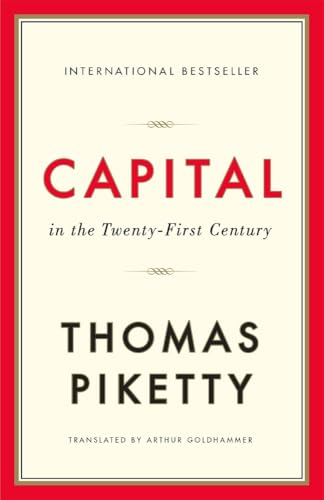
Like Scheidel, Piketty provides a data-driven, historical analysis of wealth inequality. It explores the long-term evolution of capital and the structural forces that drive economic disparity, making it an essential companion piece for understanding the mechanics of the 'leveling' process.

This book shares Scheidel's 'big history' approach, looking at the broad environmental and geographical factors that shape human societies. It appeals to readers who enjoy sweeping, macro-historical narratives that explain the current state of the world through long-term trends.

by Daron Acemoglu and James A. Robinson
This work examines the role of political and economic institutions in creating prosperity or poverty. It mirrors Scheidel's interest in how power structures and institutional stability (or lack thereof) dictate the distribution of resources across millennia.

While Scheidel focuses on the violent shocks that reduce inequality, Pinker examines the historical decline of violence. Both authors use massive datasets to challenge our perceptions of human progress and the role of conflict in shaping civilization.

Not sure what they've already read?
Let them pick their next favorite with an Amazon Gift Card.
As an Amazon Associate, we earn from qualifying purchases.

Harari offers a macroscopic view of human history that aligns with Scheidel's analytical scale. It explores how collective myths and social structures have evolved, providing a broader context for the economic and social shifts discussed in The Great Leveler.

Gordon focuses on the specific historical window of 1870-1970, analyzing the unique conditions that led to unprecedented economic leveling and growth. It provides a localized, deep-dive counterpart to Scheidel's global, multi-era perspective.

Graeber explores the history of debt and its relationship to social hierarchy and violence. Much like Scheidel, he argues that economic systems are deeply intertwined with political power and the threat of force.

by Daron Acemoglu and James A. Robinson
This book explores the delicate balance between the state and society required to maintain liberty and equality. It complements Scheidel's thesis by examining how societies can avoid the violent 'leveling' shocks through institutional design.

Milanovic provides a modern economic perspective on the cycles of inequality. His concept of 'Kuznets waves' offers a theoretical framework that pairs perfectly with Scheidel's historical evidence of leveling events.

Focusing on the darker side of Scheidel's 'Four Horsemen,' Diamond examines how environmental and social pressures lead to the total breakdown of civilizations. It is a gripping look at the catastrophic end-points of the cycles Scheidel describes.

Prefer to listen?
Try Audible and hear the story instead of reading it.
As an Amazon Associate, we earn from qualifying purchases.
As an Amazon Associate, we earn from qualifying purchases.