

Based on your book
The Kingdom of God is Within You
by graf Leo Tolstoy
Leo Tolstoy's "The Kingdom of God is Within You" isn't a gentle read; it's a profound, often challenging exploration of Christian anarchism and non-violent resistance. Tolstoy lays out a radical vision for society, arguing that true adherence to Christ's teachings demands a rejection of all forms of state-sanctioned violence and a deep commitment to social justice. You'll find him dissecting institutions and challenging deeply held beliefs with a relentless, almost sermon-like intensity. The reading experience is thought-provoking and inspiring, pushing you to reconsider everything from governmental power to personal morality. This book is for readers who aren't afraid to have their worldview shaken, who appreciate rigorous philosophical argument, and who are looking for a powerful, historically significant call to ethical living and societal transformation.
10 Books similar to 'The Kingdom of God is Within You'
If Tolstoy's "The Kingdom of God is Within You" resonated with your desire for a more just and principled world, you'll find kindred spirits in these selections. They all share that same spirit of social commentary and self-improvement, whether they're exploring individual moral responsibility like Thoreau's "Civil Disobedience" or grappling with profound ethical dilemmas in the vein of Dostoevsky's "The Brothers Karamazov." Each offers a unique perspective on rebellion against injustice and the pursuit of a more meaningful existence, echoing Tolstoy's powerful call for inner transformation and outward action.
As an Amazon Associate, we earn from qualifying purchases.

Thoreau's experiment in simple living and self-reliance, detailed in "Walden," mirrors Tolstoy's critique of societal complexities and his call for a return to fundamental truths and individual moral responsibility, emphasizing introspection and a life aligned with principle rather than convention.

This seminal essay directly influenced Tolstoy's philosophy of non-resistance. Thoreau's argument for individual conscience over state law and his advocacy for non-violent protest against unjust government policies resonate deeply with Tolstoy's core tenets in "The Kingdom of God is Within You."

Like Tolstoy's spiritual quest, "Siddhartha" chronicles a man's journey of self-discovery and his search for ultimate truth and spiritual enlightenment outside conventional religious and societal structures, emphasizing personal experience over dogma.

While fiction, Dostoevsky's epic delves into profound theological and philosophical questions about faith, doubt, morality, and human suffering, exploring the nature of good and evil with a depth that rivals Tolstoy's non-fiction works in its intellectual and spiritual inquiry.

Love to read on the go?
Explore Kindle e-readers and take your books with you.
As an Amazon Associate, we earn from qualifying purchases.

by Victor Hugo
Hugo's monumental work is a powerful exploration of social justice, redemption, and the conflict between law and morality, echoing Tolstoy's concern for the poor and oppressed and his deep philosophical inquiry into human dignity and the possibility of spiritual transformation.

Steinbeck's novel vividly portrays the devastating impact of social and economic injustice on ordinary people, exploring themes of human dignity, community, and resilience in the face of systemic oppression, much like Tolstoy's critique of societal structures that perpetuate suffering.
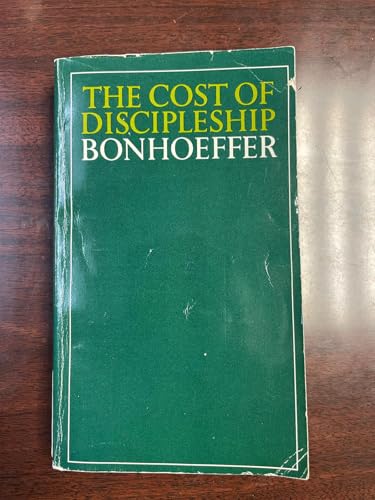
Bonhoeffer's theological work challenges readers to embrace a radical, costly discipleship, critiquing "cheap grace" and advocating for active, ethical living in alignment with Christian principles, resonating with Tolstoy's call for a practical, non-violent application of Christ's teachings.

Gibran's poetic philosophical essays offer timeless wisdom on various aspects of human existence, providing spiritual guidance and a vision for living a meaningful life rooted in love and compassion, similar to Tolstoy's moral teachings and his quest for universal spiritual truths.

Frankl's profound work explores the human capacity to find meaning even in extreme suffering, emphasizing personal responsibility and the search for purpose, which aligns with Tolstoy's focus on individual moral agency and the inner spiritual life as the source of true fulfillment.

by Vyasa
This ancient Hindu scripture, a profound dialogue on duty, action, and spiritual liberation, offers deep philosophical insights into ethical living and the nature of the self, resonating with Tolstoy's search for universal spiritual truths and his emphasis on inner transformation.

Not sure what they've already read?
Let them pick their next favorite with an Amazon Gift Card.
As an Amazon Associate, we earn from qualifying purchases.
As an Amazon Associate, we earn from qualifying purchases.