
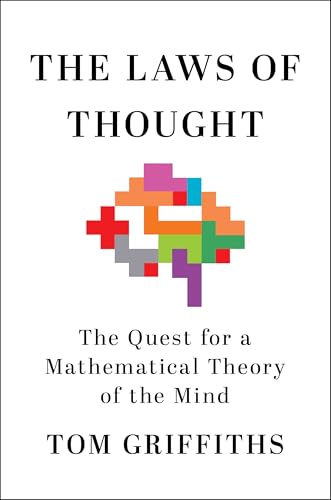
Based on your book
The Laws of Thought
by Griffiths, Tom
The Laws of Thought is an invitation to examine the architecture of your own mind. Rather than offering self-help platitudes, Griffiths dissects the logical frameworks that govern how we perceive reality, weigh choices, and construct our sense of self. It is a contemplative, dense, and deeply analytical work that forces you to confront the tension between raw instinct and structured reasoning. The pacing is deliberate, demanding your full attention as it balances abstract philosophical inquiry with the practical, often existential, reality of human decision-making. You will find yourself pausing frequently to look at your past choices through a new lens. This book is best suited for the reader who enjoys intellectual heavy lifting, someone who wants to understand the mechanics of their own consciousness and is willing to trade easy answers for a rigorous, challenging exploration of what it actually means to think.
10 Books similar to 'The Laws of Thought'
Since you enjoyed the analytical rigor of The Laws of Thought, our curated list focuses on books that bridge the gap between abstract cognitive theory and the messy reality of human life. These titles explore the same intersection of logic and fate, whether through the lens of computer algorithms, evolutionary biology, or the philosophy of consciousness. We have selected these works because they share that specific, contemplative DNA, helping you peel back the layers of your own decision-making processes while grounding those complex, existential themes in accessible, evidence-based inquiry.
As an Amazon Associate, we earn from qualifying purchases.
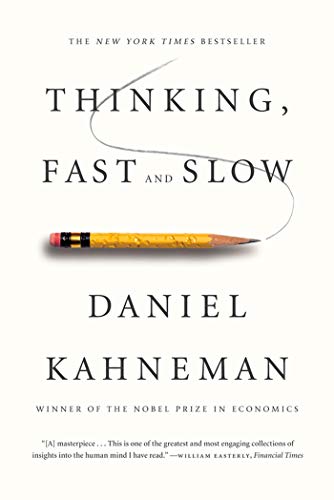
As the definitive work on the dual systems of human thought, this book serves as the intellectual cornerstone for anyone interested in the cognitive biases and logical frameworks explored in Griffiths' work. It offers a rigorous, scientific deep dive into the mechanics of decision-making that will satisfy readers seeking to understand the 'why' behind human behavior.
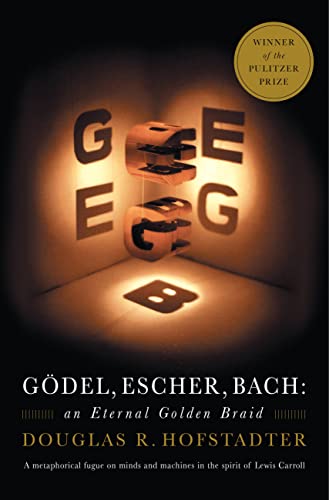
This masterpiece explores the intersection of logic, consciousness, and self-reference, mirroring the complex, analytical nature of Griffiths' writing. Fans of 'The Laws of Thought' will appreciate the playful yet deeply serious investigation into how systems of thought emerge from simple rules.

This narrative non-fiction book chronicles the partnership between Daniel Kahneman and Amos Tversky, providing the human story behind the revolutionary ideas discussed in Griffiths' work. It perfectly blends rigorous scientific theory with a compelling, character-driven narrative style.

by Dan Ariely
Ariely challenges the traditional assumption that humans act rationally, providing accessible, evidence-based insights that complement the logical exploration in 'The Laws of Thought.' It is an essential read for anyone fascinated by the hidden patterns that dictate our daily choices.

Not sure what they've already read?
Let them pick their next favorite with an Amazon Gift Card.
As an Amazon Associate, we earn from qualifying purchases.

Ellenberg demonstrates how mathematical reasoning—the foundation of logical thought—underpins almost every aspect of our lives, from politics to medicine. Readers who enjoyed Griffiths' focus on the structure of logic will find this an engaging and practical extension of those concepts.

by Hugo Mercier and Dan Sperber
This book offers a radical re-evaluation of why we reason, arguing that it evolved for social interaction rather than individual logic, which directly engages with the themes in Griffiths' work. It provides a fascinating, debate-worthy perspective on the evolutionary purpose of our cognitive processes.

by Brian Christian and Tom Griffiths
Co-authored by the same Tom Griffiths, this book applies the logic of computer algorithms to human decision-making, offering a direct, practical application of the theories presented in 'The Laws of Thought.' It is the perfect companion for those who want to see how cognitive logic translates into actionable life strategies.

by Anil Seth
Seth explores the nature of consciousness and how our brains construct reality, a topic that deeply resonates with the study of thought processes. It offers a profound, scientifically grounded look at the 'self' that will appeal to the same analytical curiosity found in Griffiths' writing.

This ambitious book argues that there are no fundamental limits to human knowledge or progress, providing a grand, logical framework for understanding the universe. Its rigorous, philosophical approach to the power of explanation will captivate readers who enjoy deep, structured intellectual inquiry.

by Nick Bostrom
Bostrom examines the logical implications of artificial intelligence surpassing human cognition, a topic that naturally follows the study of human thought processes. It is a dense, high-stakes analysis that will challenge and engage readers who enjoyed the logical rigor of Griffiths' work.

Prefer to listen?
Try Audible and hear the story instead of reading it.
As an Amazon Associate, we earn from qualifying purchases.
As an Amazon Associate, we earn from qualifying purchases.