

Based on your book
The Man Who Saw Tomorrow
by Hoddeson, Lillian
Lillian Hoddeson offers a rigorous, clear-eyed look at John Bardeen, the only person to win two Nobel Prizes in Physics. Rather than relying on myth-making, she examines the architecture of his intellect and the specific, high-pressure environments at Bell Labs that allowed his breakthroughs in the transistor and superconductivity to flourish. The reading experience is intellectual and steady, favoring precise detail and logical progression over dramatic flair. You will feel as though you are sitting in a quiet office with a historian who values evidence and systemic context above all else. This book is for the reader who finds the mechanics of scientific collaboration more fascinating than the cult of personality. If you want to understand how a single mind can pivot the trajectory of modern technology through persistence and quiet calculation, this is a essential addition to your shelf.
10 Books similar to 'The Man Who Saw Tomorrow'
If the precision of Hoddeson's research resonated with you, these selections expand on the intersection of individual genius and institutional history. We chose these titles because they mirror the analytical focus found in The Man Who Saw Tomorrow, specifically regarding the tension between solitary scientific discovery and the collaborative pressures of the twentieth century. Whether exploring the labs of the Manhattan Project or the mathematical breakthroughs of Ramanujan, these books share a commitment to humanizing the titans of physics and mathematics without sacrificing the technical complexity that defined their lives and legacies.
As an Amazon Associate, we earn from qualifying purchases.

by Jon Gertner
Like Hoddeson's work, this book provides a deep, historical look at the epicenter of technological advancement, focusing on the brilliant minds behind the inventions that shaped the modern world. It captures the same spirit of scientific discovery and the collaborative, yet often intense, environment of high-stakes research.

by Kai Bird and Martin J. Sherwin
Fans of the detailed biographical approach in 'The Man Who Saw Tomorrow' will appreciate this comprehensive examination of a scientific titan. It masterfully balances the personal life of a genius with the monumental, world-changing physics they helped create.
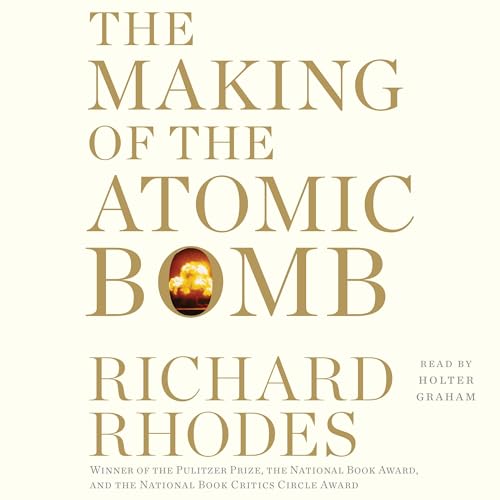
This book shares the same meticulous research and narrative drive as Hoddeson's biography, placing individual scientists within the broader context of 20th-century history. It is essential reading for anyone fascinated by the intersection of theoretical physics and global impact.

by James Gleick
Gleick offers a concise but profound look at one of history's greatest scientific minds, mirroring the focus on intellectual legacy found in Hoddeson's work. It explores the solitary nature of genius and the transformative power of scientific insight.

Love to read on the go?
Explore Kindle e-readers and take your books with you.
As an Amazon Associate, we earn from qualifying purchases.

This biography explores the life of a brilliant mathematician whose work changed the world, much like John Bardeen's. It captures the struggle of the individual genius against institutional norms and the pure, often isolating, pursuit of knowledge.

by James Gleick
Readers who enjoyed the deep dive into the life of a Nobel laureate will find this portrait of Richard Feynman equally compelling. It expertly blends the history of quantum physics with the eccentric, brilliant personality of one of its most famous practitioners.

by Liza Mundy
While focusing on a different field, this book shares the 'behind-the-scenes' historical focus of Hoddeson's writing. It highlights the unsung heroes whose intellectual labor and scientific rigor were pivotal to historical turning points.

This book captures the same sense of awe and curiosity regarding scientific discovery that permeates the life of John Bardeen. It connects the personal stories of scientists to the broader cultural and intellectual shifts of their time.

Much like 'The Man Who Saw Tomorrow,' this book uncovers the vital, often overlooked contributions of scientists and mathematicians to major technological achievements. It provides a fascinating look at the workplace dynamics of mid-century research institutions.

For those who appreciate the biographical depth of Hoddeson's work, this definitive account of Einstein is a perfect companion. It humanizes a scientific icon while clearly explaining the complex theories that changed our understanding of reality.

Not sure what they've already read?
Let them pick their next favorite with an Amazon Gift Card.
As an Amazon Associate, we earn from qualifying purchases.
As an Amazon Associate, we earn from qualifying purchases.