

Based on your book
The Mathematics of Poker
by Bill Chen
Bill Chen does not teach you how to play poker in the traditional sense; he teaches you how to quantify it. This is a rigorous, academic exploration of the game, treating every hand as a series of variables waiting to be solved. The reading experience is quiet, methodical, and deeply intellectual, stripping away the romanticized grit of the casino floor to reveal the cold, clean probability underneath. You will spend your time parsing proofs and game theory models rather than learning how to read a bluff. This book is not for the casual weekend player looking for quick tips. It is for the reader who finds comfort in equations and wants to understand the absolute ceiling of strategic play. If you approach life as a series of probabilistic decisions, you will find this manual both challenging and strangely meditative.
10 Books similar to 'The Mathematics of Poker'
Since you appreciated the analytical rigor of Chen, these selections bridge the gap between abstract probability and real-world application. We have curated a list that moves from the historical foundations of game theory seen in A Beautiful Mind to the practical, modern table strategies found in Matthew Janda and Will Tipton. Whether you are interested in the psychological biases documented by Daniel Kahneman or the financial systems explored in Fortune's Formula, these books share a common commitment to intellectual discipline and the belief that luck is merely a variable that can be managed.
As an Amazon Associate, we earn from qualifying purchases.

Considered the bible of professional poker strategy for decades, this book offers a foundational look at aggressive play and game theory that complements the more modern, mathematical approach of Chen's work. It provides the essential historical context and strategic mindset that any serious student of poker must understand.

While not about poker specifically, this book is essential for understanding the cognitive biases and decision-making processes that underpin the psychological side of poker strategy. It provides the scientific framework for the human behavior that mathematical models like Chen's aim to exploit.

This book serves as a natural successor to the theoretical foundations laid in 'The Mathematics of Poker,' focusing on applying game theory optimal (GTO) strategies to modern no-limit hold'em. It is a highly technical, rigorous text that will satisfy readers looking for the same level of mathematical depth.

Sklansky's work is a classic text that established the fundamental theorems of poker, many of which are expanded upon by Chen. It bridges the gap between basic strategy and the rigorous mathematical modeling required for high-level play.

Not sure what they've already read?
Let them pick their next favorite with an Amazon Gift Card.
As an Amazon Associate, we earn from qualifying purchases.

This book explores the Kelly Criterion, a mathematical formula crucial to bankroll management in poker and professional betting. It mirrors the analytical rigor of Chen's work while placing it within a fascinating narrative about the history of probability and finance.
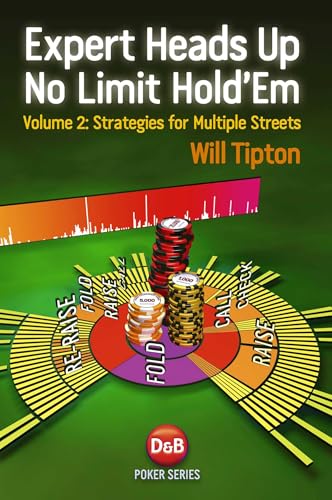
by Will Tipton
Focusing specifically on heads-up play, this book utilizes similar game-theory concepts and mathematical modeling to the ones found in Chen's work. It is perfect for readers who want to see how abstract probability translates into specific, winning tactical decisions.

by Nate Silver
Silver’s exploration of probability and statistical forecasting is highly relevant to poker players who view the game as a series of probabilistic events rather than luck. It offers a broader context for the type of analytical thinking required to master games of incomplete information.

Malmuth provides a deep dive into the theoretical underpinnings of gambling, including poker, using logic and mathematics to deconstruct common misconceptions. Readers who appreciated the logical proofs in Chen's book will find this approach both familiar and rewarding.

by Sylvia Nasar
This biography of John Nash, the father of game theory, provides the intellectual history behind the concepts used in 'The Mathematics of Poker.' It grounds the abstract math in a powerful, real-world narrative, showing the human cost and brilliance behind the equations.

by Tommy Angelo
While less mathematically dense than Chen's work, Angelo's book is a masterpiece of poker philosophy and logic, focusing on the 'meta-game' and the mental discipline required to apply rigorous strategy. It is the perfect companion for readers looking to balance their mathematical knowledge with psychological awareness.

Prefer to listen?
Try Audible and hear the story instead of reading it.
As an Amazon Associate, we earn from qualifying purchases.
As an Amazon Associate, we earn from qualifying purchases.