
Based on your book
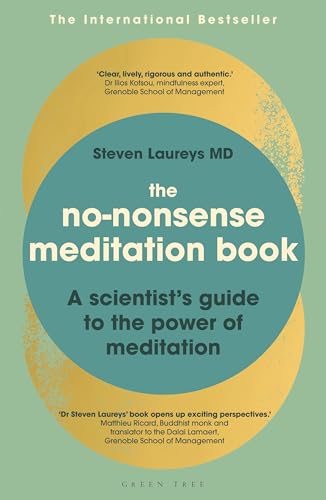
The No-Nonsense Meditation Book
by Laureys, Steven
Steven Laureys approaches meditation not as a spiritual retreat, but as a neurological tool for optimization. As a neurologist, he strips away the esoteric language often associated with mindfulness, replacing it with hard data and clinical insight. The reading experience is clinical yet deeply empathetic, feeling less like a self-help manual and more like a private consultation with a scientist who has spent his career mapping the human brain. You will not find vague promises here; instead, you get a clear-eyed look at how mental training physically alters your gray matter. It is a rigorous, introspective guide for the skeptic who wants to understand the mechanics of their own consciousness. If you are someone who needs to know the why behind the how before you can commit to a new habit, this is the book that will finally make the practice click for you.
10 Books similar to 'The No-Nonsense Meditation Book'
Since you appreciated the analytical rigor of Laureys, you will likely gravitate toward authors who treat the mind as a biological system rather than a mystical entity. We have selected these titles because they echo the same commitment to neuroplasticity and empirical evidence. Whether you are looking for the evolutionary psychology found in Robert Wright or the practical, focus-based training offered by Amishi P. Jha, these books share a common thread: they validate the meditative experience through scientific inquiry, helping you build a sustainable, grounded practice that favors logic over dogma.
As an Amazon Associate, we earn from qualifying purchases.

by Sam Harris
Like Laureys, Harris approaches mindfulness through a rational, secular lens, stripping away mystical dogma to focus on the neuroscience and philosophy of consciousness. It is a perfect follow-up for readers who appreciate the scientific grounding of meditation practices.

by Mark Williams and Danny Penman
This book shares the 'no-nonsense' practical methodology found in Laureys' work, offering a structured, evidence-based approach to mindfulness. It is ideal for readers looking to implement specific, actionable meditation techniques into their daily routine.

Wright bridges the gap between evolutionary psychology and Buddhist practice, making it an excellent companion for Laureys' scientific exploration of mental states. It validates the benefits of meditation by explaining the biological mechanisms behind why our minds suffer.

by Daniel Goleman and Richard J. Davidson
For readers who enjoyed the neurological focus of Laureys' book, this work provides a deep dive into the rigorous scientific studies surrounding meditation. It offers authoritative proof of how consistent practice can physically reshape the brain.

Love to read on the go?
Explore Kindle e-readers and take your books with you.
As an Amazon Associate, we earn from qualifying purchases.

by Dan Harris
Harris provides a relatable, skeptical, and often humorous account of his journey into meditation, which mirrors the grounded, pragmatic tone of Laureys. It is a great choice for readers who are wary of 'woo-woo' spirituality and want a down-to-earth perspective.

While broader than meditation, this book explores neuroplasticity—the core scientific concept that makes meditation effective. It shares the same fascination with how the brain functions and adapts, appealing to the curious, science-minded reader.

Kabat-Zinn is a pioneer in bringing mindfulness into clinical settings, much like Laureys. This book offers concise, accessible insights that help readers cultivate awareness in everyday life without requiring a background in religious practice.

by James Nestor
Like Laureys, Nestor investigates a fundamental biological function with a scientific eye, revealing how small, conscious changes can have profound impacts on health. It is an engaging, fact-based exploration that complements the mindfulness approach to well-being.

Jha, a neuroscientist, provides a practical guide to attention and focus that aligns perfectly with the 'no-nonsense' ethos of Laureys. It provides the reader with a toolkit for mental training backed by rigorous laboratory research.

As a classic in the field of mind-body medicine, this book provides the foundational science for how meditation counteracts stress. It is a perfect historical and scientific antecedent to Laureys' modern, accessible guide.

Not sure what they've already read?
Let them pick their next favorite with an Amazon Gift Card.
As an Amazon Associate, we earn from qualifying purchases.
As an Amazon Associate, we earn from qualifying purchases.