

Based on your book
The ordeal of civility
by John Murray Cuddihy
John Murray Cuddihy's The Ordeal of Civility is a demanding, intellectually rich exploration of how we manage our inner selves in the public sphere, particularly through the lens of modern Jewish experience. It delves into the often-uncomfortable tension between authentic self-expression and the demands of politeness and social decorum. Cuddihy doesn't just describe civility; he dissects it, showing how it can be both a necessary lubricant for society and a source of profound psychological strain, even hypocrisy. This book offers a complex, thought-provoking analysis, making you reconsider every social interaction and the subtle performances we all engage in. It's for readers who relish deep dives into social commentary, cultural analysis, and the historical roots of our moral dilemmas, and who are ready to grapple with a truly analytical and psychologically astute argument.
10 Books similar to 'The ordeal of civility'
If you found yourself deeply engaged with The Ordeal of Civility, fascinated by Cuddihy's exploration of public performance, private selfhood, and the intricate demands of social decorum, then these books will speak directly to your intellectual curiosity. We've gathered titles that, like Cuddihy's work, meticulously dissect the historical evolution of civility and social norms, examine the psychological toll of identity negotiation, and offer incisive cultural critiques. Each recommendation continues the conversation about how we present ourselves, the unspoken rules that govern our interactions, and the profound challenges of being a self in a complex, social world.
As an Amazon Associate, we earn from qualifying purchases.

Elias's seminal work traces the historical development of manners, emotions, and social norms in Western Europe, showing how the "civilizing process" profoundly shaped individual psychology and social interaction. Fans of Cuddihy will appreciate its deep historical and sociological analysis of how civility emerged and its impact on the public and private self.

Goffman's classic sociological study views social interaction as a theatrical performance, where individuals present a "front" to manage impressions and navigate social situations. This directly connects to Cuddihy's exploration of embarrassment, politeness, and the tension between one's inner self and public persona.

Sennett argues that the decline of public life and the rise of an intense focus on personal identity have eroded the rituals and spaces necessary for genuine civility and social interaction. Readers who enjoyed Cuddihy's critique of modern civility will find a complementary and profound analysis of the historical shift from public to private spheres.

Lasch critiques the self-absorption and therapeutic ethos of modern American society, arguing that it undermines traditional values, civic engagement, and genuine selfhood. This book offers a compelling parallel to Cuddihy's concerns about the erosion of civility and the challenges of maintaining a coherent self in a fragmented world.

Prefer to listen?
Try Audible and hear the story instead of reading it.
As an Amazon Associate, we earn from qualifying purchases.

Bauman offers a chilling sociological examination of how the structures and rationality of modern bureaucracy and scientific thought facilitated the Holocaust, rather than preventing it. While darker, its rigorous intellectual analysis of modernity's "ordeal" and the breakdown of moral norms will resonate with Cuddihy's exploration of the complexities and challenges of modern civility.

by Edward Said
Said's influential work analyzes how Western scholarship and culture constructed a stereotypical and often dehumanizing "Orient" to assert power and identity. Fans of Cuddihy will appreciate its incisive cultural analysis, its exploration of how identity is shaped by external perceptions, and the dynamics of "othering" in social and political contexts.

Arendt provides a profound philosophical exploration of human activities, distinguishing between labor, work, and action, and examining the spheres of public and private life. Her rigorous analysis of what it means to be human in society, particularly the importance of public appearance and interaction, deeply informs and parallels Cuddihy's concerns about civility and the public self.
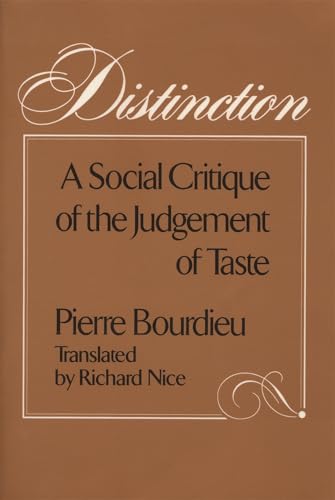
Bourdieu meticulously demonstrates how social class and cultural capital shape individual tastes, preferences, and manners, which in turn reinforce social hierarchies. This provides a detailed, empirical framework for understanding the unspoken rules and power dynamics inherent in social interactions, echoing Cuddihy's interest in the subtle mechanisms of civility and social belonging.

by Philip Rieff
Rieff, Cuddihy's mentor, critiques the rise of the "therapeutic man" in modern society, where psychological well-being replaces traditional moral and religious imperatives as the guiding principle of life. This book directly addresses the cultural shifts that Cuddihy explores, particularly the challenges to traditional civility and the search for meaning in a post-Freudian world.

Hirschman brilliantly traces the intellectual history of how human "passions" (like greed) were re-conceptualized as "interests" to be harnessed for societal benefit, leading to the rise of capitalism and a new understanding of social order. This historical deep dive into the evolution of social norms and the management of human nature offers a fascinating parallel to Cuddihy's examination of the historical construction and "ordeal" of civility.

Love to read on the go?
Explore Kindle e-readers and take your books with you.
As an Amazon Associate, we earn from qualifying purchases.
As an Amazon Associate, we earn from qualifying purchases.