

Based on your book
The Origins of Totalitarianism
by Arendt, Hannah
Hannah Arendt does not just recount the history of the twentieth century; she dissects the structural collapse of human society. This book explores how anti-semitism, imperialism, and the breakdown of class structures created the perfect vacuum for totalitarian movements to take root. Reading this is an exercise in intellectual endurance. Arendt writes with a cold, piercing precision that can feel overwhelming, stripping away our illusions about the stability of modern institutions. Her prose is dense and demanding, requiring your full attention as she maps out how objective truth is systematically dismantled. This is not casual reading. It is a vital, unsettling companion for anyone trying to understand how democratic norms erode and why individuals willingly abandon their own agency. You will walk away from this book seeing the mechanics of modern political instability in a completely different light.
10 Books similar to 'The Origins of Totalitarianism'
Since you have tackled the heavy theoretical weight of Arendt, these selections offer different windows into the same dark room. We chose these titles because they bridge the gap between Arendt's clinical analysis and the visceral human cost of mass movements. Whether you are looking for the psychological breakdown of the individual in Koestler's fiction, the sociological breakdown of fanaticism in Hoffer's work, or the chilling empirical reality of Browning's historical research, these books expand on the themes of ideological entrapment and the fragility of the private self in a total state.
As an Amazon Associate, we earn from qualifying purchases.

by Eric Hoffer
Like Arendt, Hoffer explores the psychological and social conditions that lead individuals to surrender their autonomy to mass movements. It provides a complementary, albeit more sociological, analysis of the fanaticism that fuels totalitarian regimes.

Orwell’s classic novel serves as the fictional embodiment of Arendt’s theoretical warnings regarding state control, surveillance, and the destruction of objective truth. It captures the terrifying atmosphere of totalitarianism that Arendt dissects in her historical analysis.

This is the logical follow-up to her earlier work, focusing on the specific mechanics of how ordinary individuals become agents of mass murder. It deepens the reader's understanding of the bureaucratic nature of totalitarian crimes.

by Karl Popper
Popper provides a rigorous philosophical defense of democracy against the ideologies of totalitarianism, tracing their roots back to Plato, Hegel, and Marx. It is essential reading for anyone interested in the intellectual history behind the movements Arendt studied.

Prefer to listen?
Try Audible and hear the story instead of reading it.
As an Amazon Associate, we earn from qualifying purchases.
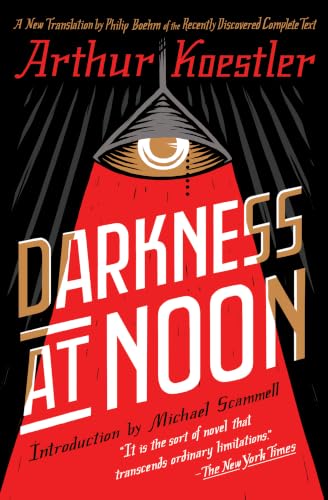
This novel depicts the psychological disintegration of an old-guard Bolshevik during the Stalinist show trials. It brilliantly dramatizes the ideological traps and moral compromises that Arendt identifies as central to the totalitarian experience.
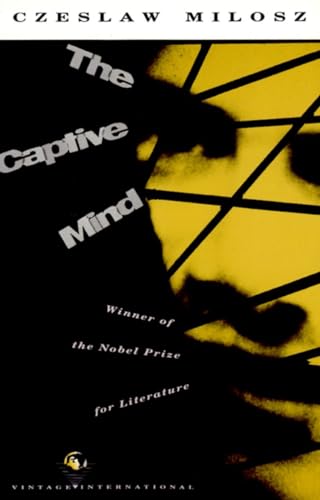
Miłosz offers a profound, firsthand account of how intellectuals in Eastern Europe adapted to and were corrupted by the pressures of a totalitarian state. His analysis of the 'Ketman' (the art of hiding one's true beliefs) mirrors Arendt's observations on the erosion of the private self.

Browning provides a harrowing empirical study that supports Arendt's theories about how average people can be conditioned to perform atrocities. It is a vital historical deep dive into the 'banality' of mass violence.
Often published as a standalone section of her larger work, this text remains the definitive academic primer on the subject. It is indispensable for those who want to revisit her core arguments about the nature of terror and ideology.

While controversial, Taylor's analysis provides a crucial counterpoint to the understanding of the political landscape in Europe that allowed totalitarian regimes to rise. It offers a different perspective on the geopolitical failures that preceded the war.
Heiden was one of the first historians to provide a comprehensive look at the rise of Hitler and the National Socialist movement. His work provides the raw historical narrative that informs much of the context Arendt later philosophized about.

Love to read on the go?
Explore Kindle e-readers and take your books with you.
As an Amazon Associate, we earn from qualifying purchases.
As an Amazon Associate, we earn from qualifying purchases.