
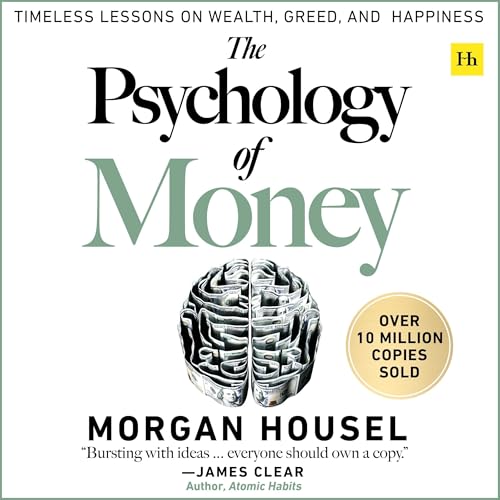
Based on your book
The Psychology of Money
by Morgan Housel
Morgan Housel shifts the conversation about finance away from spreadsheets and complex math, focusing instead on the messy, human side of money. The book is a collection of short, punchy essays that treat financial behavior as a psychological study rather than a technical skill. You will find that Housel spends less time discussing interest rates and more time exploring how our egos, insecurities, and personal histories dictate our spending and saving habits. The writing is conversational and grounded, making it feel less like a dense textbook and more like a series of late-night chats with a mentor who has seen it all. If you are tired of get-rich-quick schemes and want a more philosophical, long-term framework for thinking about wealth, stability, and the freedom to control your own time, this is for you.
10 Books similar to 'The Psychology of Money'
If the introspective nature of Housel's work resonated with you, our curated list explores the hidden variables behind success and irrational decision-making. We selected these titles because they treat wealth as a byproduct of human behavior rather than just numbers on a page. Whether you are looking for the intellectual foundations found in Thinking, Fast and Slow or the practical, life-optimizing advice of Die With Zero, these books share a common thread: they challenge the conventional wisdom that success is purely about effort, favoring a more nuanced look at luck, habit, and self-awareness.
As an Amazon Associate, we earn from qualifying purchases.

by James Clear
Like Housel's work, this book focuses on small, compounding behaviors rather than massive overhauls to achieve success. It shares the same accessible, evidence-based approach to self-improvement that prioritizes long-term systems over quick fixes.
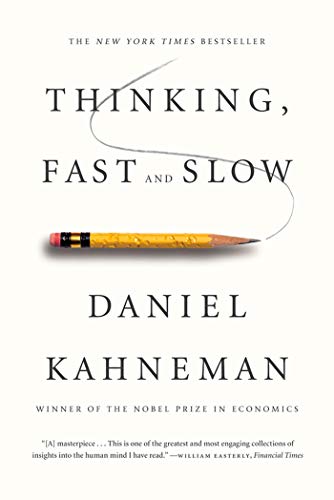
This is the intellectual foundation for much of the behavioral finance Housel discusses, exploring the dual systems that drive our decision-making. Readers who enjoyed the psychological underpinnings of money will appreciate this deeper dive into the biases that shape our judgment.

This book captures a similar philosophy to Housel's, blending wisdom on wealth creation with a focus on happiness and long-term thinking. It is structured as a collection of concise, impactful lessons that mirror the narrative style of Housel's essays.

Taleb shares Housel's skepticism toward traditional financial models and emphasizes the massive role luck plays in success. It is an essential read for anyone who wants to understand the 'hidden' variables in the financial world.

Not sure what they've already read?
Let them pick their next favorite with an Amazon Gift Card.
As an Amazon Associate, we earn from qualifying purchases.

by Vicki Robin
This classic shifts the focus from 'getting rich' to 'getting a life,' aligning perfectly with Housel's argument that money is a tool for freedom. It challenges readers to rethink their relationship with work and consumption in a deeply practical way.

Thaler provides the historical and academic context for why humans act irrationally with money, making it a perfect companion to Housel's more anecdotal style. It explains the 'why' behind the financial behaviors Housel observes.

by Bill Perkins
This book challenges the traditional 'save until you die' mentality, offering a fresh perspective on how to allocate time and money to maximize life experiences. It shares Housel's focus on the subjective, emotional value of wealth.

Much like Housel's observations, this book debunks the myths of what wealthy people actually look like and how they behave. It is a data-driven look at the habits of the truly wealthy that emphasizes frugality and discipline.

Gladwell explores the external factors—culture, timing, and luck—that create success, echoing Housel's themes about the role of chance in financial outcomes. It is highly readable and uses storytelling to convey complex sociological concepts.

While more focused on the mechanics of investing than Housel, Bogle's philosophy of simplicity, patience, and long-term holding is the practical application of the mindset Housel advocates. It is the definitive guide to the 'boring but effective' strategy.

Prefer to listen?
Try Audible and hear the story instead of reading it.
As an Amazon Associate, we earn from qualifying purchases.
As an Amazon Associate, we earn from qualifying purchases.