
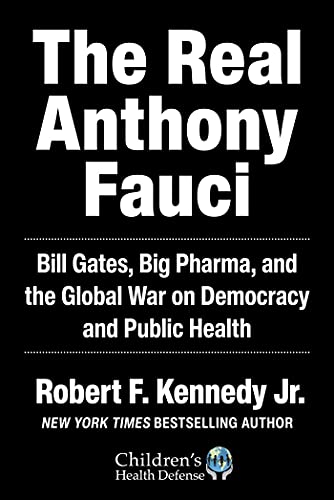
Based on your book
The Real Anthony Fauci
by Kennedy Jr., Robert F.
Robert F. Kennedy Jr. presents an intense, dense examination of the pharmaceutical industry and the career of Anthony Fauci. The book operates as a massive legal and historical brief, tracing the evolution of public health policy through a lens of deep suspicion. You will find that the pacing is relentless, packed with citations and a confrontational tone that challenges the reader to reconsider the foundations of modern medical authority. It does not aim for neutrality; instead, it offers a raw, unfiltered look at institutional power dynamics and the potential for regulatory capture. This is a book for the reader who enjoys investigative deep dives and is willing to engage with heavy, controversial material. If you find yourself questioning the intersection of government policy and corporate profit, this work provides a comprehensive, if polarizing, roadmap for your own research.
10 Books similar to 'The Real Anthony Fauci'
If this investigation into institutional influence left you wanting more, our curated list focuses on the intersection of corporate power, systemic medical corruption, and the ethics of public health. We selected these titles because they share a commitment to questioning the status quo, whether through exposing the deceptive marketing of drug companies or documenting the historical failures of government agencies. By exploring these themes of accountability and institutional overreach, you can build a more complete picture of how the pharmaceutical industry shapes our world, moving beyond the headlines to the mechanisms of influence themselves.
As an Amazon Associate, we earn from qualifying purchases.

Like Kennedy's work, this book provides a rigorous, insider critique of the pharmaceutical industry's influence on medical research and public policy. It appeals to readers looking for a detailed, evidence-based investigation into systemic corruption within the healthcare establishment.

by Ben Goldacre
This book mirrors the investigative focus on medical malpractice and the suppression of data by major corporations, making it a perfect follow-up for readers concerned with corporate accountability. It shares the same analytical rigor and commitment to exposing systemic failures in the medical field.

This narrative non-fiction work exposes the machinations of a powerful family behind a major public health crisis, resonating with the theme of institutional power and influence found in Kennedy's writing. It offers a gripping, meticulously researched look at how corporate greed can shape national health outcomes.
For readers interested in the scientific and political history of virology, this book provides an alternative perspective from a Nobel Prize-winning scientist. It aligns with the interest in the origins of viral outbreaks and the controversies surrounding major research institutions.

Love to read on the go?
Explore Kindle e-readers and take your books with you.
As an Amazon Associate, we earn from qualifying purchases.

This book is a direct companion in spirit to Kennedy's work, arguing that the pharmaceutical industry functions similarly to organized crime syndicates. Readers who appreciated the confrontational and investigative tone of 'The Real Anthony Fauci' will find this equally compelling.

This work explores the intersection of government, ethics, and scientific advancement, echoing the themes of institutional overreach and the politicization of science. It provides a broader historical context that readers interested in the relationship between the state and medicine will appreciate.

by Kevin Barry
Focused on allegations of internal corruption and the suppression of data within a major government health agency, this book touches on the exact same controversies found in Kennedy's work. It is essential reading for those specifically focused on the CDC and vaccine-related skepticism.

by Jacky Law
This book examines how the pharmaceutical industry has shifted from a focus on health to a focus on profit, mirroring the central argument of Kennedy's critique. It offers a deep dive into the corporate strategies that influence global public health policy.

While historical in nature, this book provides a masterclass in understanding how government agencies and scientific leaders manage (or mismanage) pandemics. It offers the same level of granular detail and institutional analysis that readers of Kennedy's work often seek.

This book explores the history of institutional abuse and ethical breaches in medicine, providing a foundational context for skepticism toward medical authorities. Readers interested in the history of medical misconduct will find this to be a powerful and necessary companion piece.

Not sure what they've already read?
Let them pick their next favorite with an Amazon Gift Card.
As an Amazon Associate, we earn from qualifying purchases.
As an Amazon Associate, we earn from qualifying purchases.