

Based on your book
The Reticular Society
by Paul, Ian Alan
The Reticular Society is an unsettling, deeply cerebral examination of the invisible architecture governing our modern lives. Ian Alan Paul moves beyond simple critiques of technology to map the intricate, web-like structures that dictate social behavior, political agency, and individual autonomy. The reading experience is less like consuming a traditional book and more like untangling a complex conspiracy theory that turns out to be entirely real. It is dense, demanding, and intentionally provocative, forcing you to reconsider the digital and physical environments you inhabit daily. You will find yourself pausing frequently to look at your smartphone or your city streets with a newfound, slightly paranoid clarity. This is a book for the reader who enjoys high-level philosophy and systems theory, and who is willing to sit with the discomfort of realizing that their freedom might just be a carefully managed illusion.
10 Books similar to 'The Reticular Society'
Since The Reticular Society leaves you with an urgent need to map the power structures shaping our reality, these ten titles serve as your toolkit for further investigation. We selected these works because they share Paul's obsession with how control is encoded into our systems, whether through algorithms, surveillance, or institutional design. Whether you are interested in the historical philosophy of the panopticon or the current mechanics of surveillance capitalism, this collection bridges the gap between abstract theory and the tangible, often harsh realities of living within a networked, digital society.
As an Amazon Associate, we earn from qualifying purchases.

Like Paul's work, this book provides a rigorous, deeply analytical investigation into how digital infrastructures and data-driven systems shape human behavior and societal control. It is an essential companion for anyone interested in the mechanisms of power within the modern networked society.

Bratton offers a theoretical framework for understanding the planetary-scale computation that defines our current era, mirroring Paul's interest in the architectural and political implications of technology. It is a challenging, dense, and intellectually rewarding read that deconstructs the 'reticular' nature of modern governance.

This book explores how data mining and algorithmic decision-making impact the most vulnerable populations, echoing the critical perspective on systems of control found in 'The Reticular Society'. It grounds abstract technological concepts in the harsh, lived realities of those caught in the digital net.

by Cathy O'Neil
O'Neil provides a clear-eyed critique of the algorithms that govern our lives, making the abstract dangers of algorithmic society concrete and accessible. Readers who appreciated the critical dissection of digital networks in Paul's work will find this equally compelling and urgent.

Prefer to listen?
Try Audible and hear the story instead of reading it.
As an Amazon Associate, we earn from qualifying purchases.

by Guy Debord
As a foundational text for understanding how images and representations dominate social life, Debord's work provides the philosophical lineage for Paul's analysis of surveillance and control. It is a dense, revolutionary critique that remains highly relevant to the study of digital societies.

by Neil Postman
Postman offers a prophetic look at how technology has become the dominant worldview, stripping away traditional meaning and replacing it with efficiency and control. Fans of Paul's critique of the 'reticular' society will recognize the same concerns about the erosion of human agency.

Browne provides a critical lens on the history and future of surveillance, specifically focusing on how it is used to categorize and police bodies. This aligns perfectly with the thematic focus on power dynamics and the structural control inherent in modern societal networks.

Carr examines the psychological and societal costs of our increasing reliance on automation, mirroring the concerns about how digital structures reshape human experience. It is a thoughtful exploration of how we lose our autonomy to the very tools we created.
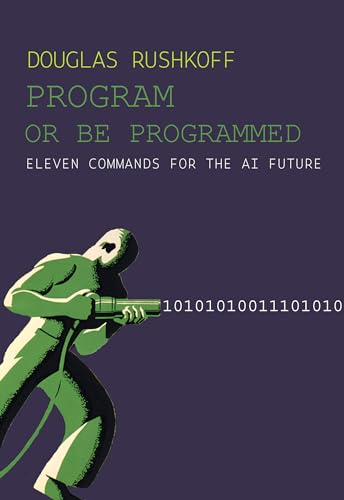
Rushkoff argues for the necessity of understanding the digital systems that govern us, lest we become mere components of those systems. It shares the urgent, critical voice of 'The Reticular Society' while offering a practical call to action for digital literacy and resistance.

Foucault's analysis of the panopticon and the mechanisms of surveillance is the bedrock upon which much of contemporary digital critique is built. Readers interested in the theoretical underpinnings of 'The Reticular Society' will find this essential reading for understanding the history of control.

Love to read on the go?
Explore Kindle e-readers and take your books with you.
As an Amazon Associate, we earn from qualifying purchases.
As an Amazon Associate, we earn from qualifying purchases.