

Based on your book
The Right of the People
by Nwanevu, Osita
Osita Nwanevu brings a sharp, surgical precision to the state of contemporary American democracy. Rather than relying on empty partisan rhetoric, the book dissects the structural mechanics that keep our political system stagnant and inequitable. Nwanevu writes with the cool, analytical eye of a seasoned observer who is more interested in systemic diagnosis than quick-fix solutions. The pacing is deliberate and intellectually demanding, favoring rigorous argument over emotional manipulation. As you read, you feel the weight of moral inquiry behind every policy critique, forcing you to reconsider what we actually owe one another in a functioning society. This is an essential text for the reader who finds standard political punditry insufficient and craves a deeper, more historical understanding of why our institutions fail us and where the genuine levers of power actually reside.
10 Books similar to 'The Right of the People'
The selections here were curated for readers who appreciate how Nwanevu bridges the gap between high-level economic theory and the lived reality of systemic inequality. If this book resonated with you, you likely value authors who dismantle the myth of policy neutrality. We chose these titles because they mirror Nwanevu’s commitment to exposing the moral costs of our current meritocratic and capitalist frameworks. Whether through the lens of history, sociology, or hard economics, each of these works provides the necessary context to further interrogate the power dynamics and political paradoxes Nwanevu highlights so effectively.
As an Amazon Associate, we earn from qualifying purchases.

Like Nwanevu, McGhee offers a rigorous, data-driven analysis of American systemic failures, specifically focusing on how racial inequality undermines public goods and economic prosperity for all. It shares the same blend of intellectual depth and accessible, urgent political advocacy.

This book provides a deep philosophical critique of the modern meritocratic ideal, mirroring Nwanevu's skepticism toward the way current economic structures erode democratic solidarity. It is essential reading for those interested in the moral and political consequences of our current capitalist framework.

Giridharadas exposes the hypocrisy of the global elite who claim to solve systemic problems while perpetuating the very systems that cause them, a theme that resonates strongly with Nwanevu's critique of neoliberalism. Both authors write with a sharp, critical eye toward the intersection of wealth and public policy.

While more ethnographic than Nwanevu's work, Desmond's masterpiece provides the human face to the policy failures Nwanevu critiques, illustrating the devastating impact of housing instability on American life. It shares a commitment to highlighting how structural inequality dictates individual outcomes.

Prefer to listen?
Try Audible and hear the story instead of reading it.
As an Amazon Associate, we earn from qualifying purchases.

A foundational text for understanding systemic injustice in America, Alexander's work employs the same rigorous, analytical approach to policy and history found in Nwanevu's writing. It challenges readers to rethink the 'neutral' structures of American governance.

MacLean traces the intellectual history of the movement to undermine democratic institutions, providing the historical context that complements Nwanevu's contemporary political analysis. It is a compelling investigation into how political ideologies are weaponized against the public interest.

by Naomi Klein
Klein's exploration of how crises are exploited to push through unpopular economic policies serves as a perfect companion to Nwanevu's arguments about the fragility of democracy under capitalism. It is a sweeping, intensely researched critique of global economic systems.

Written by two prominent economists, this book provides the hard data behind the 'deaths of despair' that Nwanevu touches upon, linking economic decline to public health outcomes. It is a sobering, scholarly look at the human cost of current economic policies.

Rothstein provides a meticulous, policy-focused history that reveals how government action created the inequality we see today, echoing Nwanevu's insistence that policy is not neutral. It is an essential read for understanding the structural roots of American disparity.
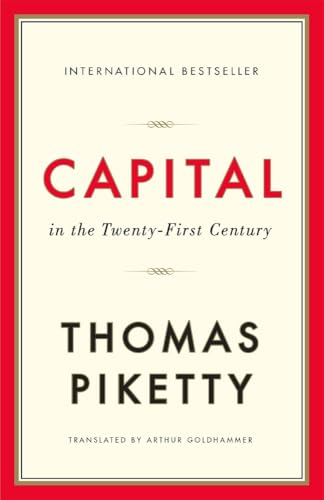
For readers who appreciate the heavy-duty economic analysis behind Nwanevu's political arguments, Piketty's seminal work offers a comprehensive look at the mechanisms of wealth inequality. It provides the foundational economic theory that informs much of the modern progressive critique of capitalism.

Love to read on the go?
Explore Kindle e-readers and take your books with you.
As an Amazon Associate, we earn from qualifying purchases.
As an Amazon Associate, we earn from qualifying purchases.