

Based on your book
The Righteous Mind
by Jonathan Haidt
The Righteous Mind isn't just another book about political divides; it's an invitation to understand the very architecture of our moral minds. Jonathan Haidt makes a compelling case that our moral judgments spring not from careful reasoning, but from deep-seated intuitions and gut feelings, with our intellect often playing catch-up to rationalize what we already believe. Reading this feels like stepping behind the curtain of human morality, gaining a profound new lens for viewing everything from dinner table debates to global conflicts. Haidt unpacks the different "moral foundations" that shape our worldviews, showing why different groups hold such divergent, yet internally consistent, ideas of right and wrong. If you're someone who thrives on intellectual challenge and wants to genuinely grasp the psychological roots of our social and political disagreements, rather than just fuming about them, this book offers clarity and a path toward empathy. It's for the curious mind ready to dissect human nature.
10 Books similar to 'The Righteous Mind'
If Jonathan Haidt's exploration of our intuitive moral minds resonated with you, you'll appreciate these further dives into human psychology and social dynamics. We've curated this list for readers eager to understand the interplay between gut feelings and reason, and how these shape our beliefs and societal structures. Books like Daniel Kahneman's "Thinking, Fast and Slow" and Carol Tavris's "Mistakes Were Made (But Not by Me)" will deepen your understanding of the cognitive biases Haidt highlights. For those fascinated by the evolutionary roots of our moral landscape and the 'us vs. them' mentality, Steven Pinker's "The Blank Slate" and Joshua Greene's "Moral Tribes" offer powerful complementary perspectives.
As an Amazon Associate, we earn from qualifying purchases.
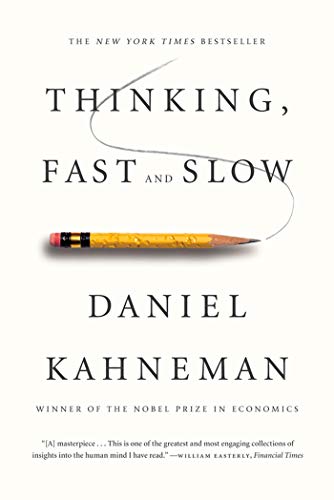
Like Haidt, Kahneman explores the dual-process model of the human mind, detailing how our intuitive 'System 1' often drives our judgments before our rational 'System 2' can intervene. It provides the psychological foundation for understanding why moral reasoning is often post-hoc justification.

This book challenges the idea that the mind has no innate traits, a core premise that aligns with Haidt's 'moral foundations' theory. Pinker uses evolutionary psychology to explain human behavior, politics, and morality in a way that complements Haidt's research.
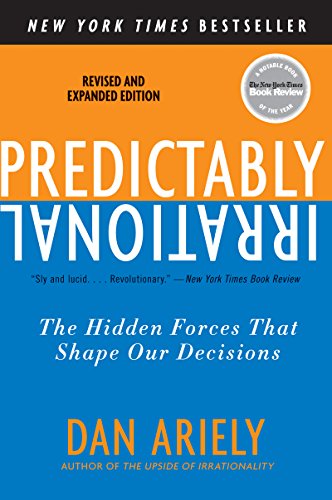
by Dan Ariely
Ariely explores the hidden forces that shape our decisions, often in ways that defy traditional logic. Readers who enjoyed Haidt's focus on how emotions and intuitions override reason will find Ariely's behavioral economics experiments equally illuminating.
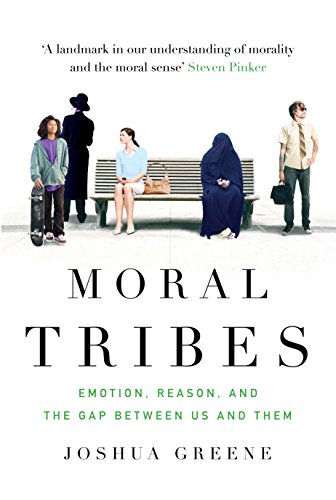
Greene, a neuroscientist and philosopher, tackles the same 'Us vs. Them' problem as Haidt, focusing on how our brains are wired for tribal cooperation but struggle with inter-group conflict. It offers a more utilitarian perspective on solving the moral disagreements Haidt describes.

Prefer to listen?
Try Audible and hear the story instead of reading it.
As an Amazon Associate, we earn from qualifying purchases.

by Jonathan Haidt and Greg Lukianoff
Co-authored by Haidt, this book applies the psychological principles of 'The Righteous Mind' to modern campus culture and social trends. It examines how 'safetyism' and cognitive distortions are affecting social cohesion and mental health.

by Carol Tavris and Elliot Aronson
This book dives deep into cognitive dissonance and self-justification, explaining why people find it so hard to admit they are wrong. It perfectly mirrors Haidt's 'elephant and rider' metaphor regarding how we rationalize our intuitive beliefs.

While Haidt looks at the 'why' of moral disagreement, Pinker looks at the historical 'what' regarding the decline of violence. It is a massive, data-driven exploration of how human morality and social structures have evolved over millennia.

Sapolsky provides a comprehensive look at the biological underpinnings of human behavior, from neurobiology to sociology. It provides the 'hard science' scaffolding for Haidt's theories on why humans are simultaneously so cooperative and so tribal.

by Matt Ridley
Ridley explores the evolutionary roots of cooperation and why humans are 'instinctively' social. It aligns with Haidt’s view that morality is an evolutionary adaptation that allowed humans to form large, cohesive groups.
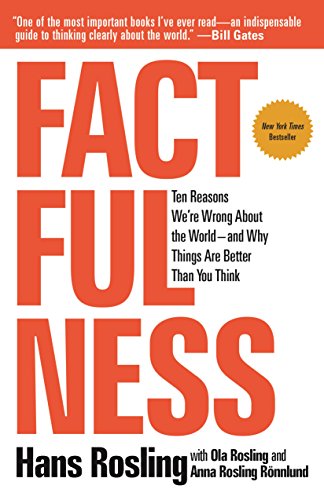
by Hans Rosling
Rosling identifies the 'ten instincts' that distort our perspective of the world. Like Haidt, he encourages readers to look past their emotional biases and tribal narratives to see the world more clearly through data and psychological awareness.

Love to read on the go?
Explore Kindle e-readers and take your books with you.
As an Amazon Associate, we earn from qualifying purchases.
As an Amazon Associate, we earn from qualifying purchases.